What preparatory work needs to be done before raising cattle
Many people do not know where to start before raising cattle. Below is an explanation of what preparations need to be made before raising cattle.
First, cattle raising requires building good cattle sheds. Build cattle sheds adapted to local conditions that are warm in winter and cool in summer. In winter, keep them well insulated so the temperature inside the shed stays above 5°C. Remove manure at fixed times every day, ventilate at noon, brush the cattle's bodies, and regularly lead them outside the shed to sunbathe, which strengthens their constitution and helps them gain fat. Here, an automatic manure scraper system can be used to achieve manure removal time control, manure removal cycle control, scraper stroke control, temperature control, manual control, and so on.
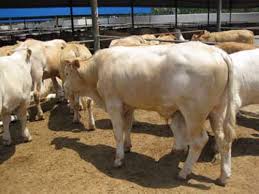
Second, be sure to select and raise improved breeds of cattle. Choosing excellent breeds of cattle for farming is the key to obtaining good returns, because improved breeds not only have good meat quality, fast growth, high feed conversion efficiency, and good appearance, but also a low incidence of disease. It is necessary to change the long-standing practice of continuous grading crossbreeding, and actively introduce breeds such as Limousin and Simmental for three-way crossbreeding, continuously improving the results of improvement and economic returns. Never assume that local cattle are already excellent and therefore neglect breed improvement. The breeds being raised must be continuously improved. When cattle prices are high, breed improvement should be carried out; when cattle prices are low, breed improvement should be carried out even more. Where conditions permit, the new technology of frozen semen breeding should be promoted as much as possible. In particular, note that hybrid bulls must not be used for breeding, because although hybrid bulls are tall and powerful, their heredity is unstable, and they very easily cause inbreeding, leading to degeneration of offspring and low economic returns.
Third, scientific feeding. In cattle raising, the cattle should as much as possible eat well and be full on green forage, while also being supplemented with other necessary nutrient feeds. To improve the returns from cattle raising, one must start from calf rearing, and in particular do a good job of supplementary feeding during the first and second winter-spring barn-feeding periods so that they reach a body weight of about 300 kg and are marketed at 18-24 months of age, or after a short period of intensive fattening reach a body weight of more than 500 kg and are marketed. After ammoniation, the crude protein content of rice straw and wheat straw can be increased, which not only lowers feeding costs but also improves the economic returns of cattle raising. Therefore, it is necessary to vigorously promote and popularize new straw treatment technologies such as straw silage, semi-dry storage, and ammoniation, and to promote raising cattle on straw.
Fourth, do a good job of deworming and disease prevention. When cattle graze, because they eat forage and come into contact with the ground, they are often infected with various parasites internally and externally, such as Haemonchus contortus, Bunostomum, and Oesophagostomum, which are very likely to appear in the cattle digestive tract; cattle are also very easily infected externally with mites, ticks, lice, flies, maggots, and other external parasites. These parasites absorb nutrients and release toxins, obstructing the growth and development of cattle, and can reduce daily weight gain by 35% and feed conversion rate by 30%; cattle warble fly maggots reduce hide prices by more than one fold, and severe parasitism can cause death. It can be seen that deworming is an indispensable and important part of cattle raising. For farm households raising cattle, deworming can be carried out twice, in spring from March to May and in autumn from September to October; fattening cattle should be dewormed at the start of fattening. At present, there are many types of deworming drugs. Levamisole, trichlorfon, and others can all be used, but their antiparasitic spectrum is narrow and the results are not entirely satisfactory. Abamectin (Chongkexing) is the first-choice deworming drug. This drug is a broad-spectrum, high-efficiency, low-toxicity, new-type antiparasitic veterinary drug developed and produced in recent years, and can simultaneously expel nematodes inside the bodies of livestock and poultry as well as external parasites such as mites, ticks, lice, and fly maggots. The dosage forms include injections, tablets, capsules, and powders. Among them, the powder is moderately priced and convenient to use. Usage and dosage: administer orally or mix evenly into feed and feed it. Use 1 gram per 10 kg of body weight; deworming is best arranged in the afternoon or evening so that the parasites are expelled during the daytime the next day, making them easy to collect and handle. Before dosing, it is best to stop feeding for 6-12 hours and only provide drinking water, in order to improve drug efficacy. After all kinds of parasites inside and outside the cattle's body are expelled, scientific feeding will have a notable effect on fattening. Preventing cattle diseases is also one of the keys to obtaining relatively high returns in cattle raising. If disease prevention is not done well, scientific feeding will be wasted. To prevent cattle diseases, in addition to doing a good job of cleaning, sanitation, and disinfection of the cattle shed and cattle bodies, ensuring the hygiene and safety of cattle feed and drinking water, and deworming, a cattle body brush can be used for cleaning work. If there is not enough veterinary expertise, it is also necessary to maintain regular contact with local veterinarians and do a good job of disease prevention and treatment.