The development direction of China's pig farming industry: from a major pig-farming country to a strong pig-farming country
China is the country with the largest pig-farming scale in the world, with its pig inventory, slaughter numbers and pork output approaching half of the world's total. Even so, China can only be called a “major pig-farming country”, not a “strong pig-farming country”.
Why is that? Let us look at a series of figures below. In 2010, China's meat output was 79.258 million tonnes, of which pork was 50.712 million tonnes. In 2010, China slaughtered 666.864 million meat pigs. Whether in inventory or slaughter numbers, China ranks first in the world. The same is true of pork output, which ranks first in the world. China's position as a major pork-consuming country is equally unmatched. However, China's pork exports are small and its production efficiency is low, with an average of 16 to 17 finished pigs produced per sow per year; a feed conversion ratio of 3.6—3.8:1, and a slaughter rate of 142%. These indicators are on the low side, and this has become the weak spot of China's pig farming industry.
Overcoming this weak spot and developing from a “major pig-farming country” into a “strong pig-farming country” is the inevitable direction for China's pig farming industry. How should this be done? First of all, we need examples to learn from. So which countries can be called “strong pig-farming countries”? And how do they manage their pig farming industries?
Denmark produced about 1.6 million tonnes of pork in 2009, of which 90% was for export (to the EU and Japan, the United States, China, etc.), making it the world's largest pork exporter. As a small Nordic country, Denmark's pork output is not as large as China's, but it is a “strong pig-farming country” beyond doubt.
As a “strong pig-farming country”, what exactly are Denmark's outstanding advantages?
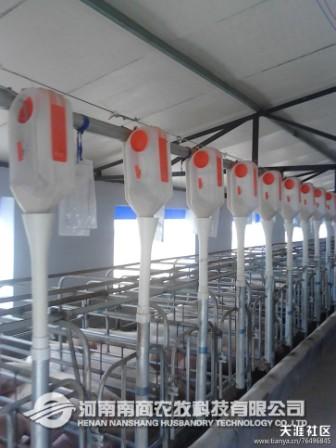
1. Highly technological pig farming and automated pig-farming equipment. Denmark's pig farming industry is recognised worldwide as a “high-tech industry”. Genetic biotechnology, computer automatic control systems and the like are widely used in the pig industry. Its breeding management technologies, such as pig herd disease control, feeding management and genetic breeding, are world-leading. At the same time, Denmark is also the country that does best in the world at banning the use of antibiotic feed additives for animals. At present, Denmark produces an average of 26 to 33 finished pigs per sow per year, with a feed conversion ratio of 2.4—2.8:1 and a slaughter rate of 168%; all three of these indicators are far higher than China's. Denmark is known for specialisation, mechanisation, large-scale operation and high efficiency, and in particular its labour productivity ranks among the highest in the world. In Denmark, raising 10,000 pigs requires an average of only 3 workers.
2. Raising “green, environmentally friendly pigs” and focusing on pork quality. Denmark's rearing, slaughtering and pork product processing all strictly follow the relevant regulations. The quality of Danish pork and pork products meets the world's highest hygiene standards, and the returns from its pig farming industry are relatively stable. By contrast, pork prices in China fluctuate up and down.
From the comparison above, it is not hard to see that our country still has a long way to go in the development of the livestock industry. To narrow the gap with “strong pig-farming countries” such as Denmark and move from a “major pig-farming country” to a strong pig-farming country, we must start from the following aspects:
1. Step up the large-scale development of pig farming, raise the technological content of the pig farming industry, adopt advanced management techniques and advanced automated equipment, and achieve scientific feeding.
2. Improve feeding models and optimise the feeding environment to reduce the occurrence of pig diseases and raise truly “green, environmentally friendly pigs”.
3. Strengthen the supervision and management system of the relevant departments, check pig feeding, slaughtering and pork processing layer by layer, and set strict requirements for pork quality.