Detailed Explanation of Cockroach Farming Techniques: Rearing Methods and Management Points
The American cockroach (Periplaneta americana), a species with a large body size, a broad food range and strong reproductive capacity, is an excellent variety for artificial rearing. There are two farming forms: 1. Mixed rearing with ground beetles (Eupolyphaga sinensis) 2. Dedicated cockroach rearing Mixed rearing with ground beetles, and the preparation of rearing soil for ground beetles. In our farm's practical operation, we found that mixed rearing of cockroaches and ground beetles does not cause much conflict, and even produces complementary advantages. Cockroaches do not burrow into the soil; special animal medicinal material farming brings high returns and sells well; during the day they only hide in cracks in the walls of the pit house, and come out at night to seek food. Ground beetles, however, burrow into the soil during the day and also come out in the evening to move about and seek food. During the process of rearing ground beetles, there will be feed that the ground beetles cannot finish that day, and this feed is excellent food for cockroaches; moreover, the light, temperature and humidity in the ground beetle rearing room are also extremely suitable for cockroaches. In our practice we found that when feed sources are insufficient, adult cockroaches also prey on ground beetle larvae. The solutions are: ① Control a certain amount of light in the rearing room during the day, so that cockroaches cannot come out to seek food. ② When feeding, also place some feed on the partitions of the ground beetle pit pools, so that the cockroaches will not be hungry and prey on ground beetle larvae.
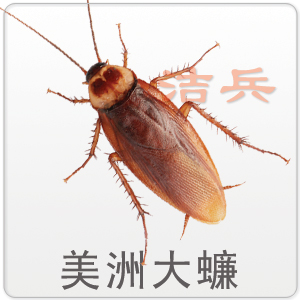 Farming Techniques, American cockroach" />
Dedicated cockroach rearing room. The requirements for a dedicated cockroach rearing room are high. When setting up a cockroach rearing house, careful attention must be paid to the sealing degree of the house; a flat-roofed house is best. The sealing degree of the top, bottom, left and right of the house must be comprehensively checked; even a tiny crack will cause small cockroaches to jump and escape. Build an inner partition wall around the four sides of the house, with the upper and lower dimensions determined according to the dimensions of the internal pit house. After the partition wall is built, plaster it with cement; after plastering, stop work for 2 days, or paste 1-3 cm foam boards onto the walls for insulation, and hang plastic film on the inner wall of the foam boards, with all four sides required to be covered. Then check the cracks on the cement wall surface and fill the cracks. The design of the pit pools is set according to the dimensions of the house, leaving a walkway of 1 m, with each layer 40 cm high, pre-cast with reinforced concrete into trough-shaped pit pools, with small grooves extending downward 25 cm inside, and the gap between the small grooves being 10 cm. To facilitate operation, the amount of rebar used when casting the pit pools must not be too small, to prevent the trough-shaped pit pools from breaking when the pit pools are built. The trough-shaped pit pools for cockroaches only need to be stacked layer by layer, and the total height of the pit house should also be below 2.6 m. When stacking to the top layer, seal the top layer with concrete to prevent cockroaches from escaping. Place insulation materials such as straw and foam on top. The doors and windows of the cockroach pit house should not use wooden doors and windows. Wooden doors and windows will be gnawed away by cockroaches; aluminum alloy or plastic-steel materials should be used instead. During production, attention should also be paid to the sealing degree; seal the outside of the doors and windows with stainless steel window screen to prevent jumping, and use black cloth curtains on the doors and windows to block strong outside light. Install a chimney-shaped ventilation opening at each end of the walkway of the rearing pools; a pipe diameter of 8-10 cm is sufficient. The ventilation windows should be partitioned with window screen. The heating facilities in the cockroach pit house can be set up flexibly. Electric stoves, honeycomb coal stoves, sawdust stoves, etc. can be used, but exhaust gas should be discharged outdoors to ensure successful farming and the safety of the keeper.
I. Farming Forms
The cockroach variety currently farmed at our farm is the American cockroach of the genus Periplaneta in the family Blattidae. This cockroach has a large body size, a broad food range and strong reproductive capacity, and is an excellent variety for artificial rearing. There are two farming forms: 1. Mixed rearing with ground beetles 2. Dedicated cockroach rearing and mixed rearing with ground beetles. In our farm's practical operation, we found that mixed rearing of cockroaches and ground beetles does not cause much conflict, and even produces complementary advantages. Cockroaches do not burrow into the soil; during the day they only hide in cracks in the walls of the pit house, and come out at night to seek food. Ground beetles, however, burrow into the soil during the day and also come out in the evening to move about and seek food. During the process of rearing ground beetles, there will be feed that the ground beetles cannot finish that day, and this feed is excellent food for cockroaches; moreover, the light, temperature and humidity in the ground beetle rearing room are also extremely suitable for cockroaches. In our practice we found that when feed sources are insufficient, adult cockroaches also prey on ground beetle larvae. The solutions are: ① Control a certain amount of light in the rearing room during the day, so that cockroaches cannot come out to seek food. ② When feeding, also place some feed on the partitions of the ground beetle pit pools, so that the cockroaches will not be hungry and prey on ground beetle larvae. Dedicated cockroach rearing room. The requirements for a dedicated cockroach rearing room are high. When setting up a cockroach rearing house, careful attention must be paid to the sealing degree of the house; a flat-roofed house is best. The sealing degree of the top, bottom, left and right of the house must be comprehensively checked; even a tiny crack will cause small cockroaches to jump and escape. Build an inner partition wall around the four sides of the house,
with the upper and lower dimensions determined according to the dimensions of the internal pit house. After the partition wall is built, plaster it with cement; after plastering, stop work for 2 days, then check the cracks on the cement wall surface and fill the cracks. The design of the pit pools is set according to the dimensions of the house, leaving a walkway of 1 m, with each layer 40 cm high, pre-cast with reinforced concrete into trough-shaped pit pools, with small grooves extending downward 25 cm inside, and the gap between the small grooves being 10 cm. To facilitate operation, the amount of rebar used when casting the pit pools must not be too small, to prevent the trough-shaped pit pools from breaking when the pit pools are built. The trough-shaped pit pools for cockroaches only need to be stacked layer by layer, and the total height of the pit house should also be below 2.6 m. When stacking to the top layer, seal the top layer with concrete to prevent cockroaches from escaping. Place insulation materials such as straw and foam on top. The doors and windows of the cockroach pit house should not use wooden doors and windows. Wooden doors and windows will be gnawed away by cockroaches; aluminum alloy or plastic-steel materials should be used instead. During production, attention should also be paid to the sealing degree; seal the outside of the doors and windows with stainless steel window screen to prevent jumping, and use black cloth curtains on the doors and windows to block strong outside light.
The heating facilities in the cockroach pit house can be set up flexibly. Electric stoves, honeycomb coal stoves, sawdust stoves, etc. can be used, but exhaust gas should be discharged outdoors to ensure successful farming and the safety of the keeper.
II. Rearing Management
Cockroaches have a very broad food range. As mentioned above, they will even gnaw wooden doors and windows; generally rotten vegetables, melons and fruits, newspapers, discarded pastries, grains and so on are all included, so the rearing cost is quite low, and artificial rearing requires almost no feed input cost. Cockroaches usually come out to move about at 18:00 at night, reach a peak from 21:00-23:00, and all hide away by the next morning, so artificial rearing only requires feeding once a day at 17:00-18:00, and the feed only needs to be placed on the platform between each layer. The feeding amount is determined according to the size of their food intake. Every 3-5 days, use a duster to sweep away leftover feed and their feces. Water can be sprayed on the rearing platform to increase humidity, or special water troughs can be made for cockroaches to drink.
The egg capsules produced by cockroaches are brown, about 1 cm long and about 0.5 cm wide. One female cockroach can produce 30-60 egg capsules, with the most reaching 90, and each egg capsule contains 14-16 larvae. The egg capsules are laid on walls or on grass stems. To collect cockroach egg capsules, we only need to place grass bundles on the rearing platform; nearly half of the cockroaches will lay their egg capsules on the grass bundles, and after a few days we only need to take out the grass bundles and shake them to collect them.
At a temperature of about 25°C, the incubation period of the eggs is 20-30 days. After the larvae emerge from the shell, they undergo several molts and become adults in about 4-5 months. The larvae have no wings; they grow wings at maturity, and males mature later than females. The female begins laying eggs about half a month after her last molt. The American cockroach has a parthenogenetic reproductive habit. If there are no males, the female can lay unfertilized eggs; after incubation, the unfertilized eggs all become females, and can reproduce continuously for 3 generations. Our artificial rearing of cockroaches can keep the pit house at 25°C-30°C year-round, and such conditions can enable cockroaches to complete one generation in 5-6 months. A rearing pool of 100 sq m can produce 1600-2000 kg of fresh cockroaches per year. The economic benefit is quite high. During the rearing process, the feed must be kept free from pesticide contamination, and insecticides are of course also prohibited.