How to breed koi fish? A complete analysis of methods and techniques
Master the breeding season well, master the timing of koi spawning well, and master the timing for injecting oxytocin.
About ten minutes after the oxytocin injection (depending on the fish's behavior), prepare for artificial spawning and breeding. The fertilization rate of artificial breeding is higher than that of natural spawning.
The fertilized eggs must be disinfected, and green water or aged water must not be used for hatching. The hatching water, hatching tanks, and ponds must also be sterilized and disinfected. After the fertilized eggs are placed in the hatching tank or pond, methylene blue should be added to prevent water mold.
Master the right timing to remove the spawning nest; too early will cause the fry to die, and too late will cause bacteria to grow in the water.
After the fry hatch, there is no need to feed them within two days; they will absorb nutrients from the yolk, and they will not eat even if you feed them.
Koi are relatively easy to keep. In spring, summer, and autumn, pay attention to the occurrence of bacterial diseases; in winter, pay attention to swim bladder disease and scale protrusion disease. In fish keeping, prevention is key; do not wait until the fish get sick to treat them. Detect abnormalities early and treat them in advance.
From the perspectives of ornamental appreciation and aquaculture, water is regarded as the soul of a landscape. Apart from hardness, the other water quality indicators of landscape water and aquaculture water fall within the standard range for surface water (a total of 24 water quality indicators), and aquatic animals and aquatic plants can be raised in it to regulate humidity and beautify the environment. Without the overall and branch water system circulation of nature, it is impossible for a stagnant landscape water body to maintain long-term water quality balance. As long as any one water quality indicator exceeds the standard, there is a risk of harm to aquatic animals, aquatic plants, and the environment. Practice has proven that treating a single water quality indicator is a temporary relief method that treats the symptoms but not the root cause, and does not solve the fundamental water quality problem. This shows the comprehensive importance of water quality standards and indicators.
Many consumers do not understand the professional standard data they need, but it is enough to require three goals. 1. Clear water. 2. No odor. 3. Aquatic animals and aquatic plants can grow normally. This is the standard.
At present, the common water treatment technology products on the markets of various countries are roughly the following types of water treatment technology products, such as
(1) Chemical agent products
(2) Activated carbon adsorption products
(3) Active oxygen sterilization products
(4) Biological bacteria products
(5) Sonar and sound wave interference products
(6) Optical sterilization products
(7) Ecological filtration and sterilization products
The water treatment technologies of the above products only provide temporary relief for single water quality indicators, and most of them target bacteria and ammonia nitrogen. Ultimately, water changes are still needed to alleviate water pollution. Water treatment technology and water purification technology are fundamentally different. Simply put, water treatment technology uses physical and chemical methods to treat single indicators of water, and its purpose is merely to slow down the degree to which some water quality indicators exceed the standard. Water treatment technology and water purification technology are fundamentally different. Simply put, water treatment technology uses physical and chemical methods to treat some indicators of water, and its purpose is to slow down the degree to which some water quality indicators exceed the standard, with treatment not reaching compliance. Sewage purification technology comprehensively treats water standards back within the standard range. Because water use has standard requirements, from the perspective of environmental protection and standard requirements, this is very strict. The national environmental quality standard for surface water specifies that, apart from pH, temperature, and bacteria, the other 21 items are required in milligrams per liter of water (gm/L).
Water purification product analysis:
A. Domestic water purification technology products; this product is intended for direct drinking by further deeply filtering and disinfecting tap water. Because tap water belongs to domestic water standards, further purifying water on the basis of this standard should not require very high technical content. However, the manufacturing materials and professional requirements are very strict. Originally, tap water can be completely disinfected and have excessive substances such as hardness reduced by physical heating to 90-99 degrees.
B. Sewage purification technology products; purifying different degrees of sewage into whatever water quality standard is required is a very high-end technical field. Because the pollution sources and pollutants in sewage differ, the purification technology for it is not simple. But no matter what purification technology is used, there must be water quality standards and data standards for each indicator.
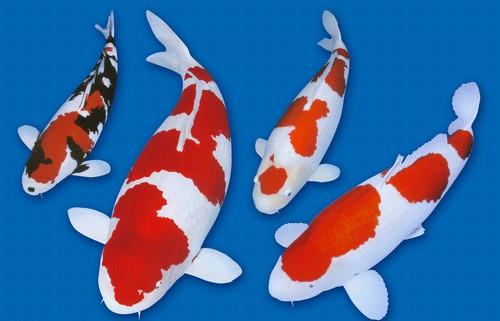
Koi are relatively easy to keep, and keeping koi when you are just starting out is a good choice. If conditions permit, of course you can switch to a larger fish tank and add other supporting equipment. But it also depends on how many you are keeping. Group keeping is recommended, but it must also be determined according to the size of your own fish tank, so that the fish tank can have a good ornamental effect. If there is no other supporting equipment such as oxygen and circulation, you can choose to change one fifth of the water in the fish tank every 2-3 days, which can ensure oxygen.
By all means do not feed too much; it is fine if each feeding is finished within 5 minutes. Feeding once or twice a day is fine.
Experience it slowly; the joy is endless!
Precautions for keeping koi regularly:
1. Like goldfish, koi are not strict about water temperature and water quality, and their living water turbidity range is 2-30 degrees Celsius. Although they are highly adaptable to the environment, they have the weakness of being unable to resist sudden changes in water temperature. If kept artificially for a long time, they can still endure a water turbidity rise or fall of 2-3 degrees Celsius, but when the range of temperature decrease or increase exceeds 2-3 degrees Celsius, the fish are prone to illness; when the temperature rise or fall range increases to 7-8 degrees Celsius, the fish lie prostrate at the bottom, neither eating nor moving; if the range of sudden temperature change is even greater, they may even die immediately. The most suitable living water turbidity is 20-25 degrees Celsius. In water at this temperature, koi swim actively, have a strong appetite, are robust in constitution, and have bright colors. Controlling the water temperature to the most suitable level for koi growth, so that the fish can have a comfortable environment and grow rapidly, is even more ideal. Golden koi living in water rely on their gills to absorb oxygen dissolved in the water, sending the oxygen to the fish body to combine with the nutrients of absorbed food and produce energy to sustain life. Therefore, whether there is sufficient oxygen in the water is the key to keeping fish well. The oxygen demand per kilogram of body weight per hour is 35 mg/L at a water temperature of 5-6 degrees Celsius, which proves that the higher the water temperature, the greater the oxygen consumption.
2. For a new tank or new pond, pay attention to changing more water every day. If the water has been maintained relatively well, changing it twice a week is enough.
3. Observe the fish's condition every day. If a fish does not eat or lies in a corner, consider whether the fish is sick.
4. When transferring fish, it is best to use an amateur koi landing net, generally a fairy net. This makes it less likely to cause injury to the fish.
5. If you see fish rubbing their bodies, it is usually because the fish have parasites, and you can consider deworming.
6. If you see that the water remains relatively cloudy, you should consider whether there is a problem with the filtration system.
7. When fish are sick, do not rush to isolate them. If isolation is needed, there should be an isolation tank with a complete filtration system.
8. Do not buy large quantities of koi from different fish farms within the same period, to prevent cross-infection.
9. Keep some commonly used medicines at home, such as coarse salt, Japanese yellow powder, potassium permanganate, antibiotics, and insecticides.
10. When buying fish, consider the size of your water body and the efficiency of the filtration system, and do not keep fish at too high a density.
Wishing you happy fish keeping!