What is the current status and prospects of loach farming in Dawu County, Hubei Province?
According to the arrangements of county government leaders, the Agriculture Section of the Dawu County Government Office in Hubei Province, together with the County Fisheries Bureau, formed a special task force to conduct in-depth research and analysis on the development of the loach industry in key loach farming townships across the county. The relevant findings are reported as follows:
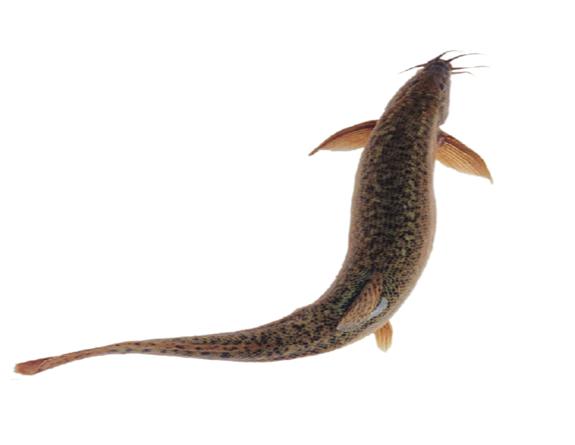
I. History and Current Status of Loach Farming in Dawu County
In the early period of reform and opening up and before, agricultural production levels were relatively low, the use of chemical fertilizers and pesticides was limited, and agricultural environmental pollution was minimal. Wild loach could be found in farmlands, ditches, and rivers. Loach farming only began to develop in the late 1980s, but it was mainly limited to small ponds in farmers' courtyards or around their homes. The scale was small, there was no systematic farming technology, and it was basically a matter of stocking without management and self-production for self-consumption, so both output and profitability were constrained to a certain extent.
After 1991, the agricultural economy developed rapidly. Large amounts of chemical fertilizers and pesticides were used in farmland, water resources became polluted, and destructive fishing methods such as "electro-fishing" caused wild loach to decline year by year, making it impossible to meet market demand. The County Fisheries Bureau had attempted loach fry breeding and technology promotion and developed a small amount of loach farming, but farmers, influenced by traditional agricultural production concepts, generally believed that loach farming was not profitable, so loach farming did not take off.
After entering the new century, the public's market economy awareness grew increasingly stronger, enabling distinctive agriculture and income-generating industries to make considerable progress. After 2009, the loach industry gradually accelerated its development. By 2013, the county's loach farming area was about 330 mu, loach output reached more than 300 tons, and output value was nearly 16.8 million yuan. Three loach farming professional cooperatives were spontaneously formed by the public across the county, driving 16 loach farming specialized households. The farming bases all integrated fry production and breeding with adult loach farming, mainly concentrated in Dufan Village and Songlin Village of Xiadian Town, and Qianwan Village of Lüwang Town and Diangang Village of Liuji Town, with few farming operations in other townships and villages.
II. Dawu County Has "Five Advantages" for Developing Loach Farming
1. Good loach quality. Loach meat is delicious and nutritious, rich in protein and multiple vitamins, and has high medicinal value. It is known as "ginseng of the water" and is a favorite aquatic product among people. Compared with loach from Wuhan and the southern lake areas, Dawu loach is the same farmed variety, but due to the influence of the mountainous soil and excellent water quality, the loach tastes more delicious, the meat is more tender, and the small bones are easier to separate. The most obvious characteristic is that Dawu loach "becomes more tender the longer it is cooked," while loach from other places "stays firm no matter how long it is cooked." In November 2013, "Dawu Wild Loach Soup" was rated as one of the top ten famous dishes of Xiaogan City.
2. Good farming resources. Loach farming has relatively low requirements for water quality, water depth, and other water source conditions. The requirements for farming ponds are not very strict. Small ponds around rural homes, rice paddies, and fish ponds with a water depth of 60 cm are sufficient for farming. Within Dawu County there are three major rivers - the Huan River, the Sheshui River, and the Zhugan River - 128 reservoirs, 26,000 pond embankments, and 33,000 mu of farmland that can be converted into fish ponds, all suitable for developing loach farming. Moreover, livestock and poultry manure, after being composted and treated, can be used for loach farming, which is conducive to treating rural pollution sources and improving the ecological environment. If biogas digesters are built, a pig (poultry) + biogas + loach ecological chain farming model can be implemented, which can both eliminate the environmental impact of livestock and poultry farming and benefit the development of loach farming.
3. Good disaster avoidance. Loach has a growth period of eight months, strong natural vitality, high environmental adaptability, relatively simple farming technology, and extensive management. Compared with livestock and poultry farming, it has fewer diseases, lower risks, and is easier to farm. In particular, Dawu is located in the "dry basin" of northern Hubei, with "drought in nine out of ten years," making it difficult for fish species with high water demands to develop on a large scale. Loach, however, can adapt to well water, river water, groundwater, and tap water, and consumes little water. In situations of water shortage, it is especially suitable for farming. If drought occurs, drilling a 100-meter-deep well can solve the water source problem. Therefore, loach is very suitable for development in mountainous areas with severe drought conditions.
4. Good sales market. Since loach is a traditional wild aquatic product of Dawu, its price is in the low-to-mid range. Ordinary residents like to eat it and can afford it, so there is a broad consumer base. Moreover, Dawu is backed by Wuhan, giving it enormous market potential. In recent years, due to climate factors and environmental pollution, wild loach output has continued to decline, and loach prices on domestic and international markets have continued to rise, yet demand still exceeds supply, bringing rare development opportunities for loach farming. According to farmers, a 30-mu loach farming operation does not sell locally at all but directly links with hotels and restaurants in Wuhan, and supplying even a single small hotel is not enough. The excellent quality of Dawu loach gives it broad market prospects in Wuhan.
5. Good industry profitability. According to farming practice, loach yield per mu is about 1,000-2,000 jin, and the current market price of loach is about 25 yuan/jin. Based on this calculation, the output value of loach farming can reach 50,000 yuan per mu. After deducting production costs such as fry, feed, land transfer rent, pond construction, and labor input, the gross profit per mu is 15,000-25,000 yuan, and there is no problem with sales volume, as the market shows a situation of demand exceeding supply. Each laborer farming 2 mu of loach would earn more than the average manual worker's income from employment, and working at home also allows them to care for elderly family members and children. Generally, each strong laborer can farm about 20 mu of loach, with income far higher than going out to work.
III. "Five Problems" Existing in Loach Farming in Dawu County
1. Public awareness problem. At present, most farmers still have a traditional small-scale peasant production mentality, accustomed to planting grain, oil crops, and cash crops, or engaging in traditional small-scale household farming of fish, chickens, ducks, and so on. Loach was once found wild in large and small farmlands and rivers, and people did not realize that "little loach" could become a big industry. Only a small number of large farming households with strong market awareness realized that "little loach" has excellent development prospects and is a good path to increase income and become wealthy.
2. Land transfer problem. Some farmers have a fairly strong attachment to their land and worry that after transferring land they will lose their livelihood. They would rather leave land fallow or manage it extensively than transfer it. Some who have transferred land are unwilling to change the current state of the fields, resulting in farming bases that are not contiguous. At present, apart from a few loach farming cooperatives, most are scattered small-scale operations, lacking scale and contiguity, and there is a lack of professional cooperatives with a farming scale of more than 100 mu.
3. Financing and investment problem. In the early stage of loach farming, there is relatively large investment mainly in fish pond renovation and construction and in farming technology. For example, a large farming household in Xiadian Town spent 40,000 yuan to go to Lianyungang to learn loach farming technology. Ordinary farmers, however, do not have the capacity for basic investment, and the threshold for bank loans is relatively high, making it difficult to obtain loans without collateral. Existing loach farming cooperatives that want to expand their farming scale generally report being constrained by a funding bottleneck.
4. Technology promotion problem. Current large farming households basically go elsewhere to learn loach farming technology, and the technology investment is relatively high, generally tens of thousands of yuan, which objectively increases basic input. Most scattered farmers have not received professional knowledge and skills training, and few understand professional technology. Relying only on experience and traditional farming methods, it is difficult for technology to meet standards. In particular, loach breeding technology cannot keep up, restricting the sustainable development of the loach industry.
5. Brand creation problem. At present, the development of the "little loach" industry lacks a unified brand. Large farming households have also not developed brand awareness, none have created brands, and none have applied for trademarks and related quality certifications such as the "three certifications." Basically, they sell their own production themselves, or even sell directly to restaurants. Each farming household is fighting its own battle, without forming a joint force, which restricts the large-scale and industrialized development of the industry.
IV. "Five Major" Measures Still Needed for the Industrialization of Loach Farming in Dawu County
1. A grand strategy for industrial planning. It is recommended that the county party committee and county government issue policy documents supporting the development of the loach industry, elevate distinctive loach farming to a county-level strategy on par with the "four major sectors and one residential area," treat it as a pillar industry for enriching the people and strengthening the county and as a distinctive advantageous agricultural industry, and give preferential support in policy formulation, funding input, and planning layout. Persist in using "little loach" to open up a path to wealth through distinctive farming with strong economic benefits.
2. Major expansion of farming scale. Through policy incentives and calculating the profitability figures, strengthen publicity and guidance in multiple forms, actively guide and encourage farmers to spontaneously farm loach, and through large-scale operation and industrialized development of loach farming, promote the adjustment of the fishery industry structure and promote farmers' income growth and prosperity through multiple channels. Encourage and guide farmers to voluntarily transfer land, and give strong support in land transfer, creating a good investment environment, and coordinating the resolution of various conflicts and disputes.
3. Major technical service training. Through unified professional technical training, continuously improve the quality of practitioners and raise farming standards, and distribute technical materials to every farming household. The fisheries department should provide unified technical guidance and management for links such as loach fry standards, stocking density, feed feeding, disease prevention and control, and pond water quality monitoring, and help farming households, especially cooperatives, with project applications, trademark registration, and pollution-free certification.
4. Major support through awards in place of subsidies. It is recommended to refer to the methods used to support industries such as green tea and oil tea, list special funds in the county-level fiscal budget each year, and provide support and subsidies for fry and seedlings in the development of the loach industry. For the construction and renovation of loach farming ponds, provide support in projects such as pond embankment construction and land consolidation. Financial institutions should lower the loan threshold and increase financial support and credit lending to resolve the funding bottleneck.
5. Major market through brand creation. On the basis of steadily developing and expanding the farming scale and ensuring that product quality meets standards and farming output continues to grow, encourage farming operators to actively apply for geographical indication certification trademarks, strive to create provincial-level and national-level famous-brand products and well-known trademarks, enhance visibility and influence, and strive to build a distinctive Dawu loach brand on par with Qianjiang crayfish and Yangcheng Lake hairy crabs, so as to radiate and drive loach farming throughout the county and further expand the scope of radiation and driving effects.