Practical tips for saving feed in pig farming
Feed accounts for 70% of pig farming costs. How to save on feed costs is the topic pig farmers care about most. In reality, pig farmers have explored all kinds of feed cost-saving methods that suit their own situations.
I. Complete feed
Pros: Improved utilization rate
Cons: Inconvenient to add medication
Zhang Qingyi, a partner at Kaiping Fengrun Pig Farm, attaches great importance to the role of feed in pig farming. He believes that using complete feed is better than premix. Although the unit price of premix may be cheaper, its utilization rate is considerably lower. With the same formula, the full utilization rate of premix is 8% lower than that of complete feed. Taking Fengrun Pig Farm itself as an example, after switching from premix to complete feed in 2007, the feed used each month dropped from 300 tons to 240 tons, and the total cost was greatly reduced.
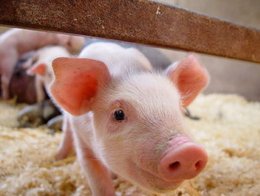
He also noted that the feed-to-meat ratio of the pig herd at Fengrun Pig Farm can currently reach 2.4, while the feed-to-meat ratio at ordinary pig farms is generally around 3.0. As a result, Fengrun Pig Farm can keep the feed cost per pig from a 30-jin piglet to a 210-jin finished pig at 660 yuan. Adding the piglet cost of 250 yuan and labor costs of about 50 yuan, the cost per market pig is 960 yuan, while the general market cost for a pig of the same 210-jin weight is 1080 yuan. It can be said that using complete feed offers a great cost advantage.
Zhang Qingyi pointed out that Fengrun Pig Farm uses feed whose raw materials have been extruded, which has its unique advantages. First, after extrusion treatment, the feed raw materials have increased aroma and improved palatability, which can stimulate the pigs' appetite. Moreover, after extrusion, the long chains of organic substances such as proteins and fats become short chains, making them easier to digest. At the same time, it reduces the content of bacteria, mold and fungi in the raw materials, lowers the risk of pigs getting sick, and reduces the amount of various medicinal ingredients that need to be added.
Tang Jicheng of Zhaoqing Lianhua Breeding Pig Farm believes that the pelleting, processing and packaging of complete feed also have advantages and disadvantages. On the one hand, it can promote more effective digestion and absorption in the pig herd while avoiding picky eating and improving feed conversion efficiency. On the other hand, during processing it is also very easy to cause the loss of effective ingredients such as vitamins, and it is very difficult for pig farms to accurately determine the degree of loss in order to supplement it.
II. Premix
Pros: Formulas can be adjusted quickly
Cons: Feed-to-meat ratio is on the high side
Xie Guoming, owner of Zengcheng Mingwang Pig Farm, admits that when it comes to feed-to-meat ratio, premix is inferior to complete feed. At his pig farm, the feed-to-meat ratio with premix is around 3.0, but he feels that the advantage of premix in unit price can make up for its disadvantage in feed-to-meat ratio. According to his calculations, the premix he uses costs an average of about 1.3 yuan/jin, with a feed-to-meat ratio of 3.0. Raising a 30-jin piglet to a 210-jin finished pig, the feed cost is 1.3×3×=702 yuan, which is about the same as complete feed.
Xie Guoming pointed out that the biggest advantage of premix is that the pig farm can adjust the formula at any time according to the actual situation of the pig herd. For example, when recent hot weather affects the pig herd's appetite, he will add several kinds of Chinese herbal medicines to the feed to improve its taste. “If a problem is discovered in the morning, the feed formula can be adjusted in the afternoon.” He believes this is impossible with complete feed, unless it is a super-large pig farm that has built its own complete feed production line, in which case it can naturally adjust the feed formula at any time.
Xie Dengyang, president of the Sihui City Pig Farming Association, said that most local pig farms use premix, mainly because they dare not trust the manufacturers' raw materials. If something goes wrong, they cannot afford the loss. Sometimes, farmers buy corn, soybean meal and other raw materials themselves to mix with premix, and the overall cost is even higher than complete feed, but Chinese people's circumstances are rather special, and it is very hard to trust others. He gave an example: a salesman from a complete feed manufacturer once asked him to help treat a customer's pigs. At a glance he found it was caused by aflatoxin, clearly a problem with that factory's complete feed raw materials, yet the salesman himself did not even know that his own factory's raw materials had a problem. This makes it even harder for farmers to trust the complete feed provided by manufacturers. He hopes that in the future the market will mature and a toll-processing model like that in foreign countries can take shape, so that whatever feed farmers need, manufacturers can make reliable products for them.
A formulator at a feed enterprise who declined to be named believes that pig farms, especially some small and medium-sized pig farms, basically find it very difficult to conduct quality inspections on the feed raw materials they purchase, especially since mold toxin contamination in corn and some miscellaneous meals is often hard to detect at present.
III. Biologically fermented feed
Pros: Can improve the intestinal environment
Cons: Effects are unstable
Li Huowen, owner of Sanshui Bole Farm, is likewise uneasy about the quality of complete feed, especially at the current stage when raw material prices fluctuate greatly. He analyzed that a rise of 100 yuan per ton of raw materials is now very common, which works out to 4 yuan per bag of feed, but manufacturers generally adjust feed prices by at most 1 yuan per bag. Any more than that would seriously affect sales. Yet manufacturers cannot simply swallow the extra 3 yuan as a loss, so lowering the quality of complete feed becomes an inevitable choice.
But he believes that while complete feed has problems, using ordinary premix also faces the reality of rising raw material prices. However, as a pig farmer, it is absolutely impossible to shortchange one's own pigs. The feed that should be used is still used, but what follows is an increase in pig farming costs. To raise pigs well, feed must be improved.
Li Huowen's method of improving feed is to use self-mixed biologically fermented feed to gradually replace traditional feed. The biologically fermented feed he uses is all made by adding microbial strains to substitutes for corn and soybean meal such as corn stalks and fermenting them. He said that after pigs eat this biologically fermented feed, their gastrointestinal environment is greatly improved. He made a vivid analogy for this: the gastrointestinal environment is like the social environment. If society is to be stable, the number of police must definitely exceed that of the underworld. Similarly, after eating biologically fermented feed, the number of active beneficial bacteria in the intestines can be greatly increased, thereby suppressing the number of other harmful bacteria, and the intestinal environment naturally improves.
Biologically fermented feed not only improves the intestinal environment, but also, because it better matches the natural characteristics of pigs, it is sweet-smelling and has better palatability. The pig farm once conducted an experiment during the hottest three months of July, August and September. Usually under such scorching weather, pigs reduce their feed intake, but instead their intake increased by 15%. Li Huowen also pointed out that only when they eat enough feed will sows produce sufficient milk and piglets' health be ensured.
At the same time, the corn and soybean meal substitutes used in biologically fermented feed can reduce costs. Calculating on the basis of one sow eating one ton of feed per year, one sow can save 300-350 yuan. At present, Li Huowen's pig farm has 1000 sows on hand, which can save more than 300,000 yuan.
Liu Zhenan, a Taiwan, China native and deputy director of Boluo County Jingu Feed Co., Ltd., also believes that using biologically fermented feed is one of the effective ways to improve feed utilization. At present, the feed utilization rate of ordinary pigs is about 65%-70%. The more they eat, the greater the waste. Biologically fermented feed, however, uses various decomposition enzymes and multiple beneficial live microbial strains combined with commonly used pig feed such as corn, soybean meal and wheat bran to break down feed raw materials into nutrients that are easy to absorb. Experiments show that using biologically fermented feed can raise the feed utilization rate to 80%-85%.
IV. Staged precision formulas
Pros: Can greatly reduce costs
Cons: Not suitable for small pig farms
Qin Yinglin, general manager of Henan Muyuan Foodstuff Co., Ltd., believes that in addition to working hard on the composition of the feed itself, adjusting feed formulas according to different stages of pig farming is also very important.
He said that Muyuan makes precise formulas for pigs at every stage, which can greatly reduce feed costs. They have already made relatively big breakthroughs in this area. In the late finishing pig stage and the multiparous pregnant sow stage, soybean meal-free diets can be used. They began trying these two formulas in 2003 and conducted comparative experiments. Compared with the classic corn—soybean meal diet, when soybean meal prices were soaring at that time, the feed cost per pig dropped by as much as 128 yuan, and the feed ratio of the whole herd stayed at around 3:1. In addition, starting in 2006 they launched Muyuan's own unique pig nutrition system, successfully reducing feed cost per pig by 100-150 yuan.
But some pig farm owners also raised doubts. This method of staged precision formulas can only be used by large pig enterprises. For small and medium-sized pig farms, it is already quite good to divide feed into the stages of suckling piglet-piglet-growing pig-finishing pig-sow, and it is difficult for them to further refine each stage as Muyuan does.