Detailed Explanation of Loquat Planting Techniques and Management Methods
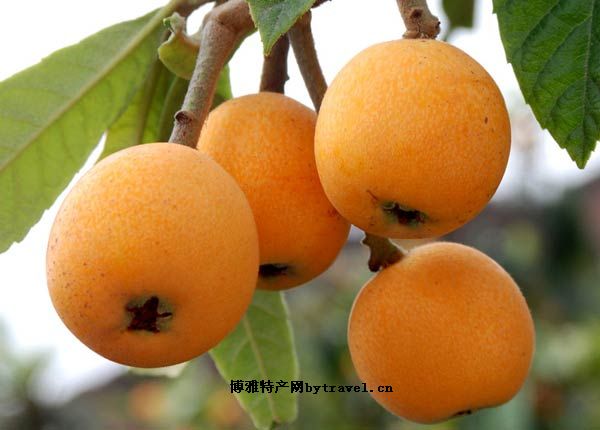
Loquat has a delicious flavor and contains various nutrients such as fructose, glucose, iron, calcium, and vitamins A, B, and C. Traditional Chinese medicine holds that loquat fruit has the effects of moistening the lungs, relieving cough, and quenching thirst, and it can be eaten by most people. When eating loquat, it must be peeled. Besides being eaten fresh, loquat flesh can also be made into canned fruit in syrup or brewed into wine. The "Compendium of Materia Medica" records that "loquat can moisten the five organs and nourish the heart and lungs." Every part of the loquat is valuable; besides the fruit, loquat flowers, loquat seeds, and other parts each have their own benefits.
Loquat is a subtropical evergreen fruit tree, more cold-tolerant than citrus. It can be planted in areas where the annual average temperature is above 12°C-15°C, winter temperatures do not drop below -6°C, and annual rainfall exceeds 1000 mm.
The following introduces loquat planting and management techniques.
I. Orchard Establishment: (1) Selection of orchard site: First, a site with convenient transportation should be chosen for orchard establishment. Loquat has strong adaptability to soil, but deep, fertile, slightly acidic soil with a pH of about 6-6.5 is best.
(2) Soil improvement in the orchard: Since loquat has a shallow root distribution, weak spreading ability, and poor wind resistance, we must carry out deep plowing to improve the soil, or use trench green manuring or large-hole green manuring, planting seedlings on the trenches or large holes (if the soil layer is less than 50 cm, blasting should be used for soil improvement). Thereafter, each year expand the holes outward, deep plow, and press in green manure to improve soil aeration and fertility, guide roots deeper into the soil, enhance root growth, expand the root distribution, make plants grow robustly, and increase wind resistance. For flat land or clay soil, drainage trenches 40 cm wide and 50-60 cm deep should be opened every 2-4 rows.
(3) Seedling planting: 1. Planting time. In areas where winters are relatively cold, loquat should be planted in spring to avoid frost damage. In most areas of the south where winters are warm, planting can be done from September to March of the following year, but October-November is best.
2. Seedling treatment. Before planting, seedlings must be soaked in a fungicide such as carbendazim for 15-30 minutes, soaking the seedlings up to more than 10 cm above the graft union. This is one of the key measures for improving the survival rate. Dip in mud slurry before planting. Since loquat has large leaves and high transpiration, all leaves should be cut back by 1/2-2/3 at planting, and all tender shoots should be cut off. Spray water on the leaves 3-4 times a day.
3. Planting density. For dwarf, dense, early-bearing orchards, planting can be done at spacings of 1×3 m or 1.5×2 m (222 plants planted) and 2×3 m (111 plants per mu).
4. Planting method. When planting, the root system should be distributed evenly, and soil should be pressed in layer by layer, just covering the root crown, with the root crown 10-20 cm higher than the surrounding ground. Then build a soil ridge around the plant, and within the ridge pour root-setting water, 20-25 kg per plant. It must be watered sufficiently and thoroughly; this is the key to improving seedling survival rate. After the water has penetrated into the soil, cover with a layer of fine soil, and finally cover the 1 sq m area of the tree disk with plastic film to maintain soil moisture and raise ground temperature. If there is prolonged drought after planting, continue watering.
II. Fertilization: Loquat is an evergreen fruit tree with luxuriant leaves and abundant flowers, and requires more fertilizer than deciduous fruit trees. Nitrogen, phosphorus, and potassium should be used in combination. Young trees mainly need nitrogen and phosphorus fertilizers, while mature trees should also be given potassium fertilizer. Fertilization timing must be determined in conjunction with shoot and root growth. Loquat shoots have 4 growth peaks in a year, mainly: spring shoots (February-April), summer shoots (May-June), autumn shoots (August-September), and winter shoots (November-December), with spring, summer, and autumn shoots being the main ones. The root activity of loquat and the growth of aboveground shoots show an obvious alternating phenomenon. Generally, roots grow about 2 weeks earlier than shoots, with 3-4 growth peaks per year, namely from late January to early March for the first, which has the largest growth amount, mid-May to mid-June for the second, mid-August to September for the third, and October to late November for the fourth. Combining the growth characteristics of roots and shoots, mature orchards generally need fertilization only three times per year.
The first fertilization is spring shoot fertilizer, applied in early to mid-February, when the root system is at its first growth peak, making nutrient absorption easier. Its main function is to promote spring shoots and enlarge fruit. Since spring shoots can become fruiting shoots of the year and basal branches of summer and autumn shoots, this fertilization is relatively important, accounting for about 30% of the annual total, mainly quick-acting fertilizers, with potassium fertilizer also applied at this time to promote young fruit expansion. Per mu, 30 kg urea, 15 kg superphosphate (phosphorus fertilizer), 30 kg potassium sulfate (potassium fertilizer), and about 1000 kg human and livestock manure water can be applied.
The second fertilization is summer shoot fertilizer, applied after fruit harvest from mid-May to early June (for late-maturing varieties, applied before harvest). This coincides with the second root growth peak, mainly to promote summer shoots and promote flower bud differentiation in July-August. Since summer shoots emerge abundantly and uniformly, and most can form fruiting mother branches in the same year, promoting summer shoots is the main measure to ensure high yields year after year. Therefore, this fertilization amount is very large, accounting for about 50% of the annual total, applying quick-acting chemical fertilizers combined with organic fertilizers, with all phosphorus fertilizer applied (to favor flower bud differentiation). Generally, per mu, 100 kg urea, 30 kg phosphorus fertilizer (superphosphate), and 2000 kg-3000 kg organic fertilizer are applied.
The third fertilization is autumn fertilizer or pre-flowering fertilizer, applied from September to early October, after heading and before flowering, accounting for about 20% of the annual total. Its main purpose is to promote good flowering, improve fruit set, and increase cold resistance for overwintering, mainly with slow-acting fertilizers. Per mu, 10 kg urea and 1000-1500 kg organic fertilizer are applied.
For young trees, fertilization follows the principle of light but frequent applications. The first fertilization is applied from planting survival to bud break, mainly with quick-acting nitrogen fertilizer plus quick-acting phosphorus fertilizer and clear manure water. Thereafter, fertilize once every month until October. For the first time, apply 2.5 kg urea, 5 kg superphosphate, and 250 kg clear manure water per mu, increasing month by month thereafter. In the second year, fertilize once each in February, April, June, August, and October. After the seedlings survive planting and sprout in spring, from April to May, about every 10 days, spray once with potassium dihydrogen phosphate plus Yunda 120 or brassinolide, plus fungicides and insecticides for disease and pest control, spraying continuously 4-5 times. Adopting this technical measure is extremely critical for improving seedling survival rate.
III. Orchard intercropping, deep plowing, drainage, and irrigation: In young loquat orchards, legume crops, vegetables, strawberries, etc. can be intercropped between rows. However, planting green manure is best, cutting it down from April to August and covering it in the tree disk. In mature orchards, from April to September, weeds or crop straw can be used to cover the tree disk, and during autumn fertilization or hole expansion and soil improvement, these can be pressed into the orchard together, which not only enriches the soil but also keeps the soil moist in summer, lowers ground temperature, and benefits plant growth. Winter covering of the tree disk helps loquat overwinter. In winter, carry out one full-orchard tillage, with a depth of 10-20 cm as appropriate.
Deep plowing. For orchards improved by trenching and planted in large holes, in autumn the holes should be expanded, deep plowed, and pressed with weeds, straw, phosphate fertilizer, etc. The whole orchard should be turned within 3-5 years. This helps guide roots to grow downward and increases fertilizer absorption capacity.
Drainage and irrigation. If there is excessive rainfall during fruit ripening, loquat fruit is prone to poor coloring and fruit cracking, so in rainy areas attention should be paid to drainage. The spring drought period coincides with young fruit development (March-April), so appropriate irrigation should be given. Summer drought has a serious impact on flower bud differentiation and the growth and development of flower spikes, especially in August-September; if the weather is dry, irrigation should be given to combat drought.
IV. Training and pruning: Training and pruning is the key to the success or failure of a dense loquat orchard and is the most important technical link. (1) Training: Loquat branching has obvious regularity. The terminal bud has strong growth vigor, while axillary buds are small and inconspicuous with weak growth vigor. At bud break, the terminal bud and several nearby axillary buds produce shoots, while the lower axillary buds all become latent buds. The terminal bud is the central branch extending upward, and axillary buds are side branches expanding outward. Therefore, the central leader of loquat is very obvious, and the tree shows clear layering. To adapt to this characteristic, dense orchards often adopt the small-crown trunk layered form (3×2 m) or fan form (2×1.5 m). The training methods are as follows:
1. Small-crown trunk layered form: evolved from the trunk layered form. This tree shape has high yield and large load capacity, suitable for dense loquat orchards with a spacing of 3×2 m (111 plants per mu). The trunk height is 30-40 cm. The first layer has 4 main branches forming a 60-70 degree angle with the central leader, the second layer has 3 main branches forming a 45 degree angle with the central leader, and the third layer has 2 main branches forming a 30 degree angle with the central leader. Training is completed in 3-4 years, and after formation the tree height is about 2.5 m. Later, as the tree age increases, the head should be lowered and the center opened to reduce the number of main branch layers. The training method is: select 30-40 cm seedlings for planting, do not prune at all after planting, wait for the terminal bud and side buds (axillary buds) to emerge, let the terminal bud grow naturally upward, select and retain 4 axillary bud branches as the first layer of main branches extending in 4 directions, making a 70 degree angle with the central leader (can be fixed with bamboo poles), and twist, girdle, and flatten the remaining shoots in early to mid-July when shoot growth stops to promote flower formation. For side branches sprouting the second time from the central leader, if they are less than 40 cm from the first layer, twist at 30 cm; if the branch is more than 40 cm from the first layer, select it as a second-layer main branch, forming a 50-60 degree angle with the central leader. Select and retain the third and fourth layers of main branches in the same way (forming a 30-45 degree angle with the center). After the fourth layer of main branches is retained, cut off the central leader. For the remaining branches, except that the terminal buds of main branches grow as they are, all other side branches and water sprouts should be twisted and girdled in mid-July to promote flowering.
2. Fan form. The fan form has good ventilation and light penetration, high early yield, good productivity, excellent quality, and quick results. It is suitable for dense orchards. Suitable row spacing is 2 m and plant spacing is 1.5 m, with 222 plants per mu. The main training method steps are: in the first year when planting, plant in north-south rows, with the first layer of branches slanting toward the row direction in southeast and northwest directions, forming a 45 degree angle with the row, and all branches extending toward the plant spacing are pruned off. The second layer of branches is 50-60 cm from the first layer, in the same direction as the first layer, and tree height is controlled at about 2 m.
(2) Pruning: For young trees (1-3 years old, during the training period), generally do not prune, allowing them to produce more shoots. Except for letting the main branches maintain growth at the predetermined angle, all other shoots should be twisted and girdled in July when new shoot growth stops. Pull flat the non-main branches growing from the central leader to promote early flower formation. For excessively dense branches, appropriately thin them in the second and third years.
Mature trees are mainly pruned twice, in spring and summer. Spring pruning is carried out in February-March together with fruit thinning, mainly removing weak branches, densely growing branches, and water sprouts, increasing the amount of spring shoot growth, and reducing alternate bearing. Summer pruning is carried out after fruit harvest, mainly removing dense branches, weak branches, and diseased and pest-damaged branches to improve light, retracting the central leader of overly tall plants, and lowering the head to open the center. Also retract some outward-shifted branches so that rows maintain a distance of 0.8-1 m, plants do not cross too much, and remove fruit stubs or the fruit axes of fruiting branches to promote summer shoots and achieve high yields year after year.
V. Regulation of fruit set and fruit management: (1) Regulation of fruit set: The regulation of fruit set mainly adopts measures such as fruit thinning or flower and fruit preservation to bring the orchard to a reasonable yield, produce high-quality commercial fruit, and achieve high yields year after year.
1. Flower and fruit thinning: Loquat spring and summer shoots both easily form flowers. Each flower spike generally has 60-100 flowers, but only 5% of flowers form yield, so excessive flowers must be thinned. Especially for Dawuxing loquat, in order to produce high-quality commercial fruit, a considerable portion of flowers and young fruit must be thinned. Flower thinning is carried out from late October to November. For trees with too many flower spikes, some flower spikes should be removed from the base; for medium trees, some flower spikes can be thinned by 1/2. In short, the amount of flower thinning is determined according to flower quantity. After appropriate flower thinning, flower spikes can obtain sufficient nutrients, increase resistance to adverse environments, and improve fruit set rate. Fruit thinning is best done after the weather warms in February-March. Remove some small fruit and diseased fruit, leaving about 1-3 fruit per spike according to the situation.
2. Flower and fruit preservation: For some varieties with low fruit set rates and plants with few flowers, as well as areas with winter frost damage, flower and fruit preservation should be carried out, and excess fruit should be thinned after mid-March to ensure high yield. The main methods of flower and fruit preservation are: ① Spray once each in early November of the previous year (before flowering), late December (after flowering), and mid-January of the following year with 0.8% loquat large-fruit agent (use according to instructions). ② Spray 10 mg/L (10 PPM) gibberellin on leaves during the flower-fading period, which can increase fruit set rate by 38.5%; ③ When 2/3 of flowers have opened, spray leaves with 0.25% potassium dihydrogen phosphate (KH2PO4) plus 0.2% urea and 0.1% borax, which can increase fruit set rate by 34%.
3. Flower promotion measures: In dense loquat orchards, after summer shoot growth stops in the current year, for trees with relatively strong vigor, especially plants that have produced both spring and summer shoots, measures should be taken in July-August to promote flower bud differentiation so that they bloom and bear fruit in autumn and winter. The main methods are: ① Spray once each in early July and early August with 500 PPM 15% paclobutrazol or 350 times PB. ② In early July, when summer shoot growth stops, pull branches flat, twist shoots, girdle (cut 3 rings, each 1 cm apart), and ring-bark with bark inversion. ③ From July to September, pay attention to drainage and maintain appropriate drought.
(2) Fruit management: 1. Measures to enlarge fruit: ① Spray young fruit with 30 PPM forchlorfenuron (CPPU) + 500 PPM gibberellin (GA) at the end of February, the end of March, and mid-April to enlarge fruit. ② At the end of March and early April, soak fruit twice with 100-fold loquat large-fruit agent solution (once every 10 days). ③ Spray once each at the late flowering stage (5 days after flowering) and young fruit stage (within 10-15 days after flowering) with Guoduoduo (each small packet added to 50 kg water). This can increase fruit set rate and enlarge fruit. ④ In mid-March, thin excess young fruit and small fruit.
2. Fruit bagging: Fruit bagging can prevent purple spot disease, fruit-sucking noctuid moths, and bird damage, and reduce fruit cracking caused by sun exposure after rain. At the same time, it can avoid pesticide liquid being sprayed on the fruit surface, and can also give the fruit good coloring, a beautiful appearance, and improve fruit quality and commercial value. The best bagging time is after the last fruit thinning, generally from late March to early April. Before bagging, a mixed solution of broad-spectrum insecticide and fungicide must be sprayed once. The bagging paper can be old newspaper or special fruit bags. Large fruit can be one fruit per bag, while small fruit can be one spike per bag. Start bagging from the top of the tree, then downward and outward. Tie the bag opening tightly with string, or staple it closed.
3. Fruit harvesting: Loquat fruit is best harvested in batches when the peel is fully colored and ripe, harvesting earlier those that color first; if for long-distance transport, harvest appropriately early. Because loquat peel is thin, the flesh is tender and juicy, and there is a layer of fuzz on the peel, special care is needed when picking. It is best to hold the fruit cluster or fruit stalk with the hand and cut it off carefully, without rubbing off the fuzz on the fruit surface or bruising the fruit. After harvesting, gently place it in a fruit basket lined with palm fiber or straw. Harvesting time is best in the morning, afternoon, or on cloudy days. Never harvest during heavy rain or under high temperature and strong sunlight.
VI. Disease and pest control: (1) Disease control: 1. Cancer disease, also known as bud blight: occurs in March-April. Black ulcers appear on new shoots and buds, showing bud blight symptoms, often causing side buds to cluster, and leaf lesions are black with a distinct yellow halo. On affected fruit, the fruit surface is rough and ulcerated, and the fruit stalk surface splits longitudinally. On affected branches and trunks, initially yellow-brown irregular spots appear with a rough surface, then ring-shaped raised cracks form, exposing dark brown xylem, showing cancer-like symptoms and causing branches and trunks to die. It is a bacterial disease, and the pathogen overwinters in diseased parts of the trunk.
Control: ① Strengthen orchard management, pay attention to drainage, enhance tree disease resistance, promptly prune diseased branches, and promptly collect diseased leaves and fruit and burn them to eliminate the source of infection. ② In the early stage of disease (early March), spray 8000-fold Daconil M-45 or 1200-1500-fold Duomeiqing 1-2 times.
2. Other diseases: Leaf spot disease: damages leaves. Lesions are polygonal, reddish-brown, with a yellow halo outside, and later grow black mold in dots. It overwinters as mycelial masses and conidia. In warm areas, it occurs year-round.
Gray spot disease: damages leaves. Lesions are round or irregular after coalescing, reddish-brown, with the enlarged center grayish-yellow and the outer edge grayish-brown. Later, small black dots appear on the lesions, sometimes arranged in concentric rings. It overwinters as pycnidia and mycelium on diseased leaves.
Sooty leaf disease: occurs more often on the underside of leaves. Initially dirty brown round or irregular spots, later growing sooty mold that can cover the entire leaf. It overwinters as conidia and mycelium on diseased leaves.
Red rust disease: damages leaves, producing orange-yellow to yellow-brown rust spots, granular, with an outer membrane, not scattering. Clearing fallen leaves and spraying protective chemicals is effective against it.
Purple spot disease: occurs only on fruit as purplish-red rust spots. It only affects appearance and hardly affects flesh quality. Symptoms suddenly appear in the late stage of loquat fruit ripening and are related to sunlight exposure. The most effective control measure is fruit bagging.
Control of the above diseases: ① Emphasize clearing fallen leaves, combine with pruning to remove diseased branches and leaves, do drainage work well during the rainy season, strengthen management, and enhance tree vigor. ② After new leaves emerge, spray 1:1:160 Bordeaux mixture, or in the early stage of disease spray 1200-1500-fold Duomeiqing, etc.
(2) Pest control: 1. Yellow hairy caterpillar: The larvae gnaw on loquat tender buds and tender leaves. When they occur in large numbers, the leaves are almost completely eaten. Young trees suffer more serious losses when damaged. It overwinters as pupae in cocoons attached to bark cracks and depressions or on the backs of old leaves. Adults appear in May and lay eggs on the backs of leaves. The first generation damages leaves in June-July, the second generation occurs from July to mid-August, and the third generation occurs from mid-August to mid-September, coinciding with the period when loquat tender leaves emerge. The 1st and 2nd instar larvae gather on new tender shoots to cause damage. The larvae are yellow, later becoming orange-yellow, and mature larvae are about 20 cm long.
Control measures: The key is at the larval stage. Use 20% fenvalerate 4000-5000-fold solution or 2.5% deltamethrin 3000-fold solution, or 2.5% diflubenzuron No. 3 suspension concentrate 1500-2000-fold. During winter orchard cleaning, remove overwintering cocoons and combine with manual killing of 1st-2nd instar larvae.
2. Cnethocampa moth: also known as boat-shaped caterpillar, it is a major pest damaging loquat leaves, feeding specifically on mature leaves. It first gnaws the leaf flesh, leaving only the epidermis and the main veins. It has 1 generation per year and overwinters as pupae in the soil near the trunk. It emerges in July and is active in the evening. Eggs are laid on the backs of leaves, 10 eggs in a row as one mass, hatching in late August. The 1st-2nd instar larvae gather to cause damage, with heads outward and neatly arranged on one or several leaf backs. Damaged leaves become net-like. The number of insects on a single tree can be extremely high. They feed in the morning and evening and quickly eat all the leaves of the entire tree. When disturbed, the larvae have the phenomenon of spinning silk and dropping down, and feigning death. From September to October, mature larvae enter the soil to overwinter. The larvae are initially yellow-brown, later purplish-brown.
Control measures: In winter, carry out tillage and dig out pupal cocoons in the soil around the trunk. In late August, concentrate on killing clustered young larvae. If the larvae have already dispersed to feed, choose 20% fenvalerate 5000-fold solution or Meishalili 3000-fold solution.
3. Mulberry longhorn beetle: mainly damages loquat branches. The larvae first gnaw along the bark, then enter the xylem to cause damage, causing branches to die. Use 40% dichlorvos and other 50-fold solution soaked into cotton, then insert it into the burrow, and seal the opening with yellow mud.
4. Slug moths: commonly known as huolazi and bajiaoding. There are many species; the main ones damaging loquat include the flat slug moth and the yellow slug moth. There are 1-2 generations per year. The first generation is from mid-July to mid-August, and the second generation is from early September to late October. Use 20% fenvalerate 5000-fold solution to control them together when controlling other pests. Other pests such as fruit borers, aphids, spider mites, and bagworms can be controlled at the same time when controlling major pests. Chemicals such as Meishalili, Manke, and Kelmante can be selected for control.
Planting Techniquesand Management" />
Loquat Planting Techniques
Zhang Sheng, a large-scale loquat grower in Ganlu Town, Zizhong County, has contracted more than 100 mu of mountainous land to grow loquat. He has rich planting experience. In response to planting and management questions consulted by loquat growers, he introduced specific planting techniques:
I. Orchard establishment and planting
Choose fertile, well-drained sandy loam soil to establish the orchard. Select strong seedlings with good roots, thick stems, and a height of about 30-40 cm for planting.
II. Soil and fertilizer management
Nitrogen, phosphorus, potassium, and other organic and inorganic fertilizers should be reasonably combined. The suitable ratio of nitrogen, phosphorus, and potassium is 4:2.5:3, and organic fertilizer should account for more than 60% of the total fertilizer application.
Young orchards should be fertilized lightly and frequently, 4-5 times per year, mainly with nitrogen and phosphorus. Mature trees need fertilization only 3 times per year. The first time is mainly quick-acting fertilizer, the second time is quick-acting nitrogen fertilizer combined with organic fertilizer and phosphate fertilizer, and the third time is mainly slow-acting fertilizer.
III. Training and pruning
Training method: After planting, among the first whorl of side branches (30-60 cm above ground), select 3 evenly distributed branches as the first layer of main branches to train, and select another 2 branches as auxiliary branches.
Pruning method: Thin out densely growing branches, prune diseased and pest-damaged branches, crossing branches, and overlapping branches, shorten leafless branches, and retract drooping branches and weak branches.
IV. Flower and fruit management
Flower promotion measures: Strengthen fertilizer and water management during the young stage, and adopt reasonable flower promotion measures during the second year's growth period.
Flower and fruit thinning: Thin less on strong trees and more on weak trees; thin weak ones and keep strong ones; thin late ones and keep early ones; remove upper ones and keep lower ones; remove outer ones and keep inner ones.
Fruit bagging: Within 1 month after flowering, bag 2-3 leaves into the paper bag. Before that, spray once comprehensively with thiophanate-methyl and pyrethroid pesticides. Bagging order: top first, then bottom; inside first, then outside.
Fruit harvesting: Hold the fruit stalk with the hand and cut it off carefully. Do not rub off the fuzz on the fruit surface or bruise the fruit. After harvesting, place it in a fruit basket with soft padding and pack each fruit individually.
Disease and pest control: During winter orchard management, prune diseased and pest-damaged branches and burn them centrally; scrape off diseased spots and cracks on branches and trunks, and paint the trunk with limewater to reduce overwintering disease and pest sources; strengthen management to improve resistance to diseases and pests.