Sharing pig-farming experience in early spring: teaching you how to raise pigs well
In the past two years, epidemics have occurred in many regions across the country. Although the incidence rate is high, the direct losses are very small, because the direct deaths caused by the epidemics are not very great. However, the reproductive performance of sows has already shown some signs of decline at present, such as increased returns to estrus, more stillbirths, fewer piglets born, slow growth of suckling piglets in the farrowing house, and more disease cases. In particular, piglets in nursery houses in many regions show symptoms such as persistent high fever that does not subside, progressive emaciation, and low survival rates, seriously affecting the economic benefits of pig-farming friends.
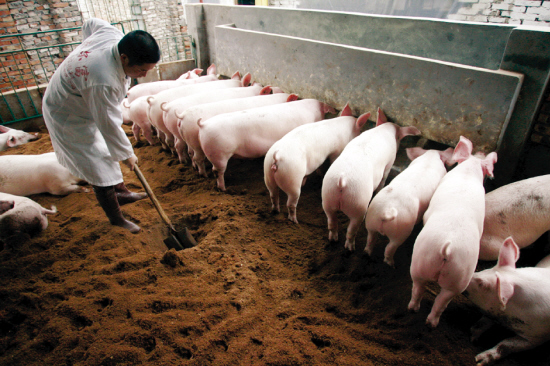 Pig farmingExperience sharing: how to raise pigs in early spring" />
Are pig diseases really unavoidable? For this reason, specialized personnel communicated about technical issues at some small-scale pig farms and found some common characteristics of these farms, which are shared here with pig-farming friends:
1. A strong preference for biotechnology products
Toward many new products and new technologies that many pig-farming friends still view with skepticism, they dare to try them. For example, some new products currently on the market: Shanghai Bangcheng's Taijianbao, Hangzhou Jiaxu Biology's Zengmiansu, Shandong Baolailai's Taijunsu, Nanjing Nansen's Yibaite, Shanghai Institute of Animal Husbandry's Yishengyuan, Dalian Sanyi's transfer factor, interferon and interleukin, lysozyme, acidifiers, enzyme preparations, oligosaccharide preparations, etc. For some controversial products, they are especially partial to them, such as probiotics, prebiotics, and similar products, which they still insist on using and using long term. Even under such depressed pig prices, they have never given them up because of cost pressure.
2. Attaching great importance to building the feeding technology team
At these pig farms, which are healthy, have few disease cases, and have high production levels, the feeding technicians have all worked at the farm for more than 3 years, and at some farms the average length of service of the feeders has reached more than 5 years. Many bosses say proudly that many feeders and technicians have worked with them from the time the farm was being prepared until now. Not only have they been together for a long time, but their relationships are especially harmonious. The shortage and frequent turnover of feeding technicians may be the fatal weakness of many pig farms today.
3. Attaching great importance to the harm of feed toxins
We must understand one principle: detoxifying agents + corn ≠ good corn. First, detoxifying agents cannot completely remove the toxins in feed; second, many manufacturers only promote the advantages of detoxifying agents but do not tell us pig-farming friends about their negative effects, which involves suspicion of commercial hype and a certain degree of misleading. When these healthy pig farms cannot purchase good raw materials such as good corn, they choose some substitute raw materials such as wheat, barley, paddy rice, sorghum, etc. to replace corn, ensuring that the harm of feed toxins to sows is reduced to a minimum. Zhuduoduo Forum is an interactive platform for pig farmers to communicate and learn. Detoxifying agents are a remedial measure after purchasing raw materials with mold problems, a last resort. Their feeling is that such measures have solved many problems, such as stillbirths, splayed legs, abnormal estrus, weak piglets, abnormal inguinal lymph nodes in suckling piglets, etc.
4. Scientific use of antibiotics
These pig farms all share a common understanding, which is that they place special emphasis on the scientific use of antibiotics. The use of antibiotics in animal husbandry actually has only three meanings: first, treating diseases; second, treating predictable diseases or what is called purification of known pathogenic factors in a herd; third, promoting growth. However, in our industry today, treating antibiotics as one of the effective means of disease prevention is everywhere. Random compatibility, random administration, abuse of drugs, and low-concentration dosing are serious phenomena, leading to increased drug resistance among some pathogenic bacteria in our pig farms.
5. Having their own views on disinfection
These pig-farming enterprises or pig farms all have their own very distinctive understanding of disinfection. First, absolutely no excessive disinfection. They believe that excessive disinfection is also a kind of harm to the environment and to pigs, especially damage to the upper respiratory tract mucosa and digestive tract mucosa of pigs, which instead creates opportunities for harmful pathogenic bacteria to invade. This article is original content of Zhuduoduo Forum. They generally adopt an organic combination of local disinfection and whole-farm large-scale disinfection, ensuring a thorough whole-farm large-scale disinfection once a week. Second, focus on doing a good job in environmental sanitation construction and the timely transfer or treatment of manure and urine. The importance of timely transfer or treatment of pollutants such as manure and urine every day is much greater than that of environmental disinfection or disinfection with pigs present. Third, adhere to the proceduralization of disinfection, which is one clean, two washes, three disinfect, consistent with the "eight-step disinfection method" that I have always emphasized, namely one clean, two washes, three soak, four remove residue, five mist, six whitewash, seven fumigate, eight empty the shed, which is to say that disinfection in the true sense begins from the third step.
6. Epidemic prevention and health care require both addition and, even more, subtraction
These healthy pig farms have not continuously increased their pigs' epidemic prevention and health care items as the breeding time has extended; on the contrary, they have reduced many compared with the past. At present, in many pig-farming enterprises, whether for breeding pigs or fattening pigs, the epidemic prevention and health care items are scheduled to the maximum, and some technical teachers at pig-farming enterprises even say there is really no way to arrange any more, with no time or space left. The reason is that they only know how to add and do not know how to subtract. It is suggested that we pig-farming friends take a look back at your epidemic prevention and health care plans. Can those that may or may not be done be omitted? Can those whose effect is uncertain even after being done be stopped? Never let added technical measures become impossible to remove.
7. Good at learning, daring to try
Whenever there is an opportunity, the bosses or technical personnel of these pig farms attend training. To be honest, because many feed, drug, and additive companies regularly conduct technical promotion, we pig-farming friends do not lack opportunities to learn. But merely attending training is still not enough. The key is how much you have digested and applied in your pig production. Following trends and echoing what others say is even less advisable.
As for other issues such as compensation, breeds, management, and so on, they all have their own set of successful experience, which will be shared with everyone in the future when there is an opportunity.