How is ganoderma cultivation? The economic benefits are quite considerable
As people's health awareness continues to strengthen, the demand for health foods is also gradually rising. Ganoderma has high nutritional value, and it can not only fight cancer but also boost immunity. Therefore, cultivating ganoderma has very good market prospects. Analysts say that the successful domestication of wild ganoderma has not only increased the yield of wild ganoderma, but natural resources have also been protected.
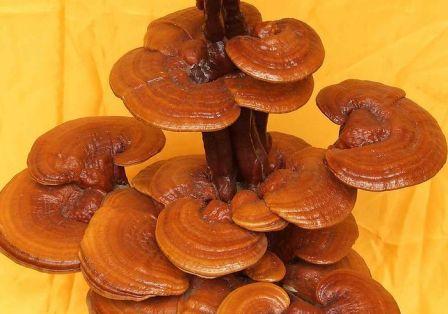
As a new project in the planting industry, artificially domesticated wild ganoderma not only meets market demand, but will also bring substantial profits to growers.
According to rough calculations, about 7,000 bags of ganoderma can be cultivated per mu of land, yielding 2,800 jin of fresh ganoderma, while the yield of dried ganoderma is about 560 jin. Each jin sells for at least 300 yuan to 500 yuan. After deducting the cost of 10 yuan per bag and 2 yuan in labor management fees, the net profit per mu from cultivating ganoderma can reach about 140,000 yuan. Compared with growing greenhouse vegetables, the income is nearly 10 times higher.
Everyone says ganoderma is not easy to grow, yet Guan Shijie and Bai Qiuju, a couple from Guan Gou Village, Tong Gou Township, Sujiatun District, began purchasing ganoderma seed stock in April this year and planted it on a large scale. This year, their one mu of ganoderma spore powder will bring in 100,000 yuan without any problem.
Growing ganoderma: “first complex, then simple”
Guan Shijie told reporters that cultivating ganoderma is indeed much more complicated than growing corn. Not only do you have to buy seed stock, you also have to buy oak wood segments; generally, one portion of seed stock requires 6—10 oak wood segments. Moreover, the oak wood segments need to be sterilized at high temperature, then bundled together with the propagated ganoderma seed stock and buried in the soil of the greenhouse around May. According to Guan Shijie, in order to ensure the medicinal properties of the ganoderma, he does not apply fertilizer or spray pesticides; usually, just watering it a little is enough. About a month after planting, the ganoderma has basically taken shape, and at this point it begins to release spore powder; after about another month, the powder release ends. The entire process from planting to maturity takes only a little more than 3 months.
The economic benefits are quite considerable
Speaking of the economic benefits of ganoderma, Guan Shijie said that ganoderma has high medicinal value, and ganoderma spore powder can be sold, as can dried ganoderma. At present, his family has a one-mu greenhouse with a total of 13,000 ganoderma plants. Powder release is about to end, and it is estimated that about 150 kg of spore powder will be collected in total. This ganoderma spore powder is very valuable. If sold “retail,” the current purchase price is at least 150 yuan per 50 grams. If priced according to different purity levels, the wholesale purchase price per kg is between 800—1,200 yuan. If all of his family's powder can be sold, the income will be at least more than 100,000 yuan. In addition, selling dried ganoderma can also bring a small income; generally, 10—12 dried ganoderma make 1 kg, with a selling price of 60—80 yuan.
Although ganoderma makes money, the survival rate after planting in the soil is not high, yet the survival rate of the ganoderma grown by the Guan family is 100%. The Guan couple told reporters that growing ganoderma mainly requires attention to three aspects. First, ganoderma is a plant that likes shade and fears light. When planting in a greenhouse, use straw curtains to cover the greenhouse for shading; it is best to have eight parts shade and two parts light. Second, the high-temperature sterilization process for the oak wood segments used to cultivate ganoderma is the most critical. If sterilization is not done well, the ganoderma will not easily emerge. Steam must be used for continuous sterilization for more than ten hours to kill all kinds of pathogens in the wood segments, so as to ensure the survival of the ganoderma. Third, when selecting seed stock, you must not be tempted by cheap prices; choose reasonably priced pure ganoderma seed stock.