How to Raise Free-Range Chickens? Detailed Guide to Farming Techniques and Practical Tips
Free-range chicken farming is currently a relatively popular method of raising chickens. Its advantages are low farming costs and high returns on investment, plus chickens have strong disease resistance and are more favored by ordinary people as food. This kind of chicken, raised completely free-range without ever eating feed, tastes more delicious than chickens fattened on feed, has higher nutritional value, and naturally commands a higher market price, so many investors have set their sights on free-range chickens.
However, truly achieving free-range chicken farming is rare, because most people do not understand free-range chicken techniques. In the absence of free-range chicken techniques, both the egg-laying rate and the growth speed are affected. Below we mainly discuss free-range chicken techniques and farming tips.
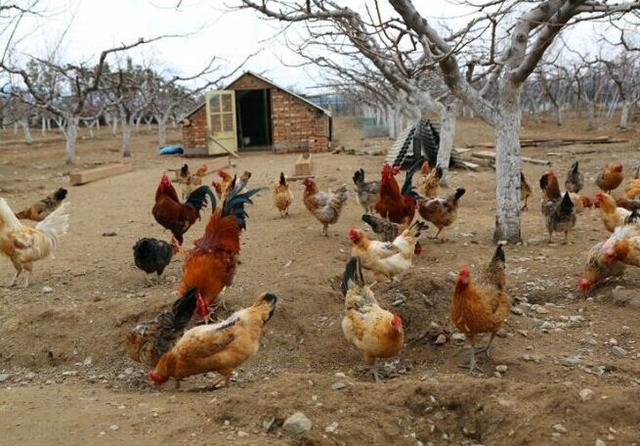
Site selection: Site selection for free-range chickens is crucial. You can choose a place with an orchard, so it can be fully utilized. The manure produced by the chickens can be absorbed by the fruit trees, the insects falling from the fruit trees can be eaten by the chickens, and the chickens can also eat the insects and green grass on the ground. In this way, a very good ecological chain is formed and fully utilized. Another advantage is that the chickens can cool off under the trees, and the tree trunks can serve as tools for activity, which is very good and can enhance the chickens' disease resistance. Generally, farmhouse free-range chickens have a characteristic: they like to dart into the woods, going inside to look for insects to eat, which is very good.
Increasing the egg-laying rate: I believe all farmers hope to increase the egg-laying rate. Many farmers complain that their chickens do not lay many eggs, or that the eggshells are relatively thin. In fact, a major reason for this is insufficient nutrition. So what should be done? In the afternoon, we can give the chickens some foods high in protein, such as wheat, soybean cake, corn, etc., and they can also eat some feed that increases the egg-laying rate; all of these are fine. Another point is to supplement calcium. The big reason the eggshells are very thin is calcium deficiency. Talcum powder can be added to the food; the main component of talcum powder is calcium carbonate, which can supplement calcium very well.
Increasing the chickens' growth speed: The faster the chickens grow, the better for farmers. So how do we increase their growth speed? Free-range chickens relatively grow slower, mainly because of the influence of food. We can raise some earthworms and frogs, or even catch some insects for the chickens to eat, and this can increase the chickens' growth speed. Of course, chicken feed can also be fed, and all of this can promote the chickens' growth.
The food for free-range chickens can also be millet, corn, vegetable leaves, sweet potatoes, etc. These are all things chickens like to eat. We cannot completely free-range them without feeding them food; that is a mistaken understanding. We still need to feed some other food so as to meet the chickens' growth needs.
Disease prevention: Free-range chickens are relatively less likely to get sick, but prevention must still be done well. During flu season, pay attention to avian influenza and also prevent fowl pox. Normally, the chicken coop should be cleaned and disinfected regularly. Generally, manure should be cleaned out once a week, and then limewater or disinfectant should be used for disinfection.
Management must be done well during the raising process. If sick chickens are found, they must be isolated and raised separately, and only after they recover can they be put back together. Only in this way can diseases be prevented. Another thing to note is that young chickens and adult chickens should not be raised together, to avoid them being pecked and injured. In fact, when free-range chickens are raised well, they are very profitable, with simple management and low costs, which is what most investors are optimistic about.