Management Tips for Southern Improved Walnut Varieties from May to July
1. In the first half of this year, the South has had particularly abundant rain, and from June onward the southern rainy season begins. The rainy season is the key season that tests walnut varieties! During the rainy season, a walnut variety that does not rot, does not get black spot disease or anthracnose is truly a good variety suited to the climate! If walnuts mostly rot during the rainy season and get black spot disease, then no matter how many fruits set, it is meaningless.
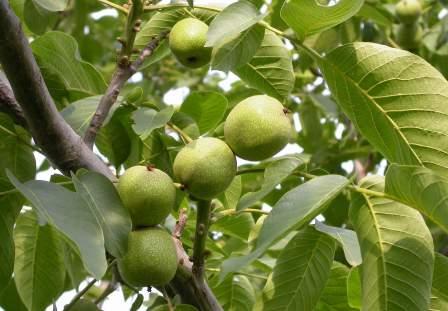
Once again, it must be emphasized that in the South (Sichuan, Chongqing, Hunan, Hubei and other regions), rainfall is several times or even ten times that of the North. When the climate is humid, fungal infections are very likely, causing black spot disease and anthracnose.
2. Longhorn beetles multiply in large numbers and lay eggs, so patrols in the morning and evening must be strengthened, all the way until July. Observe the leaves; the traces of longhorn beetle feeding are very obvious. If there are notches carved into the trunk, looking like stitches in skin after surgery, be sure to strike the carved notches, because the longhorn beetle eggs are laid inside them.
Chemical method: in May, spray the trunk with Green Weilei. Or, when the walnut is flowering, spray DuPont's Kangkuan + Shuofeng. Besides preventing longhorn beetles, it also has a fairly good effect on protecting flowers and fruits and preventing fruit drop.
3. This season is exactly when flower bud differentiation occurs. Apply a low-nitrogen, high-phosphorus, high-potassium compound fertilizer, or pure dipotassium phosphate, and supplement some organic matter. Nitrogen fertilizer must be controlled. If farmyard manure is available, even better. Practice has proven that silkworm excrement has the most ideal effect in supplementing organic matter.
For details, please refer to the manual "Cultivation and Management Techniques for Early-Fruiting Improved Walnut Varieties in the Sichuan Hills." Friends growing walnuts in the South are also welcome to call for consultation. Phone 156.0801.8852, Teacher Li.