Common problems in walnut cultivation and their solutions
As a plant with high economic value, walnut has now become a major planting industry. Especially in recent years, walnut has gradually become an important planting industry that drives the economic development of mountainous areas and raises people's living standards. Along with the expansion of cultivation area, many cultivation and management problems have gradually emerged. This article discusses some problems existing in walnut cultivation and provides some reference opinions for walnut cultivation in our region.
As is well known, the economic value and use value of walnut stand out among many nut types at present. As a food with high nutritional value and high medicinal value, walnut has been favored by a large number of consumers, not only being used directly for food, but also gradually developing many processed foods. As a key point in the construction of the forestry industry, walnut planting is not only an important measure to drive the economic development of poor areas, but also has practical significance for raising people's living standards. However, we must admit that among the many problems in walnut cultivation, due to the particularity of walnut itself, its requirements for the environment are also different, and there are still many problems in the cultivation process. These problems are not only reflected in environmental requirements, but also in cultivation techniques. This article uses a large number of books on walnut cultivation experience for research and puts forward some reasonable suggestions for the walnut cultivation situation in our region.
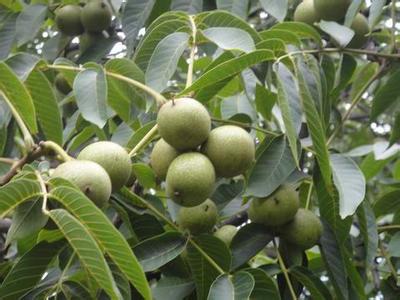
I. Analysis of the main problems existing in the current walnut planting process
In the process of walnut cultivation, due to the influence of cultivation techniques, experience, and some natural factors, many problems still appear in the current walnut cultivation process. These problems are mainly manifested in the following aspects:
1. Excessive proportion of cultivation
Walnut branches contain a relatively large amount of tannins, so during grafting, the cut surface is easily oxidized to form an isolation layer. After branches with an isolation layer are grafted, it is very difficult for them to survive, and this has also become a difficult problem that fruit farmers currently need to solve. Generally, fruit farmers will hire experienced professional grafting technicians at high salaries, or directly purchase expensive excellent grafted seedlings from the market. Therefore, the resulting capital investment is quite large, and some farmers without the conditions cannot accept it, thus causing a reduction in walnut yield. Grafting of improved varieties has never been vigorously promoted on the market, and not a few farmers have therefore lost high-quality and efficient planting.
Second, the cultivation density of fruit trees must be customized according to the variety and growth characteristics of the fruit trees. The cultivation density of walnut fruit trees is not only related to the geological conditions of the cultivation area, but also has a great relationship with the management level and cultivation techniques. If consideration of the factors affecting cultivation density is lacking, it will instead affect the high yield and high efficiency of the fruit trees. Without scientific planning and design, and without sufficient pruning and maintenance measures after cultivation, the yield of walnut cannot be increased.
2. Lack of reasonable management of groundwater, fertilizer, and water
Once the cultivated orchard lacks facilities and measures to maintain water and soil balance, causing serious soil erosion, if the soil is dry and water is not replenished in time, and if fertilizer is lacking and fertilizer is not supplemented in time, the fruit trees will not have enough water and nutrients, which will lead to low yield or even death. On the other hand, if fertilizer is sufficient and the fruit trees grow vigorously, but reasonable pruning and management are not carried out, allowing branches to grow freely, causing a disordered tree structure, severe canopy closure will not only cause the fruiting position to move outward, but may also cause premature aging of the fruit trees.
3. Unreasonable angles of the trunk and main branches, and inadequate management of flowers and fruits
Regarding the later pruning of fruit trees, some fruit farmers manage by setting the trunk low in order to shorten the shaping period. In the end, this may cause the crown to be too close to the ground, which is not conducive to management operations and may also cause the branches to drag on the ground later, affecting the light of the crown, thereby affecting yield. Some crowns are set too high, which will cause a long shaping period and late crown formation, which is not conducive to management operations. In addition, in the management of flowers and fruits of fruit trees, some fruit farmers lack understanding of flower thinning, resulting in a large number of flowers on the tree body and a waste of water and nutrients. Some fruit farmers, because they do not understand the role and meaning of artificial pollination, lack proper pollination operations, resulting in a greatly reduced fruit-setting rate. The current dense planting cultivation method of walnut mostly uses the early-fruiting type, which generally fruits earlier and more abundantly. Many fruit farmers cannot bear to remove dense fruits, which not only affects the growth of other fruits, but may also cause premature aging of the fruit trees due to too many fruits.
4. Lack of timely pest and disease prevention
Pest and disease damage is an unavoidable phenomenon in all planting industries. In the actual cultivation process, if pest and disease prevention work is not handled at the appropriate time, and treatment is carried out only when pests and diseases are encountered later, the cost will be greatly increased and it will be unfavorable for the fruit trees to bear fruit. On the other hand, pest and disease prevention must also adopt scientific and reasonable control measures. In these aspects, many fruit farmers only realize prevention and treatment measures such as pesticides, and do not pay attention to the dosage and side effects of pesticides. Later, this may instead cause the death of trees and fruit drop.
II. Countermeasures for the problems existing in walnut planting
1. Cultivation of improved varieties and maintenance of reasonable dense planting
In order to better use orchard land to cultivate fruit seedlings and effectively increase fruit tree yield, for existing seedling trees, improved-variety cultivation can be achieved through top grafting with excellent varieties. For newly built dense walnut orchards, the method of first raising seedlings and then planting to establish the orchard can be adopted to directly achieve improved-variety cultivation. Excellent seedlings can also be purchased from professional agricultural science research institutes to ensure the purity of the seedlings. Second, when establishing an orchard, the limiting factors affecting cultivation density must be fully considered, and dense planting must be reasonably planned for walnut cultivation.
2. Strengthen fertilizer and water management and carry out scientific pruning
Fertilizer and water management is the focus of attention in mountain walnut cultivation orchards. First, it must be ensured that the orchard has good water and soil conservation. Furthermore, terraces should be repaired well, tree disks should be prepared well, and grass mulching techniques should be used to improve fertility. Fertilization of fruit trees must be carried out after strict on-site investigation. Combined with the growth status of the fruit trees themselves, a reasonable fertilization plan should be designed, and the fertilization amount and types should be confirmed before fertilization operations are carried out. In addition, for the pruning work of fruit trees, attention must be paid to the adjustment of tree structure. It is necessary not only to cultivate main and lateral branches and reasonably use water sprouts, but also to regularly cut off dry branches and pest- and disease-damaged branches, ensure the use of space between fruit trees, and maintain a good tree structure, so as to ensure the good growth of fruit trees.
3. Attach importance to flower and fruit management and prevent and control pests and diseases in time
During the flowering period of fruit trees, scientific and reasonable flower thinning operations should be carried out in time to ensure a small amount of male flowers at the top and outer periphery of the crown. This not only saves water and nutrients, but also improves the fruit-setting rate and achieves the effect of increasing yield. In addition, comprehensive control of fruit trees should be carried out well in combination with pest and disease forecasting. Based on agricultural control, manual control, or physical and biological control, chemical control may also be appropriately adopted, but the amount of pesticide used must be limited to eliminate excessive pesticide use, with the premise of protecting the tree body and increasing fruit tree yield.
III. Conclusion
In summary, regarding the various problems existing in the walnut cultivation process, as long as we can analyze them from multiple aspects, combine them with the actual cultivation situation, attach importance to technical control in each link of the cultivation process, improve fruit farmers' management of fruit trees, and take timely treatment measures when problems occur, we can effectively ensure the quality of walnut cultivation.
Author: Xue Rong