Yam cultivation technique video, teaching you how to grow yams well
Yam, also known as Chinese yam and long yam, belongs to the Dioscoreaceae family, and its thick tuberous roots or cylindrical roots are used for food. The tuberous roots contain 1.5% protein, 14.4% carbohydrates, and also contain various vitamins and choline, etc., with relatively high nutritional value. Yam is a perennial herbaceous climbing plant with persistent roots, likes warmth and cannot tolerate cold; the tuberous roots begin to sprout above 10°C, and stem and leaf growth is optimal at 25°C-28°C, while tuber enlargement is fastest at 20°C-24°C. In China, except for the Northeast and Northwest, yams are cultivated in all other provinces and regions.
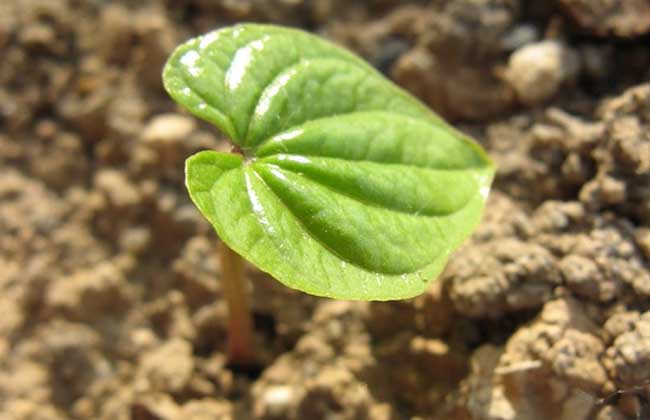
Land selection
Choose a field of sandy loam or loam with high, dry terrain, good drainage, deep soil layer and loose texture, requiring consistent soil quality from top to bottom; if there is a relatively thin heavy clay layer below, it can also be planted after digging it out when trenching. The soil should preferably be slightly acidic to neutral. Yam cannot be grown continuously, and generally should be rotated once every 3 years.
Trenching and land preparation
For long-root varieties, dig deep north-south trenches in the field at a row spacing of 1 m, with a trench width of 28-30 cm and a depth of 140 cm. When digging, pile the upper and lower soil layers separately on both sides of the trench, and turn and break up the sandy soil in the bottom 20 cm of the trench on site. After drying in the sun for a few days, first level and tamp the bottom layer of soil, then fill in the lower layer soil and upper layer soil separately, leveling and tamping once for every 20 cm filled, and pick out all rubble and debris. To make trenching easier, generally dig every other trench first, and after half a trench has been filled and leveled, dig the remaining half trench.
Seed tuber treatment
20-25 days before planting, select the harder root head at the upper end of a disease-free tuber that matches the characteristics of the variety being planted as seed, dip the cut surface at its lower end in slaked lime powder, then place it in the sun for a few days to sterilize and promote sprouting. Propagation by root heads cannot expand the planting area. If the propagation coefficient is to be increased, the tuberous roots must be cut into sections for propagation. That is, select relatively thin tuberous roots about 1 m long and 2.5-4.5 cm in transverse diameter, cut them into several small sections 15-20 cm long, and mark the upper and lower ends with a writing brush, then dip each cut surface in lime, place them horizontally in the sun to dry the seed sections until fine cracks appear at the section ends. During the seed-drying period, handle them gently to prevent bruising. At the same time, do a good job of wind protection, rain protection and frost protection.
Planting method
Plant when the local air temperature rises above 12°C and the ground temperature steadily reaches above 10°C. In North China, this is mostly in late April, in the Yangtze River basin mostly in early to mid-April, and in South China in March to April. Before planting, dig deep surrounding trenches around the field, about 1 m deep and 0.6-0.8 m wide, and connect them with outer trenches. If the field is longer than 20 m, waist trenches should also be added to ensure rapid drainage during the rainy season. Then stretch a rope down the center of the planting row and open a shallow trench along the rope at a row spacing of 1 m, 5.6 cm deep; in the trench, use steel bars 10-12 cm thick to punch holes one by one at a plant spacing of 20 cm, going down to the bottom of the loose soil layer. Place the upper end of the seed yam horizontally over the hole along the direction of the trench, so as to guide the newly grown tuberous roots to extend vertically downward, grow with uniform thickness, and meet export and purchasing standards. After arranging one trench, immediately cover with soil and form a ridge, with a ridge height of 10 cm.