Is the claim that Chinese yam boosts male virility actually true?
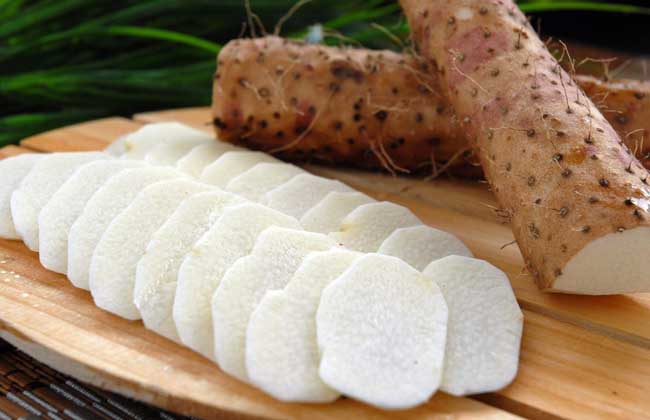
Chinese yam contains a large amount of starch and protein, B vitamins, vitamin C, vitamin E, glucose, crude protein amino acids, choline, allantoin, and more. Among these, the important nutrient diosgenin is a precursor substance for hormone synthesis, and has the effects of nourishing yin and tonifying yang and enhancing metabolism. Now let us take a look together at whether Chinese yam really boosts male virility!
Is it true that Chinese yam boosts male virility?
It is true that Chinese yam boosts male virility. Chinese yam has a strong effect on tonifying the kidney and strengthening the spleen, and can also tonify the kidney and replenish essence. It can truly be called an excellent food and medicine dual-use product. Traditional Chinese medicine also points out that Chinese yam is a loyal partner of men, and can tonify the kidney and secure essence, boost male virility, and treat male conditions such as impotence and spermatorrhea. Regarding the multiple effects of Chinese yam in tonifying the kidney and strengthening the spleen, books record numerous discussions by ancient physicians. For example, Li Shizhen emphasized the functions of Chinese yam in tonifying the kidney and strengthening the spleen. Therefore, people with weak spleen and stomach and kidney deficiency can use Chinese yam as a common food to regulate and nourish the body.
The effects and functions of Chinese yam
1. Strengthening the spleen and benefiting the stomach: Chinese yam is a mildly tonifying food and medicine dual-use product for the spleen and stomach, containing substances such as amylase and polyphenol oxidase, which are beneficial to the digestive and absorptive functions of the spleen and stomach. It can be eaten whether there is spleen yang deficiency or stomach yin deficiency, and clinically it is commonly used to treat conditions such as weak spleen and stomach, poor appetite and fatigue, and diarrhea.
2. Nourishing the kidney and benefiting essence: Chinese yam contains multiple nutrients and has the effect of strengthening the body, nourishing the kidney, and benefiting essence. It can be taken for conditions such as kidney deficiency and spermatorrhea, excessive vaginal discharge in women, and frequent urination.
3. Benefiting the lungs and stopping cough: Chinese yam contains saponins and mucilage, and has lubricating and nourishing effects, so it can benefit lung qi, nourish lung yin, and treat conditions of lung deficiency with phlegm cough and chronic cough.
4. Lowering blood sugar: Chinese yam contains mucoprotein and has the effect of lowering blood sugar. It can be used to treat diabetes and is an excellent dietary therapy product for diabetic patients.
5. Prolonging life: Chinese yam contains a large amount of mucoprotein, vitamins, and trace elements, and can effectively prevent blood lipids from depositing on blood vessel walls, prevent cardiovascular diseases, and achieve the effects of benefiting the mind, calming the spirit, and prolonging life.
6. Resisting hepatic coma: In recent years, research has found that Chinese yam has a sedative effect and can be used to resist hepatic coma.
Which foods can boost male virility?
1. Seahorse: Seahorse is warm in nature and sweet in taste, and can tonify the kidney and boost male virility. Therefore, all people with insufficient kidney yang should eat it, including impotence, infertility, excessive urination, nocturnal emission, and deficiency asthma caused by kidney yang deficiency, and eating it is quite suitable. Seahorse can be ground into fine powder and taken with yellow rice wine, 1 to 2 grams each time, 2 to 3 times a day.
2. Weever: Weever is neutral in nature and sweet in taste, and can both tonify the spleen and stomach and tonify the liver and kidney, and benefit the tendons and bones. “Commentary on the Materia Medica” once recorded: “Weever, sweet and bland in taste and neutral in qi, is suitable for the spleen and stomach. The kidney governs bones, the liver governs tendons, and the flavors belong to yin, all returning to the organs. It benefits the yin qi of the two organs, so it can benefit the tendons and bones.” “Jiaku Materia Medica” believes: “Weever, eating more is suitable for people, and making it into jerky is especially good.” It is suitable for all those with liver and kidney yin deficiency, or spleen deficiency and weak stomach.
3. Dried scallop: Dried scallop is neutral in nature and sweet and salty in taste, and can tonify the kidney and nourish yin. Therefore, those with kidney yin deficiency should eat it often. Wang Mengying, a dietary physician in the Qing Dynasty, believed: “Dried scallop tonifies the kidney, the same as dried mussel.” “Exploration of the Materia Medica” also says it can “nourish true yin,” which actually refers to the meaning of nourishing kidney yin.
4. Sheep bone: Sheep bone is warm in nature and sweet in taste, and can tonify the kidney and strengthen tendons and bones. “Principles of Correct Diet” believes: “Sheep tail bone benefits the kidney and brightens the eyes, and tonifies deficiency cold in the lower jiao.” “Compendium of Materia Medica” records: “Sheep spine bone tonifies bone deficiency, frees the governing vessel, and treats waist pain and dysentery. Sheep tibia governs weak spleen, and kidney deficiency failing to control essence, and white turbidity.” The Tang Dynasty “Dietary Physician's Heart Mirror” also introduces: “To treat deficiency cold of the kidney and inability to rotate the waist and spine: one sheep spine bone, crushed and boiled until soft, eaten on an empty stomach.”
5. Dog meat: Dog meat is warm in nature and salty in taste. In addition to tonifying the middle and benefiting qi, it can also warm the kidney and assist yang. Therefore, it is most suitable to eat for insufficient kidney yang, weak waist and knees, or cold pain. “Rihuazi Materia Medica” believes: dog meat “tonifies stomach qi, boosts male virility, warms the waist and knees, tonifies consumptive deficiency, and has the function of benefiting qi.” “Medical Forest Compendium” also says: “Dog meat tonifies lung qi and secures kidney qi.” Zhang Lu, a physician in the Qing Dynasty, also said: “Dog meat is most suitable for people with lower jiao deficiency.” People with lower jiao deficiency are those with weak kidney yang and decline of the gate of life fire.
6. Cowpea: Cowpea is neutral in nature and sweet in taste, and can tonify the kidney and strengthen the spleen. In addition to being suitable for people with spleen deficiency, it is also suitable for people with kidney deficiency. For kidney deficiency wasting thirst, spermatorrhea, white turbidity, or frequent urination, and vaginal discharge in women, eating it is most suitable. “Compendium of Materia Medica” once recorded: “Cowpea regulates the middle and benefits qi, tonifies the kidney and strengthens the stomach, and generates essence marrow.” “Sichuan Materia Medica” also says it can “nourish yin and tonify the kidney, strengthen the spleen and stomach, and treat vaginal discharge, white turbidity, and kidney deficiency spermatorrhea.”
7. Millet: Millet tonifies kidney qi. Both “Supplementary Records of Famous Physicians” and “Materia Medica of Southern Yunnan” say that “millet nourishes kidney qi.” Li Shizhen also said, “Millet is the grain of the kidney, and should be eaten for kidney disease. Eating it as porridge benefits the dantian and tonifies deficiency damage.”
8. Sesame: Sesame is sweet in taste and neutral in nature, and tonifies the liver and kidney and moistens the five organs. For example, “Commentary on the Materia Medica” once recorded: “Sesame, with a mild flavor, neither cold nor hot, is an excellent grain for tonifying the liver and kidney.” It is especially most suitable to eat for people with kidney deficiency who have sore waist and weak legs, dizziness and tinnitus, dry and falling hair and premature white hair, and dry constipated stool.