Yam: Benefits, Effects, Nutritional Value, and Cultivation Techniques
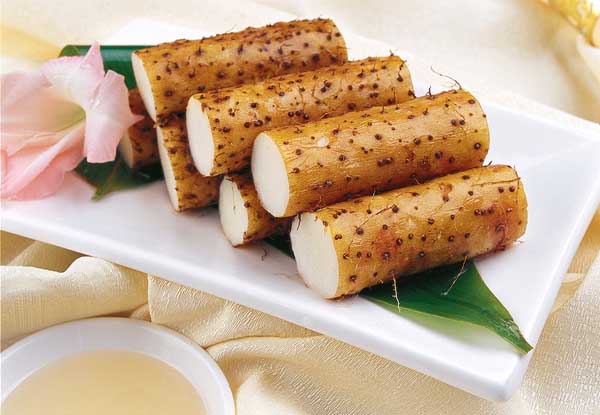
Where is the place of origin of yam?
The original place of origin of yam was Jiaozuo, Henan. The current main production areas are Bo'ai, Wuzhi, Wenxian, and other places in Henan, and it is also cultivated in Shanxi, Shaanxi, Shandong, Hebei, Zhejiang, Hunan, Sichuan, Yunnan, Guizhou, Guangxi, and other places. Several major production areas, mainly in Guangxi, Hebei, Henan, and other places, form the main domestic yam cultivation region. The yam produced in Huaiqing Prefecture, Henan (Bo'ai, Wuzhi, Wenxian) is the best and is called Huai yam. Huai yam was exhibited at the 1914 Panama Pacific International Exposition and thus became famous at home and abroad. Over the years, it has been exported to more than ten countries and regions, including the United Kingdom and the United States.
Nutritional Value of Yam
1. The calories and carbohydrates contained in yam are only about half those of sweet potato of the same weight. It contains no fat, and its protein content is higher than that of sweet potato.
2. The main component of yam is starch, part of which can be converted into dextrin, a decomposition product of starch. Dextrin can aid digestion, so yam is a tuber food that can be eaten raw.
3. Yam contains a variety of trace elements, among which potassium is relatively high. The types and amounts of vitamins it contains are relatively few, and it contains almost no carotene.
4. The leaves of yam are an excellent source of carotene and also a good source of calcium, iron, and vitamin C.
Benefits and Effects of Yam
1. Strengthening the spleen and benefiting the stomach: Yam is a mild tonic for both the spleen and stomach and can be used as both medicine and food. It contains substances such as amylase and polyphenol oxidase, which are beneficial to the digestive and absorptive functions of the spleen and stomach. It can be eaten whether there is spleen yang deficiency or stomach yin deficiency. Clinically, it is often used to treat conditions such as weakness of the spleen and stomach, poor appetite and fatigue, and diarrhea.
2. Nourishing the kidneys and strengthening essence: Yam contains a variety of nutrients and has the effect of strengthening the body, nourishing the kidneys, and strengthening essence. It can be taken for conditions such as kidney deficiency and spermatorrhea, excessive vaginal discharge in women, and frequent urination.
3. Benefiting the lungs and relieving cough: Yam contains saponins and mucilage and has lubricating and moistening effects, so it can benefit lung qi, nourish lung yin, and treat prolonged cough with phlegm due to lung deficiency.
4. Lowering blood sugar: Yam contains mucoprotein, which has the effect of lowering blood sugar. It can be used to treat diabetes and is an excellent food therapy item for diabetic patients.
5. Prolonging life: Yam contains a large amount of mucoprotein, vitamins, and trace elements. It can effectively prevent the deposition of blood lipids on blood vessel walls, prevent cardiovascular diseases, and achieve the effects of benefiting the mind, calming the spirit, and prolonging life.
6. Anti-hepatic coma: In recent years, research has found that yam has a sedative effect and can be used against hepatic coma.
Cultivation Techniques of Yam
1. Land selection: Choose field plots of sandy loam or loam with high and dry terrain, good drainage, deep soil layer, and loose texture. The soil texture above and below should be consistent. If there is a relatively thin heavy clay layer below, it can be removed when digging the trench, and planting can still be done. The soil should preferably be slightly acidic to neutral. Yam cannot be continuously cropped and generally should be rotated once every 3 years.
2. Trenching and land preparation: For long-root varieties, dig north-south deep trenches in the field at a row spacing of 1 m, with a trench width of 28-30 cm and a depth of 140 cm. When digging, pile the upper and lower soil layers separately on the two sides of the trench, and dig and rake the 20 cm of sandy soil at the bottom of the trench in place until broken up. After drying in the sun for several days, first rake the bottom layer of soil level and tread it firm, then fill in the lower layer of soil and the upper layer of soil separately, raking level and treading firm once for every 20 cm filled, and pick out all tiles, stones, and debris. To facilitate trenching, generally dig every other row first, and after half of the trench has been filled level, dig the remaining half of the trench.
3. Seed piece treatment: 20-25 days before planting, select disease-free root heads from the upper, harder end of tubers that conform to the characteristics of the cultivated variety as seed. Dip one cut end in powdered slaked lime, then place it in the sun to dry for several days to sterilize and promote germination. During the seed drying period, handle gently to prevent bruising, and at the same time do a good job of preventing wind, rain, and frost.
4. Timely planting: In North China, mostly in late April; in the Yangtze River basin, mostly in early to mid-April; and in South China, in March to April. Before planting, dig deep surrounding trenches around the field, about 1 m deep and 0.6-0.8 m wide, and connect them with the outer trenches. Then stretch a rope along the center of the planting row, and at a row spacing of 5-6 cm, use a 10-12 cm thick steel bar to punch holes one by one in the trench at a plant spacing of 20 cm, reaching the bottom of the loose soil layer. After placing one trench, immediately cover with soil and form a ridge, with a ridge height of 10 cm.
5. Applying sufficient base fertilizer: After sowing and before emergence, deeply plow the soil between the rows on both sides of the planting trench by 20-30 cm and apply base fertilizer. Organic fertilizer and inorganic fertilizer should be applied in combination. Apply 2000-4000 kg/mu of decomposed barnyard manure or manure fertilizer, plus 20-25 kg of urea, 15 kg of superphosphate, and 25-35 kg of potassium sulfate, and mix thoroughly with the turned soil.
6. Trellising and guiding vines: As soon as yam emerges, trellises should be set up in time to guide the vines to grow upward. Generally, thin bamboo poles or branches are inserted to form a human-shaped trellis, with a height of 2-2.5 m as appropriate. If limited by materials, it should be at least 1.5 m high. The trellis should be inserted firmly to prevent being blown down by typhoons.
7. Intertillage and soil filling: In the early growth stage, intertillage and weeding should be done frequently, generally once every half month, until the stems and vines have climbed halfway up the trellis, after which weeds should be pulled out. A portion of the soil between the rows outside the trellis should be dug up and filled between the rows inside the trellis, so that a high bed is formed inside the trellis and a trench 20 cm deep and 30 cm wide is formed between the rows outside the trellis, to facilitate drainage during the rainy season.
8. Reasonable topdressing: Apply topdressing once when the stems and vines have climbed halfway up the trellis, applying 10-15 kg/mu of urea according to plant growth. Apply less for vigorous seedlings and more for weak seedlings, so as to achieve balanced development across the field. Later, when the stems and vines cover the trellis, if there is yellowing, thinness, and loss of vigor, another topdressing may be applied.
9. Irrigation and drainage: Yam is a drought-tolerant crop, but for high yield, it should also be watered appropriately. Generally, before and after the first topdressing, if there is a long drought without rain and the soil becomes fully pale, light watering should be done 1-2 times, until the soil surface is moistened. Later, at the turn of summer and autumn, if drought and hot weather continue for more than 1 week, cool water should also be used in the early morning to combat drought. Yam is even more afraid of waterlogging, so in rainy seasons, trenches should be cleared and drainage done in time to achieve no standing water in the field.
Complete Collection of Yam Recipes
1. Stir-fried Yam
[Ingredients] 400 g yam, 15 g each green pepper and red pepper, 3 g salt, 2 g chicken essence.
[Method] ① Peel and wash the yam, cut diagonally into thin slices, wash the green pepper and red pepper separately, and slice. ② Pour oil into a wok and heat to 70% hot, add the yam slices and stir-fry until cooked, then add the green pepper slices and red pepper slices and stir-fry, season with salt and chicken essence, remove from the pan, and plate.
2. Yam Porridge
[Ingredients] 30 g yam, 20 g carrot, 30 g rice, a little spinach puree, 2 cups water.
[Method] Peel the yam and carrot and cut into small pieces (about 1 cm square). Add 2 cups of water to the rice and bring to a boil, add the yam and carrot and bring to a boil together, turn to low heat and cook for about another 15 minutes, then add the spinach puree and it is done.
3. Yam, Corn, and Pork Rib Soup
[Ingredients] 2 pork ribs, 1 ear sweet corn, half a yam, appropriate amounts of scallion, ginger, yellow wine, and salt.
[Method] ① Chop the pork ribs into small sections. Put cold water in a pot, add the ribs, and after it comes to a boil, rinse the ribs in cold water until clean. Put warm water in a clay pot, place the ribs in the clay pot, and bring to a boil over medium heat. Cut the corn into sections, cut the yam into chunk-cut pieces, shred the scallion, and slice the ginger. ② After boiling the ribs over medium heat for about 40 minutes, add the corn, yam, shredded scallion, and ginger slices, pour in one spoonful of yellow wine, turn to low heat and continue cooking for 40 minutes, then add salt according to personal taste and turn off the heat.
4. Stir-fried Yam with Mutton
[Ingredients] 200 g mutton, 1 yam, 2 stalks fragrant celery, 2 red pointed peppers, half a spoon salt, 3 g ginger, 5 cloves garlic, 1 large spoon cooking wine, 1 large spoon light soy sauce, half a spoon dark soy sauce, 1 small spoon sesame oil, 1 section scallion, appropriate amounts vegetable oil and white pepper powder.
[Method] ① Cut the mutton into slices, cut the fragrant celery into sections, slice the scallion, ginger, and garlic, and cut the red peppers into rings. ② Peel the yam and cut into slightly thick slices, blanch in a pot of boiling water for 10 seconds, then remove and set aside. ③ Heat oil in a pot, add the mutton slices and stir-fry until just cooked, then immediately remove. ④ Add oil to the cleaned pot again, stir-fry the scallion, ginger, and garlic until fragrant, add the mutton slices, fragrant celery sections, and red pepper rings and stir-fry for a moment. ⑤ Then add cooking wine and yam, quickly add light soy sauce, dark soy sauce, salt, and white pepper powder, stir-fry evenly over high heat, and finally drizzle with sesame oil.
5. Yam, Carrot, and Pork Rib Soup
[Ingredients] 400 g pork ribs, 300 g yam, 100 g carrot, appropriate amounts red dates, appropriate amounts ginger, appropriate amounts scallion.
[Method] ① Soak the pork ribs in clean water for 20 minutes to remove blood water. Scrape the peel off the yam and carrot with a small knife. Put cold water in a pot, add the ribs, and bring to a boil. Be sure to add them to cold water, otherwise the meat texture will not be good. ② Remove the blanched ribs. Cut the carrot and yam into pieces, smash the ginger, and put the ribs, yam, carrot, appropriate amounts of red dates, and smashed ginger together in a pressure cooker, add water to cover the ingredients. ③ Cover the pot and steam-cook for 30 minutes, add appropriate amounts of salt and scallion, and remove from the pot.