How to Catch Live Turtle Doves? Introduction to Common Methods and Techniques
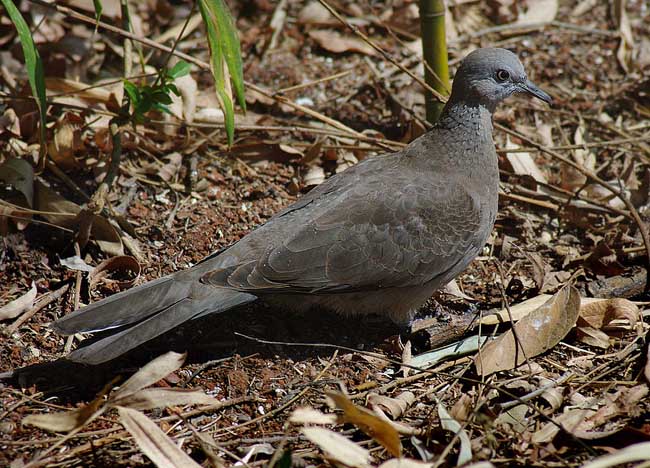
Many turtle dove enthusiasts or breeders ask, how exactly should turtle doves be caught? There is no precise answer to this, because turtle doves are timid by nature and have keen eyesight! So the requirements for the snare must also be more refined than for other snares. Turtle dove snares are mostly made from 2.5 steel wire into a seven-ring tree snare 15-16.5 cm high and 44 cm long, the steel wire is treated to rust, and the line used is No. 6 black line! Generally, one set of 20 strands is best, as only this way can you fool the alert turtle dove!
Choosing the Location for Snaring Turtle Doves
Generally, when dealing with rather alert birds, the first-choice location should be far from roadsides and in a quiet place. The intensity of light plays a very decisive role, so when choosing a location you should choose a secluded spot with dim light. The trees should not be too tall, just reachable by a person. Tall woods that contain the occasional short small tree are also ideal locations. Special attention should be paid to the fact that some trees are rather short with low leaf cover, so that you can only see the horizontal branches when you crouch down; this type of tree is the most ideal location! Bird lovers familiar with turtle doves will often see that turtle doves have a habit: they fly low and then turn upward before settling on a branch. Seizing on this point, we can make the turtle dove stand inside the snare before it has clearly seen it!
Snare-Setting Techniques for Catching Turtle Doves
Bird lovers who often catch turtle doves know that some turtle doves will not rush to the call spot immediately, but instead stand on a nearby tree and call back. So when making a call spot, make two call spots: place half the snares on the trees above the electronic decoy, and place the other half on the outer perimeter, which can serve to enlarge the capture range. Among the techniques: choose trees with lush leaves, since such trees have distinct leaves and branches and dimmer light. When setting snares, try to avoid setting too many on a single branch; generally one to two is suitable, and when necessary they can be separated with branches, with branch size preferably above finger thickness. When arranging the leaves, try to keep them as they were; too much change will arouse the turtle dove's suspicion! When choosing a call spot, do it within its territory as much as possible!
Call-Playback Techniques for Snaring Turtle Doves
The sounds to prepare are: three-note call, four-note call, and nodding call, three forms. When starting to lure with calls, mostly use the four-note call; after the wild bird calls back and moves, switch to the three-note call; after the wild bird comes close, switch to the nodding call. Set the volume to medium, slightly lower than the wild bird's call. When playing the sound, stop playback when the wild bird calls frequently; when the wild bird's calls gradually become sparse, you can add a few calls, to anger the wild bird as much as possible and lure it to rush to the call spot. Overall, playback should follow the sequence of a weak bird entering its territory!
Precautions for Snaring Turtle Doves
Because turtle doves are quite strong, when snared they often fly up with the snare, so when setting snares it is best to prepare a safety rope wrapped around the tree trunk. To make the rope specifically: buy two fishing connector clips, cut a 20 cm length of small black nylon rope, tie one connector clip to each end, clip one end to the snare frame, wrap it once around the tree trunk, and clip it back onto the rope!
Catching turtle doves is all about patience. Turtle doves come rather slowly. Using snares to catch turtle doves can be enjoyed with a calm mind, with endless pleasure. Those who rush for success mostly end in failure. Reading this, I believe everyone should have some understanding of how to catch turtle doves!