Turtle Dove: Detailed Explanation of Nutritional Value, Recipes and Breeding Techniques
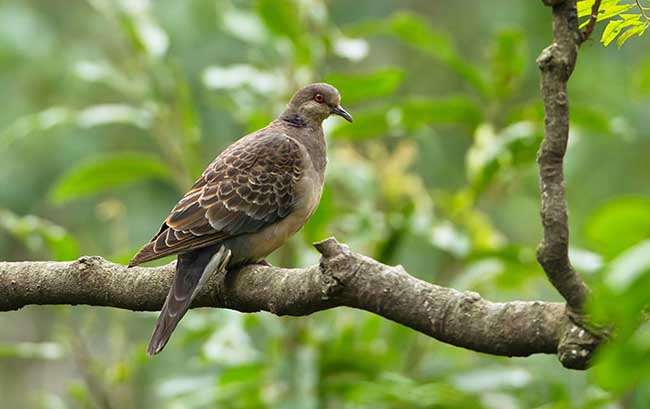
Is the turtle dove a protected animal?
Wild turtle doves belong to the general protected animals and are not allowed to be sold. Wild turtle doves are "three-haves" protected animals, that is, terrestrial wild animals protected by the state that are beneficial or have important economic or scientific research value. Protected turtle doves of the same genus include the European turtle dove, oriental turtle dove, Eurasian collared dove, spotted dove, laughing dove, red turtle dove, and others.
Nutritional Value of the Turtle Dove
The nutritional value of the turtle dove is comparable to that of the soft-shelled turtle. Among all kinds of meat, turtle dove meat is the richest in protein, while its fat content is extremely low, with a digestion and absorption rate as high as over 95%. Compared with chicken, fish, beef and mutton, turtle dove meat is also rich in vitamin A, vitamin B1, vitamin B2, vitamin E and trace elements for blood production, and has a strong tonic effect on postpartum women, post-surgery patients and people with anemia. Folk empirical prescriptions use the turtle dove as medicine combined with other drugs to treat dizziness, gynecological leukorrhea and so on.
Breeding Techniques for the Turtle Dove
1. Site establishment: A high-altitude net cage should be set up on a sunny slope with good ventilation, dryness and relatively high terrain. The net cage area is generally 40-60 sq m, with a height of 2.5-3 m, built with bamboo frames and tied with plastic netting. Inside the net cage, build a 1 sq m bird shed for the turtle doves to shelter from rain and summer sun. The net cage for breeding birds should be 1.5-2 m above the ground, with artificial trees made from bamboo or branches, and artificial nests attached, to facilitate egg-laying by the turtle doves.
2. Selecting breeding birds: Select 10-month-old adult birds that are large, robust and disease-free as breeding birds, and raise them separately. The feed should contain more protein, lecithin and calcium-rich foods to facilitate reproduction.
3. Egg-laying and incubation: Wild breeding birds generally mate and lay eggs in spring and autumn, approaching summer. In artificial breeding, female birds can be injected with estrogen to promote estrus in a short time, so that they can lay eggs every month. Collect the eggs after laying and place them in an incubator for artificial incubation. During incubation, temperature and relative humidity should be well regulated to ensure a hatching rate above 98%.
4. Chick management: When the chicks have just hatched, attention should be paid to keeping them warm and providing timely drinking water. Use a potassium permanganate solution at a concentration of 2 in 10,000 as drinking water, replacing it every 4 hours. After hatching, chicks generally show feeding behavior within 6-8 hours. It is best to choose small, easily digestible foods such as millet or broken rice, or chick pellet feed. After 1 week, 20% of various plant seeds such as canary seed and paddy can be added to the feed ratio.
5. Timely disease prevention: Due to high artificial breeding density, infection is easy. Cleaning inside the net cage should be done well, with regular disinfection, timely removal of droppings, and regular epidemic prevention. Sick birds found should be isolated and treated; dead birds should be buried deep or burned, and all birds in that net cage should be disinfected.
What kinds of turtle doves are there?
1. European turtle dove: The European turtle dove is a slightly small pinkish-brown dove, with a patch of many black and white fine lines on the side of the neck, dark brown wing coverts with pale brown scaly markings. It differs from the red turtle dove in being smaller, paler in color, with no white tips on the wing coverts, denser brown on the back and nape, whiter markings on the neck and tail sides, and a more wine-red chest. The bare skin around the eye is red. It inhabits various forests such as broad-leaved forests, mixed forests and coniferous forests in plains and low hilly areas, feeding on the fruits and seeds of various plants, and also eating mulberries, corn, sesame, wheat and other crops as well as a small amount of animal food.
2. Oriental turtle dove: The oriental turtle dove is a bird of the genus Streptopelia in the family Columbidae, with a body length of about 32 cm. Its bill and claws are straight or slightly curved, the base of the bill is soft and covered with a cere, and the tip of the bill is enlarged and horny. The neck and legs are both relatively short, and the tarsus is fully feathered. The dark scalloped markings on the upper body have brown feather edges, the rump is gray, the tail feathers are nearly black, and the tail tip is light gray. The underparts are mostly pinkish, and the feet are red. When taking off, it makes a high-frequency “pu-pu” sound. It moves in pairs or alone, mostly in open farming areas, villages and around houses, around temples, or near small ditches, foraging on the ground, with food mostly grain-bearing cereals.
3. Eurasian collared dove: The Eurasian collared dove belongs to the "three-haves" protected animals. It is a medium-sized bird of 32 cm, a bird of the genus Streptopelia in the family Columbidae. It is widely distributed, but its population is scarce and it is uncommon. The whole body is grayish-brown, with blue-gray patches on the wings, white tips on the tail feathers, and a black neck ring on the back of the neck surrounded by white feathers. The iris is red, the eyelid is also red, the bare skin around the eye is self-colored or light gray, the bill is nearly black, and the feet and toes are dark pink. In China it is distributed in North China and Northwest China, and there are also records in the lower reaches of the Yangtze River and South China.
4. Spotted dove: The spotted dove is also known as the gudiao, gu bird, zhongban, huabanjiu, huaboju, zhenzhujiu, banjingjiu, zhujingge, banjia and so on. It is a common turtle dove distributed in South Asia, Southeast Asia and vast areas of southern China. It inhabits plains with sparse trees, grasslands, low hills and farmland areas, and often appears in mixed woods near villages, bamboo forests, trees at field edges or near homes.
5. Laughing dove: The laughing dove is a bird of the genus Streptopelia in the family Columbidae. It is distributed in Africa, the Arabian Peninsula, Iran, the former Soviet Union, Afghanistan, Pakistan, India, Nepal, possibly introduced artificially to Turkey, Palestine, Syria, Australia, as well as ** and other places in mainland China. It generally inhabits deserts, semi-deserts, oases and places with low shrubs.
6. Red turtle dove: The red turtle dove is also called hongjiu, hongbanjiu, banjia, hongkazhui, huogujiao and so on. It inhabits tropical areas of southern Asia and is a small pigeon commonly seen foraging in flocks on plains and grasslands. It is distributed in India, Nepal, Bhutan, Bangladesh, Myanmar, Indochina, the Philippines, as well as various places in mainland China from north China southward, reaching Sichuan and Tibet in the west, and various places north of the Yangtze River. It mainly inhabits open fields and areas near villages.
Complete Collection of Turtle Dove Recipes
1. Snowball Turtle Dove
[Ingredients] 10 turtle doves, 50 g egg yolk cake, 100 g egg white, 50 g fried pine nut kernels, 100 g glutinous rice, 20 g soaked dried shrimp, 40 g cooked Yunnan ham, 30 g soaked dried winter mushrooms, 40 g winter bamboo shoots, 10 g scallion, 50 g flour, 10 g ginger, 20 g cilantro, 20 g sesame oil, 15 g refined salt, 1000 g vegetable oil, 3 g MSG, 3 g pepper powder.
[Method] ① Slaughter the turtle doves and drain the blood, scald off the feathers with boiling water, rinse clean with clear water, and chop off the wing tips and claws. Make a cut straight down from the neck, take out the bones and internal organs, and after boning the whole dove, rinse again with clear water. Wash the glutinous rice, soak in warm water for 30 minutes, steam until cooked, mix in 20 g cooked Yunnan ham, 2 g refined salt and 1 g MSG, and form 12 round balls. Whip the egg whites into foam, add flour and mix well. Coat the glutinous rice balls with the egg foam batter and stick cilantro leaves on them. ② Put a pan over medium heat, pour in lard, heat to 30% hot, add the glutinous rice balls and fry slowly. When the egg foam batter is fully cooked, take them out, drain the oil, and arrange them around the plate. ③ Cut the dried shrimp, 20 g Yunnan ham, winter mushrooms, winter bamboo shoots and egg yolk cake into granules, chop the scallion and ginger, put these seven ingredients into a bowl, mix in the pine nuts, 13 g refined salt, pepper powder and 2 g MSG to make the filling, stuff the filling into the dove bellies, and steam in a steamer for 3 hours. ④ Take out the turtle doves, brush with sesame oil, then put them in a roasting oven and roast until both sides are golden brown, take them out, place them in a plate belly-up, with the glutinous rice balls in the center, and it is ready.