What are the living habits of hedgehogs? A detailed explanation
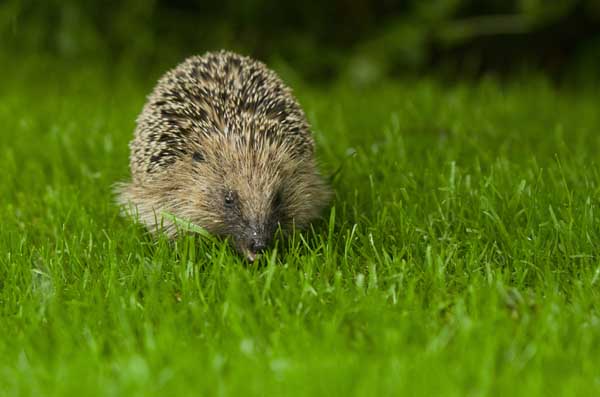
In our country, the family Erinaceidae comprises 6 genera and 7 species, and the most widely distributed is the hedgehog, whose back is densely covered with thick, hard spines, with rather short ears that do not protrude beyond the spines. It can be seen from the Northeast and North China to the middle and lower reaches of the Yangtze River. It preys on various invertebrates and small vertebrates, and also eats plant roots, fruits, melons and other plants. It produces 1 litter per year, with 3 to 6 young per litter. The long-eared hedgehog resembles the hedgehog in appearance, but its ears are longer and protrude beyond the spines, and it is found in Inner Mongolia, ** and other places. In the south there are the Chinese hedgehog, the lesser hedgehog and the Hainan new hedgehog, all of which are mouse-shaped and lack spines, with fur on the back and a slender tail.
Hedgehogs have strong adaptability and are not demanding about their environment. However, hedgehogs have the habit of preferring quiet and fearing light, and of being active by night and resting by day. The inner nest chamber serves as the den, lined with dry grass, pine needles or straw. The outer nest chamber is the activity area, including mounds of earth or hills, flowers and grasses, shrubs and so on, to provide shade in summer and warmth in winter. Hedgehogs are nocturnal animals, so feeding them fruits, vegetables and clean water once in the evening is enough. The food provided must be fresh and clean, and fruits and vegetables should be washed before feeding. If the melons and vegetables are bought from the market, they should first be soaked in a water basin for 1 hour, then washed and fed, to prevent pesticide poisoning. At the same time, the feed should be varied; a single type of feed will cause hedgehogs to bite and fight each other and refuse to eat.
Hedgehogs live in mountains, hills, plains and farmland, and also venture into vegetable gardens in suburban rural areas. With sharp claws, they dig burrows under tree roots, in rock crevices and beneath dead wood, lining them with dry grass, twigs and leaves. They are timid, afraid of light and fond of quiet, sleeping in their burrows during the day and sometimes even snoring. When night falls, it slowly moves its body and comes out to be active. It can climb trees and also swim, and can cross a small river to the opposite bank. Its vision is degenerate, but its sense of smell and hearing are very keen, and this structure makes it suited to coming out at night to hunt. It is a large insect-eating animal, and its diet includes earthworms, insects, snails, frogs, small snakes, lizards and mice. It also eats plant roots, stems, fruits and so on, and is especially fond of eating cockroaches, and can even swallow venomous moths. It also has strong resistance to vipers and can swallow small snakes.
Weasels and foxes are its natural enemies. When other animals attack it, it curls its body into a ball, with all the hard spines on its body standing erect, like a spiky ball, and in this way it faces the enemy; but if it is turned over, its defensive ability is greatly reduced. The fox turns its body over again and again, and this is dangerous for it, because the intruder will release a foul odor aimed at the small gap to anesthetize it.