What Do Hedgehogs Eat? A Detailed Guide to Hedgehog Habits and Breeding Techniques
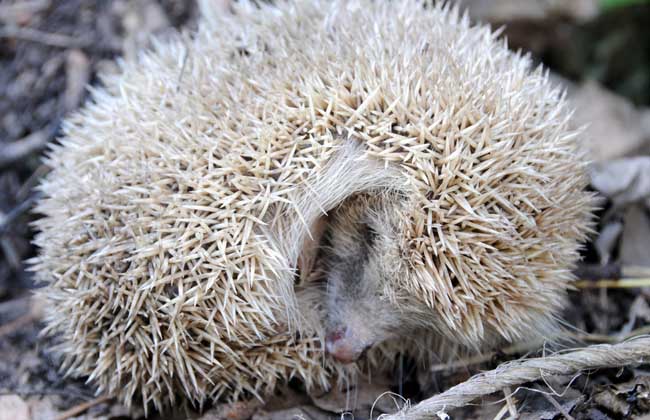
What food do hedgehogs eat?
Hedgehogs feed on insects and worms. Their favorite foods are ants and termites, and they also eat young birds, bird eggs, frogs, lizards, and occasionally crops. They can eat 200 grams of insects in one night, so they help agriculture by eliminating pests.
Hedgehogs also eat plant matter such as grass roots, melons and fruits, and vegetables.
Hedgehog Habits
1. Hedgehogs live in mountains, hills, plains, and farmland, and also move into vegetable gardens in suburban rural areas. With sharp claws, they dig burrows under tree roots, in rock crevices, and under dead wood, lining them with dry grass, twigs, and leaves. They are timid, afraid of light, and fond of quiet; by day they sleep in their burrows and sometimes even snore. When night falls, they slowly move their bodies and come out to be active. They can climb trees and swim, and can cross small rivers to the opposite bank. Their eyesight is degenerated, but their sense of smell and hearing are very keen; this structure suits them for coming out at night to hunt. They are large insectivores, and their diet includes earthworms, insects, snails, frogs, small snakes, lizards, and mice. They also eat plant roots, stems, and fruits, and are especially fond of cockroaches; they can even swallow poisonous moths. They also have strong resistance to pit vipers and can swallow small snakes.
2. Weasels and foxes are their natural enemies. When other animals attack them, they curl their bodies into a ball, with all the hard spines on their bodies standing upright, like a spiky ball, and use this method to face the enemy; however, if they are turned over, their defensive ability is greatly reduced. A fox repeatedly rolls it over, and this is dangerous for it, because the attacker will aim at the small gaps and release a foul odor to anesthetize it.
Hedgehog Breeding Methods
Hedgehogs begin mating and giving birth in April each year, producing 1-2 litters per year, with 3 to 6 young per litter. In spring each year after hibernation ends, hedgehogs look for mates. Before the female hedgehog accepts courtship, the male hedgehog spends several hours around her, after which he completes his mission. The female hedgehog then begins to look for a safe and quiet place as a den for herself and the baby hedgehogs that will be born 30 days later.
Newborn young have sparse, soft hair on their backs and have no vision during the first two weeks after birth, but within a few days it gradually hardens and turns into spines. After being nursed on breast milk for 4-8 weeks, the mother hedgehog teaches them how to forage.
Two months after birth, the mother hedgehog stops caring for the young hedgehogs and leaves them to live on their own. About 90% of young hedgehogs live less than one year.
Hedgehog Farming Prospects
The whole hedgehog is treasured: hedgehog spines, fat, and meat are all valuable traditional Chinese medicines, with effects such as lowering qi and relieving pain, and can treat stomach diseases, kidney diseases, breast diseases, hemorrhoids, burns, scalds, and stop bleeding and eliminate leakage. The hedgehog's brain, heart, liver, gallbladder, and kidneys can all be used as medicine. Hedgehog skin has even higher medicinal value.
Hedgehog skin is called yixiang or xianrenyi and is an important traditional Chinese medicinal material. It has the effects of lowering qi and relieving pain, cooling blood and stopping bleeding, promoting qi flow and detoxifying, and reducing swelling and relieving pain. It is mainly used to treat tuberculosis-related cough, regurgitation and vomiting of food, abdominal pain and hernia masses, hemorrhoids and fistula with bloody stool, uterine bleeding, seminal emission and impotence, and frequent urination.
Hedgehog meat is especially high in protein and fat. Its main medicinal effects are promoting appetite, improving digestive capacity, increasing protein utilization, stimulating the hematopoietic system, and significantly increasing hemoglobin, hematin, and red blood cells. It is the best health food for patients undergoing chemotherapy, post-surgery, postpartum women, and those with anemia or gastric dysfunction. It is also the best nutritional food for middle-aged and elderly people who are weak and for children who are thin and weak. It is a medicinal product for treating various chronic diseases and has huge development potential.
Hedgehog fat can treat severe bloody diarrhea; applying it externally can treat favus and scabies, and it has the effect of killing skin parasites. Soaking hedgehog brain, heart, liver, gallbladder, kidney, and penis in wine and drinking it can refresh the mind, improve eyesight, eliminate fatigue, strengthen the body, and strengthen the bones.
Soaking hedgehog brain, heart, liver, gallbladder, kidney, and penis in wine and drinking it can refresh the mind, improve eyesight, eliminate fatigue, strengthen the body, and strengthen the bones.
Risk Warnings for Hedgehog Farming
1. Hedgehog farming requires a relatively large site (each pair of breeding hedgehogs needs at least 1.5 sq m of rearing space; generally, a 100 sq m shed housing 30-50 hedgehogs is more suitable), and it needs to be in a relatively quiet place far from human disturbance.
2. Hedgehog farming requires a certain amount of farming experience. Before preparing for large-scale farming, it is best to have some technical accumulation. Do not start large-scale hedgehog farming just after reading a few books or watching farming videos; the chance of success is very small, and the chance of losing money is very large.
3. To obtain relatively high hedgehog farming benefits, it is best to find a buyer for hedgehog skin and also develop a market for selling hedgehog meat.
4. Wild hedgehogs are national second-class protected animals. Farming hedgehogs requires obtaining a Wildlife and Its Products Business License; otherwise, slaughtering or selling them may be illegal.