Centipede Farming Technical Points and Methods Explained in Detail
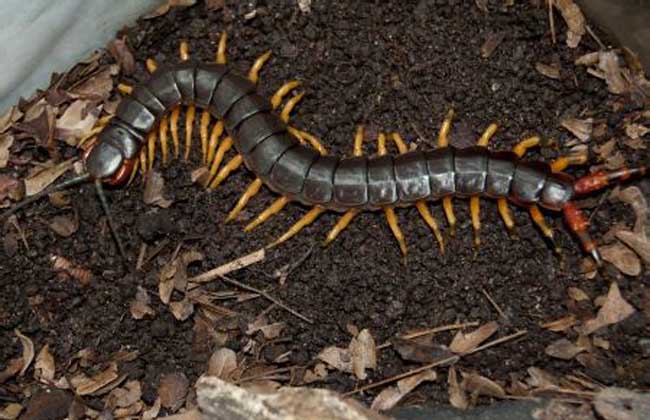
The centipede is a traditional and important animal-based medicinal material, and its medicinal properties and uses are clearly recorded in famous pharmaceutical literature such as the Compendium of Materia Medica written by Li Shizhen. The medicinal source is distributed across the provinces south of the Yangtze River, mainly produced in Hubei and Zhejiang provinces, and its original animal has been identified as Scolopendra subspinipes mutilans. According to reports, in Zhejiang it is mainly produced in the two major production areas of Haining and Daishan in the Jiaxing region. Due to changes in the production environment, over the past one to two decades, the annual catch in the Jiaxing region has dropped from two million individuals to more than ten thousand. In order to increase centipede resources and develop artificial breeding, small-scale indoor artificial breeding and island release trials were carried out. In the Zhoushan region, a survey was conducted on the resources of wild medicinal centipedes, and their population structure and catch volume were analyzed.
At the centipede trial breeding site, research was carried out on the biological characteristics of centipedes. Extensive observation and research were conducted on the number of eggs laid during the centipede reproductive process, the egg-laying period, the egg-guarding period, egg-eating and re-laying after egg-eating, the molting pattern during centipede growth, the life cycle and reproductive cycle, and the feeding habits and feed of centipedes, providing a scientific basis for artificial centipede breeding. In breeding management technology, technical difficulties such as live male-female identification and increasing the hatching rate were overcome, and some experience was accumulated in overcoming difficulties such as mold diseases, drying, and feed. In 1976 and 1978, adult centipedes were released on Hengleshan Island twice. By 1980, observation and statistics found that new centipedes of each generation could grow actively. The island release was successful, and selecting suitable islands for centipede release is also one of the directions for developing breeding.
Living Habits
Centipedes mainly live in low mountain areas with many stones and little soil, and are only distributed in small numbers in plain areas. After Awakening of Insects each year, as the temperature warms, centipedes awaken from hibernation and begin to emerge and move about, and they are good at living in damp, shady weed thickets or rocky gullies. From Grain in Ear to Summer Solstice, as the temperature gradually rises, they again gradually move into cool trenches, graveyards, field ridges, or cracks in earthen banks, avoiding the hot daytime. In late autumn, they mostly perch under wind-sheltered, sun-facing loose-soil slopes or in warmer places such as tree holes and tree roots. In short, centipedes are afraid of light and shy of brightness, hide by day and come out at night, and like to live in dark, damp, warm, and ventilated caves. Therefore, when artificially breeding centipedes, it is necessary, according to their living habits, to try to create the living conditions they require. For example, planting trees and grass in the breeding site and placing bricks and tiles are among the measures taken to meet the centipede's requirements for its living environment.
Centipedes generally come out at night to move about alone. Although they have 8 simple eyes, their eyesight is weak, especially in daytime when their eyesight is extremely poor. When moving alone, they only detour when their antennae touch each other, each avoiding the other. On clear, windless nights, 20:00 to 23:00 is their peak activity period. Their activity is characterized by more activity at night and less by day; more activity when the temperature is above 25°C, and less activity on days from 10 to 15°C; even less activity below 10°C, or activity even stops; more activity on stuffy, hot nights and nights after rain, and less activity on nights with low temperatures; more activity on windless or slightly windy nights, and less activity on windy nights (wind force above level six); more activity on nights after rain, and less activity on rainy nights. It can thus be seen that the frequency of centipede activity is closely related to meteorological factors such as temperature, air pressure, relative humidity, rainfall, and light intensity. Therefore, when artificially breeding centipedes, attention must be paid to the effects of the above meteorological factors on their lives. At the same time, centipedes have a very strong ability to bore into cracks, so they can smoothly bore through crevices in rocks, earthen banks, and the like, and can inhabit these cracks.
When the living density of centipedes is too high or there is much disturbance, they are prone to killing each other and dying. However, under breeding conditions, with improvements in the living environment and breeding conditions, such as providing enough fresh feed and water and not increasing disturbance to their lives, even if the breeding density is relatively high, it has little effect on their lives. In particular, because centipedes produced by the same mother live together from an early age, even when they grow up, dozens of them can curl up together and still live together harmoniously. Therefore, providing enough fresh feed and water and maintaining a quiet environment are necessary conditions for artificial centipede breeding.
Capture Methods
It is generally best to capture them before Qingming Festival. Centipedes are oviparous insects. According to living habits such as liking shade and moisture, being quiet, and fearing strong light, choose places with dense forest shade or shaded hillside slopes as capture sites. In these places, place chicken feathers, miscellaneous bones, or dry grass and fallen leaves to lure centipedes to inhabit and lay eggs, and pick the eggs before Qingming Festival. When picking eggs, bring back the soil together with branches and weeds, put them into a breeding pond or breeding jar, cover them, and then incubate. During incubation, frequently and gently turn the covering material to prevent invasion by other pests, so as to ensure that the young hatch smoothly and safely.