What is the market price situation for centipedes?
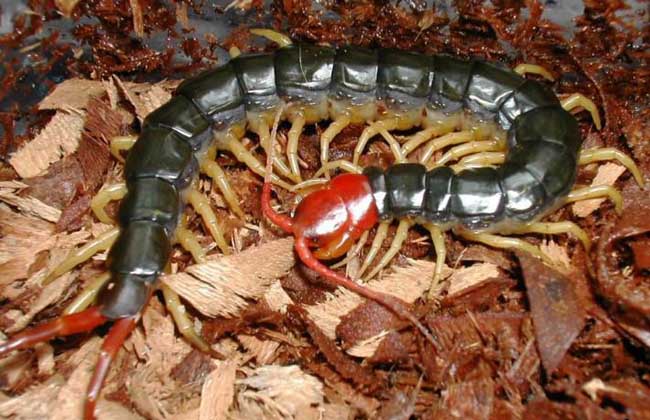
Centipedes are terrestrial arthropods. In traditional Chinese medicine, centipedes are believed to have the effects and functions of calming wind and stopping spasms, and unblocking collaterals and relieving pain, and they have relatively high medicinal value. Because wild resources are gradually becoming scarce, the price of centipedes has remained high. Below, let us take a look together at the market price and farming prospects of centipedes!
The market price of centipedes
The current market price of centipedes is about 1.5-2.5 yuan each.
Seasonal effects on the market price of centipedes
From November each year to around Qingming of the following year is the dormant period for centipedes. Therefore, from January to April is when the market supply of centipedes is the lowest, and it is also when the price of centipedes is the highest.
Mid-July is the season when large numbers of centipedes come onto the market, and the price of centipedes will decline somewhat compared with April. Experts believe that if artificial farming of centipedes can control the temperature of the centipedes' growth environment so that they do not go dormant and reproduce twice each year, it may be possible to keep the market supply of centipedes stable throughout the year, thereby stabilizing the market price of centipedes.
Farming prospects for centipedes
1. Easy to farm: Can be farmed at home or in factory-style three-dimensional farming
2. Strong reproductive capacity: Lays 50-80 eggs at a time, and under constant-temperature farming can lay eggs 2-3 times per year.
3. Small food intake and a wide range of feed: Generally one feeding can last 2-3 days, and during the egg-laying period they basically do not need to eat or drink. For large-scale farming, bait can be artificially cultured; for natural farming, only wheat bran, vegetable leaves, melons and fruit, insects, animal offal, bone meal, etc. are needed, with almost no cost.
4. Strong disease resistance: Strong adaptability, vigorous vitality, not easy to contract diseases, and absolutely no risk of outbreaks such as avian influenza (chickens), foot-and-mouth disease (pigs), or mad cow disease (cattle).
5. Saves labor and time: Generally feed at 6-8 p.m., and it can be farmed in spare time.
6. Low investment: Apart from introducing breeding stock, almost no investment is needed. For general household feeding, vacant rooms, balconies, courtyards, and areas in front of and behind the house can be used, and raising in jars, boxes, or ponds is all acceptable; for large-scale farming, pen raising or three-dimensional farming can be used, with green feed grown on site and insects raised on site.
Farming benefits of centipedes
Below, let us take three groups of 600 breeding centipedes as an example (calculated per batch, with each centipede breeding 60-100 per time), calculated at the lowest reproduction rate of 60 per centipede.
1. Profit: 600 centipedes × 60 times × 2.0 yuan = 72,000 yuan (per batch)
2. Cost: Farming feed is very wide-ranging. Generally, animal offal, green vegetables, melons and fruit, and scraps from markets, restaurants, and kitchens can all be used, and the cost is low. Now, taking feeding with yellow mealworms provided by our company as an example, 3 kg of rice bran raises 1 kg of yellow mealworms; rice bran is 1.2 yuan per kg, so 3 kg costs 3.6 yuan. The 600 parent breeding centipedes eat an average of 60 grams of yellow mealworms per day, totaling 0.216 yuan.
① Cost of raising parent breeding centipedes per batch: 0.216 yuan × 90 days = 19.44 yuan.
② Food intake cost for 36,000 larvae (the total food intake of larvae is less than 1/2 that of parent breeding centipedes): 19.44 yuan × 60 times × 0.5 = 583.2 yuan.
③ Labor cost (1 hour of labor per day): 10 yuan per working hour × 90 days = 900 yuan.
④ (Breeding stock introduction cost 10,800 yuan - after eight rounds of parent breeding, sold as commercial centipedes at 1,200 yuan) ÷ 8 = 1,200 yuan.
⑤ Farming construction cost 500 yuan.
⑥ Medicine and disinfection cost 50 yuan.
3. Comprehensive cost per batch: 19.44 + 583.2 + 900 + 1,200 + 500 + 50 = 3,252.64 (yuan)
4. Net profit per batch: 72,000 - 3,252.64 = 68,747.36 (yuan). The above profit is calculated per batch. If calculated on the basis of indoor farming and breeding 4 times per year per batch.
5. Annual profit is: 68,747.36 yuan × 4 = 274,989.44 yuan