Scorpion Farming Techniques: What Do Scorpions Eat, and What to Do If You Get Stung
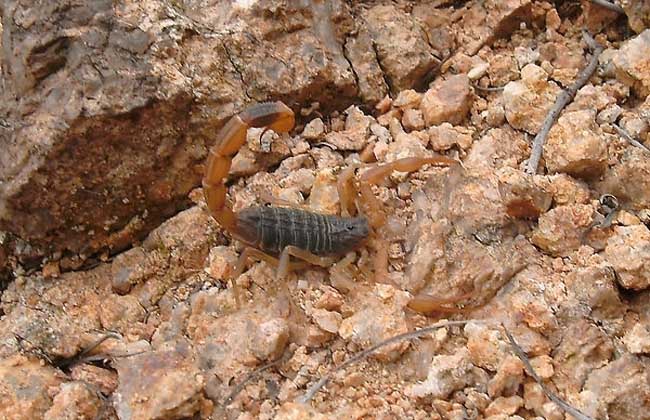
Scorpion Living Habits
1. Scorpions are nocturnal animals that hide by day and come out at night. They like humidity and fear dryness, and they prefer darkness and are afraid of strong light stimulation. They like living in groups, prefer quiet to activity, and have the habit of recognizing their nests and their groups. Most scorpions settle together in fixed nests. Generally, in a large scorpion nest there are both males and females, large and small, living together in harmony, and mutual killing rarely occurs. But if they are not scorpions from the same nest, they will often kill each other after meeting.
2. Scorpions have the habit of hibernation. Generally in mid-to-late April, that is, after Awakening of Insects, they emerge from hibernation, and in early November they begin to gradually enter hibernation. Their active period throughout the year is about 6 months. During a day, scorpions mostly come out to be active from 8 p.m. to 11 p.m. after sunset, and return to their nests to rest at 2 to 3 a.m. the next morning. This activity pattern generally occurs on warm, windless nights with dry ground, while on windy days they rarely come out to be active.
3. Although scorpions are poikilothermic animals, they are still relatively tolerant of cold and heat. When the external environmental temperature is between 40°C and minus 5°C, scorpions can survive. The growth, development and reproduction of scorpions are closely related to temperature. When the temperature drops below 10°C, scorpions become less active; when the temperature is below 20°C, scorpions are also less active. The most suitable temperature for their growth and development is between 25 and 39°C. At 35 to 39°C, scorpions are most active, their growth and development speed up, and giving birth and mating mostly take place within this temperature range. When the temperature exceeds 41°C, the water in the scorpion's body is evaporated. If at this time the temperature is not lowered in time and water is not supplemented in time, the scorpion is very likely to die of dehydration. When the temperature exceeds 43°C, scorpions die quickly. Scorpion activity, growth, development and reproduction are closely related to temperature, and the optimal temperature is between 35 and 38°C. Therefore, when we breed scorpions artificially, we must pay attention to mastering this.
4. The growth and reproduction of scorpions are also closely related to the humidity of the external environment. In nature, if wild scorpions face a long drought without rain, they will burrow into moist places about 1 m underground to hide and conceal themselves; when the weather is rainy and there is standing water on the ground, they will climb to higher places to take shelter. Therefore, when breeding scorpions, great attention must be paid to the moisture content of the feed as well as the humidity of the breeding site and the nests. Generally speaking, the scorpions' activity area should be somewhat moist, while the nests where they rest should be slightly dry. This is beneficial to the growth, development and reproduction of scorpions. If the nests are too wet, they are likely to be harmed by microorganisms, and it is also very difficult for scorpions to molt; if the scorpions' activity area is too dry and the feed provided is also insufficient in moisture, it will also affect the normal growth and development of scorpions and may even induce mutual killing.
5. Scorpions like darkness and fear light, especially strong light stimulation, but they also need a certain amount of light so as to absorb the sun's heat, improve digestive capacity, accelerate the speed of growth and development, and facilitate the process of embryos hatching inside pregnant scorpions. According to reports and observations, scorpions have a positive tendency toward weak light and a negative tendency toward strong light, but they most like to be active under relatively weak green light.
6. Scorpions have a strong avoidance response to various intense odors, such as paint, gasoline, kerosene, asphalt, and various chemicals, pesticides, chemical fertilizers, quicklime, etc. It can be seen that their sense of smell is very keen, and the stimulation of these substances is very harmful to scorpions and may even kill them. Scorpions are also very sensitive to various strong vibrations and sounds, and sometimes they may even be frightened away, stopping feeding, mating and reproduction, giving birth, and so on.
Prospects for Scorpion Farming
Judging from the development history of artificial scorpion farming in China, before the early 1980s it was mainly to meet the needs of the medicinal materials market. Since the mid-1980s, in addition to a small amount still meeting the needs of the development of traditional Chinese medicine, a large number of whole scorpion products have been consumed as food and health tonics.
Although scorpions are widely distributed in China, with the prosperity of the traditional Chinese medicine market and the gradual development of people's understanding of the economic value of scorpions, the social demand for whole scorpions, a traditionally precious medicinal material, has been increasing day by day; in addition, on the one hand, excessive artificial capture has caused a sharp decline in natural populations, and on the other hand, factors such as the continuous destruction of the ecological environment and the large-scale use of pesticides and chemical fertilizers have led to the continuous deterioration of the scorpions' natural living environment and a decline in food sources, intensifying the contradiction between social demand and output supply. Therefore, since the early 1950s, China began experimental research work on artificial scorpion farming and achieved encouraging progress. In provinces such as Shandong, Jiangsu and Zhejiang, large numbers of specialized scorpion-farming households appeared one after another, taking the lead in embarking on the path to moderate prosperity.
Because scorpions reproduce relatively quickly, producing two litters a year, with more than 20 to 50 young scorpions per litter, the sales rate of scorpions also increases year by year, rolling more and more like a snowball. If 600 breeding scorpions are stocked per cubic meter of space, then by the second year at least 10,000 commercial scorpions can be bred, which can be made into about 10 kg of dried scorpions. The state purchase price is about 400 yuan per kg. After deducting various costs (such as introducing breeding scorpions, facility investment, feed, etc.) of 3,000 yuan, the minimum net income can be 1,000 yuan; by farming scorpions in spare time, one person can manage scorpions in 10 cubic meters of space, with annual income of no less than 10,000 yuan. Moreover, once the breeding stock is introduced, there is no need to buy stock again, and one can benefit for life.
Artificial scorpion farming is one of the key projects promoted under the national “Spark Program”, and the state stipulates long-term tax exemption. The techniques of artificial scorpion farming can generally be mastered quickly by ordinary people through short-term study. There is no need to worry about sales channels, making it a relatively safe household sideline. Therefore, artificial scorpion farming has developed rapidly in many provinces and cities across the country and is regarded by the broad masses of farmer friends as a new path to wealth with a small land footprint, low investment, little labor required and considerable income.
Techniques for Introducing Breeding Scorpions
1. Timing of introduction: For scorpion farming at normal temperature, the introduction time should be arranged for late spring and early summer or autumn. Among these, late spring and early summer is the best time for introduction, because at this time the hibernating scorpions have already emerged from hibernation, have passed the “spring death period”, and adult female scorpions have already entered pregnancy and can give birth that same year. Introduction can bring benefits in the same year.
2. Sources of breeding scorpions: One is to catch wild scorpions or buy wild scorpions back as breeding scorpions. The other is to buy from units or individuals engaged in artificial scorpion farming. For beginners, using wild scorpions as breeding scorpions is not advisable.
3. Selection of breeding scorpions: When introducing breeding scorpions, purchase young scorpions, adult scorpions or pregnant scorpions according to need and on a selective basis. For male scorpions, choose those with a strong physique, bright body color, liveliness and strength, and strong sexual desire as breeding scorpions. For female scorpions, choose those that are large, with a body length above 4.8 cm, with no missing limbs, robust, agile in movement, with the rear abdomen curled when stationary, the front abdomen plump, and the skin glossy as breeding scorpions. Generally, as long as the front abdomen of a spring female scorpion is plump and full, light gray in color, and the body length is about 5 cm, the birth rate is relatively high, and the birth period is also early. Female scorpions that are too short in body should not be readily selected for breeding even if they have a large abdomen and correct color, because their reproductive period is often later and cannot meet breeding requirements.
4. Matching of females and males: Some farmers, when introducing breeding stock, select only female scorpions and not male scorpions in order to obtain more young scorpions. This practice is wrong. According to the mating patterns of scorpions, the ratio of female to male scorpions should preferably be matched at 2-3:1.