Detailed Explanation of Leech Breeding Technology and Management Key Points
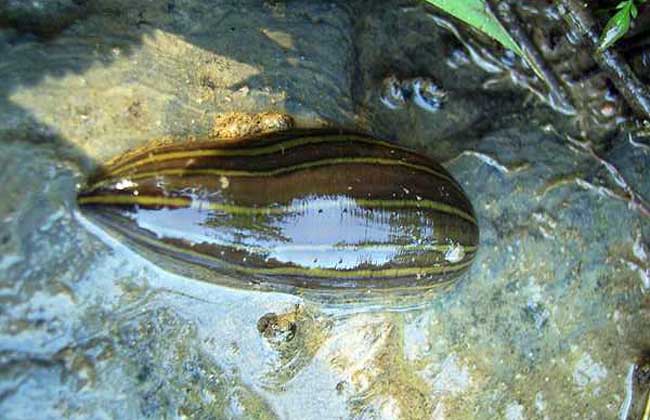
The leech, commonly known as ma huang, grows and reproduces in inland freshwater waters and is a traditional specialty medicinal aquatic animal in China. Its dried product, after processing, is used in traditional Chinese medicine and has effects in treating stroke, high blood pressure, clearing blood stasis, amenorrhea, and traumatic injuries. In recent years, it has been newly discovered that leech preparations have special effects in preventing and treating cardiovascular and cerebrovascular diseases and in anti-cancer applications. Historically, it was mainly obtained through natural capture, but due to the abuse of pesticides and chemical fertilizers in recent years, as well as environmental pollution from industrial and agricultural “three wastes,” wild natural resources have sharply declined. With the in-depth development of the medicinal value of leeches, their market demand potential is enormous.
Farm Construction
Choose a wind-sheltered, sunny location with convenient drainage and irrigation to build the pond. The ridge around the pond should be 1.8 m high, with a water depth of 1 m. The area size should be determined according to the breeding quantity. Generally, 60,000 to 100,000 young leeches can be stocked per mu of water surface. Set an inlet and an outlet at opposite corners of the pond. To facilitate leech habitation and egg laying, some irregular stones or branches can be placed on the pond bottom. In the water, 5 to 8 earthen platforms should be built 20 cm above the water surface, each platform about 1 sq m. An escape-prevention ditch should also be set on the pond ridge, built with bricks, with a ditch width of 12 cm and a height of 8 cm. During rain, cover it with fine mesh netting or scatter some lime in the ditch to prevent escape.
Stocking and Release
The source of leech seedlings can be capture, purchase, or self-breeding. At the beginning of breeding, natural capture is generally the main method, but they can also be purchased from relevant units. There are three kinds of leeches traditionally used as medicine in China: for artificial breeding, the golden leech is best. The golden leech has a large body size and high yield. The golden leech is what is commonly called “cow leech” in rural areas. When herding cattle, they often climb onto cattle to suck blood, and attention should be paid to identification when catching them as breeding stock. Leeches are hermaphroditic, and each leech can lay eggs and reproduce. They lay egg cocoons from late March to April (Yangtze River basin, the same below), and the egg cocoons are laid in the soil. Generally, 1 to 4 egg cocoons are laid, with 13 to 35 young leeches in each cocoon, mostly around 20, and each leech can reproduce 60 to 80 individuals at one time. Young leeches appear in large numbers in June and grow rapidly. Within one month after hatching, they grow by an average of more than 20 mm, and by September and October they become difficult to distinguish from adults. It is advisable to stock in early spring. Stocked in early spring, they can grow to maturity by October and be processed for sale.
Artificial Breeding Technology for Leeches
1. Construction of breeding ponds: The pond area should preferably be about 30 sq m, and it is advisable to build it as a square of 5 m × 5 m or 6 m × 6 m. Around the pond, a platform 1 to 1.5 m wide should be set along the pond wall, with water in the middle, a water depth of 50 cm, and the platform 2 cm above the water surface, with the platform surface kept moist. The soil used for the platform should be loose sandy soil rich in humus, convenient for leeches to burrow into. Do not use yellow clay. An overflow outlet should be set level with the platform surface to prevent rainwater from submerging the platform and causing breeding failure. Generally, they are divided into two types: small breeding ponds and large breeding ponds:
① Construction of small breeding ponds: Generally, pond ditches 3 m wide and 1 m deep are built, with unlimited length. Several small ponds can also be built with shared ridges, with a ridge width of 40 cm, and each pond provided with an outlet and an inlet. In the middle of the pond, there must be an egg-laying platform 50—100 cm wide. The platform and the water surface are at the same level, and a layer of humus soil 20 cm thick is piled on top of the platform as a place for leeches to lay eggs and reproduce. The water level should preferably be 50—60 cm.
② Construction of large breeding ponds: The construction of large breeding ponds is generally carried out by building ponds of different specifications according to the actual geographical environment. If the water source is inconvenient, a layer of plastic film can also be laid on the bottom of the pond. An appropriate amount of river mud should be placed on the pond bottom to increase the organic matter content of the water. Planting some aquatic plants in the water can purify the water quality and increase the oxygen content in the water. It is best to bury a ring of nylon mesh (0.5—0.6 m high) on the pond bank to block natural enemies such as frogs and snakes from entering the breeding pond. In order to prevent excessively high water temperature and too strong light in summer, trees such as weeping willows can be planted on the pond bank for shade.
2. Selection of breeding leeches: For use in breeding and as breeding leeches, the age should be more than 2 years, the body weight about 30 g, with a robust constitution and lively activity, quickly contracting into a ball when touched by hand. Such leeches carry many eggs and have a high hatching rate. The stocking amount of breeding leeches is calculated according to the land area of the platform in the pond. Generally, about 1.5 kg is stocked per sq m. After the breeding leeches are put into the pond, the water quality should be kept fertile and rich, with sufficient plankton and snails for them to feed on.
3. Reproduction: In the middle and lower reaches of the Yangtze River, the egg-laying period of leeches begins in early May and continues to mid-June (varying with individual differences), with mid-May being the peak reproduction period. During the egg cocoon laying period, quiet should be maintained, and walking and vibrations along the bank should be avoided; otherwise, leeches in the process of laying egg cocoons will be startled and flee, resulting in empty cocoons.
4. Incubation management: After leeches lay egg cocoons, they can be collected and caught for separate pond culture or processing. The breeding pond also serves as an incubation pond, and the egg cocoons are allowed to hatch naturally in the burrows. About 11 to 15 days after the egg cocoons are laid, young leeches hatch. Newly hatched young leeches resemble adults in body shape, are cork-yellow in color, and have 7 thin purple-gray longitudinal stripes arranged on each side of the back. As the young leeches grow, the color between the longitudinal stripes gradually changes, forming 5 longitudinal stripes composed of two alternating patterns and changing into the color pattern of adults. During the incubation stage, try to avoid walking on the platform to prevent stepping on and breaking the egg cocoons. The platform surface should be kept moist and can be covered with a layer of aquatic plants. If rainy weather occurs, the overflow outlet should be cleared, and the water surface must not cover the platform, maintaining a gap of about 3 cm. After the breeding leeches are removed, tender mussels and snails can be put in for the young leeches to feed on. After hatching, young leeches mainly rely on yolk to sustain life for two to three days, and can begin feeding after three days. Newly hatched young leeches mainly feed on the blood and fluids of mussels and snails. Into one mussel, dozens to 100 young leeches will burrow. As the young leeches grow, they will devour the entire soft body parts of mussels and snails. Young leeches grow rapidly. After half a month, their average growth reaches more than 15 mm, and they can be transferred to large ponds to be raised into adult leeches.