Is the Centipede Poisonous? A Detailed Explanation of Its Effects and Uses, and Breeding Techniques
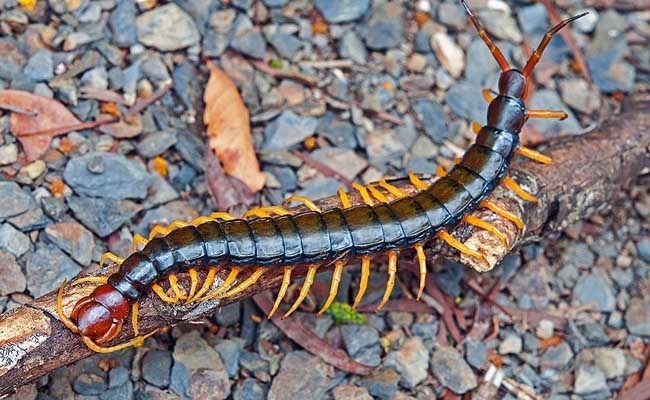
The Centipede's Living Habits
1. Centipedes fear sunlight and hide by day and come out at night, preferring to live in dark, warm, rain-sheltered, well-ventilated places. Centipedes like to live in hilly areas and sandy soil regions. During the day they mostly hide in crevices between bricks and stones, along wall bases, and in dark corners of piles of leaves, weeds and rotting wood, and come out at night to move about and seek food such as green caterpillars, spiders and cockroaches. Generally, when the weather turns cold in October, they burrow into the soil on wind-sheltered, sun-facing hillsides, lying dormant at a depth of about 12cm in the soil to overwinter until after Jingzhe (early March) the following year, and then begin to move about and forage again as the weather warms.
2. Centipedes are extremely good at squeezing through cracks. They often use their sensitive antennae and flat head plate to probe crevices, and can mostly pass through or dwell in the cracks of rocks and soil. When density is too high or they are disturbed too much, they may fight each other to the death. However, under artificial breeding conditions, when food and drinking water are sufficient, dozens of them can also live together.
3. The centipede is a typical carnivorous animal. It is fierce by nature and has a wide food range, especially preferring to eat insects. In early spring when food is scarce, it may also eat a small amount of young grass and moss shoots.
Centipede Breeding Methods
1. Box breeding: The breeding box is made of wooden boards, with a suitable size of 55 cm long, 45 cm wide and 30 cm high. A layer of non-toxic plastic film is pasted on the inner wall of the box, and an iron gauze lid is fitted to the box opening. After the box is made, place it in an appropriate position indoors. If there are multiple boxes, arrange them well. Place multiple layers of tiles at the bottom of the box, with a distance of about 1.5 cm between the tiles, and use cement to support the feet around the perimeter. Usually 5 to 6 pieces form one stack, so that the gaps left between the tiles can provide shelter for centipedes. Before the tiles are put into the box, they must be washed clean with water and allowed to absorb enough water, so as to create a humid environment for the centipedes. Moreover, after a certain period, replace them with a batch of pre-made new tiles to maintain moisture and cleanliness.
2. Vat breeding: Usually ceramic vats are used, choosing ceramic vats with a mouth diameter of 50 to 60 cm and a height of 80 to 100 cm. Place them in an appropriate position indoors. Put a layer of crushed stones or broken tiles at the bottom of the vat. Cover it with a 30 cm thick layer of fertile garden soil, level it slightly, and stack tiles on the soil surface in the same way as box breeding. The top layer of tiles should be about 20 cm from the vat mouth, and cover the vat mouth with an iron gauze cover to prevent the centipedes from escaping.
3. Pond breeding: This is breeding in ponds built indoors or outdoors, with the pond made of brick and cement. The environment inside the pond must be warm, cool, humid and quiet. Indoor ponds are generally suitable at about 2 sq m each, rectangular, with a pond height of 50 to 60 cm. The inner wall is smoothed with cement without leaving any gaps, and is lined with agricultural film, or a ring of 20 cm wide glass is inset around the upper part of the pond. The bottom of the pond is not paved with cement. First spread a layer of small clods of soil about 10 cm thick, then stack 5 to 6 layers of tiles on top, with 1.5 cm gaps left between the tiles for the centipedes to shelter and lay eggs and hatch. In cold weather areas, a pit 50 to 60 cm deep may be dug outside a certain distance from the inner side of the pond wall, with stones, broken bricks and broken tiles piled inside, creating gaps for the centipedes to overwinter. The pond opening is tightly covered with an iron gauze cover or plastic gauze cover.
Centipede Breeding Techniques
1. Reproductive Characteristics
The centipede has a lifespan of only 6 years. After sexual maturity, mating generally occurs in the early morning after rain clears from March to May and from July to August, and egg laying begins after 40 days. The female centipede lays the fertilized eggs on her own back so that they can hatch in time. Each female centipede lays eggs for 2 to 3 hours at a time, laying 30 to 60 eggs each time. The egg surface is rich in mucus, and the eggs stick to each other to form an egg mass. During the incubation period, the female centipede does not eat or drink until the young centipedes hatch, and then they grow to adults.
2. Breeding Feed
The centipede is a typical carnivorous animal with a broad and miscellaneous diet, especially fond of eating various insects, such as yellow mealworms, crickets, scarab beetles, termites, cicadas, dragonflies, spiders, flies, bees, and their eggs, pupae and larvae, etc. It also eats Li worms, earthworms, snails, and the meat, internal organs, blood and cartilage of various livestock, poultry and aquatic animals, as well as fruit peels, potatoes, carrots, tender vegetables, etc. Milk, bread and so on can also serve as food for centipedes.
3. Construction of Breeding Ponds
Artificial breeding of centipedes can use vats, ponds and other methods. For vat breeding, use old broken earthen vats or ceramic vats, preferably with a diameter of more than 0.5 m, bury them mouth-down in the soil about 20 cm, and pat the surrounding soil firm. Inside the vat, build up bricks or adobe in the middle, about 10 cm lower than the vat surface, leaving a certain gap between the adobe and the vat wall. If using a complete and intact vat, do not knock out the bottom; simply build the adobe inside the vat directly. A vat with a diameter of 80 cm can hold about 200 adult centipedes.
Centipedes must be bred in three-dimensional setups, and the centipede pond must be built to suit the centipede's survival. When establishing pond breeding, the breeding pond should be built in a sun-facing, well-ventilated, well-drained, shady and secluded place. It can be built indoors or outdoors. Build it with bricks or stones, etc., and smooth the surface with cement, with a pond height of 80 cm. The area of the breeding pond may be arbitrary, generally 5 to 10 sq m is suitable. Paste smooth, undamaged plastic film around the inner side of the pond opening, or inset a ring of glass pieces about 15 cm wide at right angles to the pond wall as an inner eave. One sq m should hold about 50 centipedes. The maximum must not exceed 100.
4. Key Management Points
(1) Prevent centipedes from escaping. Centipedes are impatient by nature, and if preventive measures are not in place, they can easily escape.
(2) Pay attention to breeding density, and breed them in separate groups and separate ponds according to changes in the centipedes' body length and size.
(3) Manage temperature, humidity and light well, and keep the environment quiet.
(4) Keep the feed clean and hygienic, and do not feed bait contaminated with pesticides.
(5) Observe frequently to prevent the centipede's natural enemies from entering the breeding pond.
(6) Prevent food and soil from becoming moldy.
(7) Remove diseased centipedes promptly.
Centipede Effects and Uses
[Nature and Flavor] Pungent, warm. Toxic.
[Meridian Tropism] Enters the liver meridian.
[Effects] Extinguishes wind and stops spasms, resolves toxins and dissipates masses, unblocks collaterals and relieves pain.
[Indications] Used for acute and chronic infantile convulsions, tetanus, sores and swellings with toxin, migraine and generalized headache, and rheumatic arthralgia.
[Usage] Internal use: decoct in water, 0.5 to 1.5 qian, or make into pills or powder. External use: grind into powder and apply mixed.
1. Treating tuberculosis: Take centipedes, remove the head and feet, roast dry and grind into powder for internal use, about 3 to 5 centipedes each time, 2 to 3 times a day.
2. Treating whooping cough: Take equal parts centipede and licorice, roast dry and grind into powder for oral use, 3 times a day, 1.5 grams each time for ages 1 to 2, and 2 grams for ages 3 to 4. Taking continuously for 5 to 7 days constitutes one course of treatment.
3. Treating cancer: Dry centipedes in the sun and grind into powder, with a daily amount of about 2 to 3 centipedes, taken in divided doses. Or make 200 ml of injection from 100 centipedes, use 2 to 4 ml daily, and inject by infiltration at the base of the lesion.
4. Treating submandibular lymphadenitis: Take 2 dried centipedes, decoct in water and take in 3 divided doses, 1 dose per day. Generally it can be cured in 3 to 4 days.