How to Catch Leeches? Sharing Practical Capture Methods
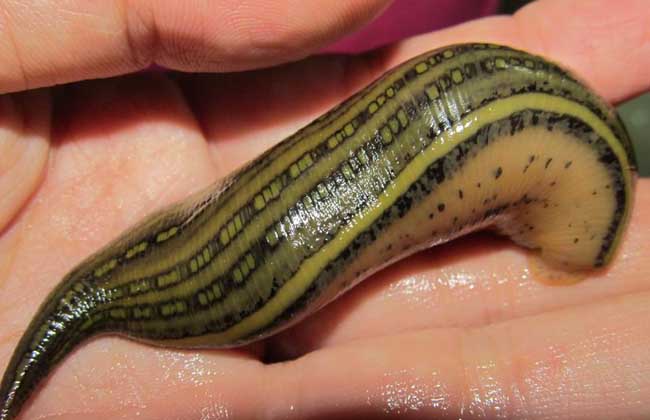
The leech, commonly known as the bloodworm, has 3 medicinal species in China, namely the Japanese medical leech, the wide-body golden-line leech, and the slender golden-line leech. They are distributed in Guizhou, Sichuan, Hunan, Hubei, Jiangsu, Zhejiang, Jiangxi, Anhui, Fujian, Guangdong, Guangxi, Shandong, Hebei, Liaoning and other provinces and regions. Leeches have very high medicinal value and remarkable efficacy, and on the international market, leeches are in great demand. At present, the purchase price of dried leeches is about 65 to 70 yuan per kilogram, and live leeches are about 20 yuan. Therefore, artificially farming leeches is another good path to wealth in rural areas.
The Habitat Environment of Leeches
Leeches live in paddy fields, rivers and ditches, and streams. In winter they lie dormant in the soil, and begin to move about when spring warms. They are sensitive to climate changes and feed on plankton in the water, small insects, the larvae of mollusks, and humus on the mud surface. Their ability to endure hunger is especially strong. The egg-laying period is from June to September.
Leech Capture Methods
1. Split a bamboo tube into two halves, remove the inner nodes, smear animal blood inside the bamboo, then tie it back into its original shape and insert it at the corner of a paddy field or by a shallow riverbank, letting the water submerge it. Then use a tree branch to stir the field water or river water so that the fishy smell of the blood spreads in all directions. After leeches smell the fishy odor, they immediately enter the tube to suck the blood. The next morning, take out the bamboo tube and the leeches can be caught.
2. Use a bamboo sieve, tie animal blood or internal organs wrapped in gauze on top of it, and bind the sieve to the end of a bamboo pole. Hold the other end of the bamboo pole by hand, and after lifting the bamboo sieve, leeches can be obtained.
Post-Capture Handling of Leeches
Select robust, uninjured, large individual wide-body golden-line leeches as breeding leeches. Leeches are hermaphroditic, and every one of them can reproduce. They lay eggs in the soil, producing 1 to 4 egg cocoons each time, and each egg cocoon contains 15 to 35 young leeches. They hatch in July and grow to more than 2 cm within 1 month, and by September to October they can be grown and caught for sale as processed dried products or sold fresh.