What are the living habits of leeches? A full guide to understanding them in one article
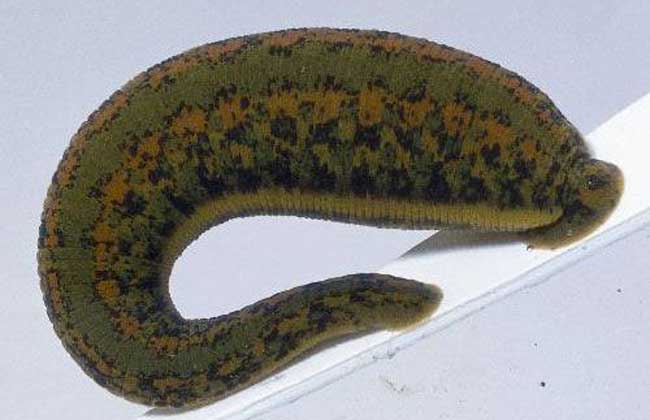
Leeches live in rice paddies, ditches, shallow polluted ponds and similar places. They are bloodsuckers that feed on the blood of humans and livestock, move very agilely, can swim in undulating waves, and can also move by looping like an inchworm. They become active whenever spring turns warm, and June to October is their egg-laying period. In winter they often lie dormant in the wet mud near the shore, neither eating nor moving, and they have strong survival ability. Now let us take a look at pictures of leeches and their production area distribution!
The production area distribution of leeches
They are produced in lakes, ponds and rice paddies in most parts of China. They are mainly produced in Weishan Lake, Dongping Lake, Nanyang Lake and other lakes in Shandong, with Weishan Lake having the largest output. Besides supplying the province itself, they are also sold to Northeast China, Hebei and Shanxi. Part of the output from the suburbs of Suzhou City and Wu County in Jiangsu is also sold elsewhere. In addition, they are also produced in Zhejiang, Anhui, Hunan, Hubei, Sichuan, Shaanxi, Hebei, Liaoning, Jilin, Heilongjiang and other places, all for local production and local sales.
The living habits of leeches
Leeches are cold-blooded annelids and can grow and reproduce in both northern and southern China. They mainly live in freshwater reservoirs, ditches, rice paddies and lakes and marshes, and are most abundant in ponds rich in organic matter or in pollution-free small rivers. The suitable growth temperature is 10-40°C. In northern regions, when the temperature is below 3°C, they enter a dormant overwintering period in the soil, and in March to April of the following year, when the temperature rises above about 8°C, they emerge from dormancy and become active. Leeches are omnivorous animals, and their main way of life is sucking the blood or body fluids of animals. They often feed mainly on plankton, insects and mollusks in the water. Under artificial conditions, they are fed with various animal internal organs, cooked egg yolk, compound feed, plant residues, freshwater snails and shellfish, miscellaneous fish, earthworms and so on.
The population classification of leeches
1. Japanese medical leech: The Japanese medical leech, also known as the medicinal leech, has a long narrow body that is slightly flat and roughly cylindrical, with a body length of 3-5 cm and a width of 4-5 mm (fixed). The back is green with black, with 5 yellow longitudinal lines. The belly is flat, grayish green, without mottled markings. The number of body rings is 103. The clitellum is not prominent and occupies 15 rings. The male gonopore is between the 31st and 32nd ring grooves. The female pore is between the 36th and 37th ring grooves. There are 5 pairs of eyes, arranged in an arc. There is a front sucker on the ventral side of the front end of the body. The esophagus has 6 longitudinal folds, and there are 3 jaws, semicircular, with well-developed jaw teeth. There is a rear sucker on the ventral side of the rear end, bowl-shaped, facing the ventral side, with the anus on its dorsal side. It lives in rice paddies and marshes. It sucks the blood of humans and livestock. It moves agilely and can swim in undulating waves and move by looping like an inchworm. It becomes active when spring is warm, June to October is the egg-laying period, and it lies dormant in winter. Its regenerative ability is very strong; if it is cut and kept, a new body can regenerate from the cut part. It is distributed throughout the country.
2. Wide-body golden-line leech: The wide-body golden-line leech has a large body, slightly spindle-shaped, flat, 6-13 cm long and 0.8-2 cm wide. The back is usually dark green, with 6 longitudinal lines composed of fine yellow-black spots, and the mid-dorsal line is darker. The belly is pale yellow, mixed with many irregular tea-green spots. The number of body rings is 107. The clitellum is obvious and occupies 15 rings. The male gonopore is between the 33rd and 34th ring grooves. The female pore is between the 38th and 39th ring grooves. The eyes are the same as those of the Japanese medical leech. The front sucker is small, and the jaw teeth are not well developed. It lives in rice paddies, rivers and lakes and marshes. It does not suck blood, but feeds on plankton in the water, small insects, larvae of mollusks, and humus on the mud surface. It is distributed in most parts of the country.
3. Tea-colored leech: The tea-colored leech, also known as the cattle leech, is slightly smaller than the wide-body golden-line leech, willow-leaf-shaped, flat, with a brown-green back and 5 longitudinal lines composed of fine green-black spots. The belly is light yellow, very flat, scattered with irregular dark green spots. The rest is similar to the wide-body golden-line leech. It is distributed in most parts of the country.