What is purple spiderwort? People often grow it in pots for ornament and it can also be used as medicine
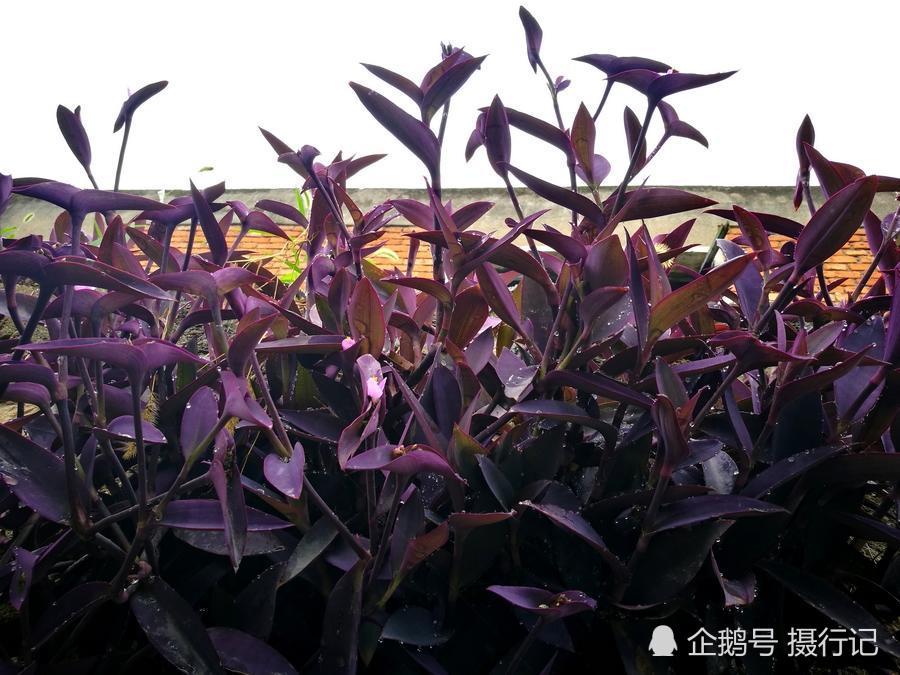
In the wild countryside, there is a plant that looks like spiderwort, but its leaves are purple. Do you know what it is called?
Look, there is a large patch of this grass in the wild, and its leaves are purple. Do you recognize it?
This grass is called "purple bamboo plum", also known as purple spiderwort and purple brocade grass. It is a plant of the phylum Angiospermae, genus Tradescantia, subclass Commelinidae.
Purple spiderwort is generally used as a potted display, and household cultivation is more common. It can be placed in the living room, study, office and bedroom, and in autumn it can be used as a color-matching plant for flower beds.
Purple spiderwort likes warmth and moisture, is not cold-tolerant, avoids direct sun exposure, and likes semi-shade. It has strong adaptability to drought and is suitable for fertile, moist soil.
Besides being ornamental, purple spiderwort also has certain medicinal effects. Its alternative names include Xuejianchou, Yasheshecao, Benshan Jinxianlian, Yashihuang, etc.
Purple spiderwort is mild and sweet in taste, cool in nature, and toxic. It enters the heart and liver meridians.
As medicine, purple spiderwort has the effects of promoting blood circulation, promoting diuresis, reducing swelling, dissipating masses, and removing toxins. It treats carbuncle, swollen toxins, scrofula and tuberculosis, and gonorrhea.
Usage and dosage: for internal use, decoct in water, 3 to 5 qian (1 to 2 liang if fresh). For external use, pound and apply, or decoct in water and wash.