Secrets to High-Yield Peanuts: Fertilizing by Growth Stage Is Key
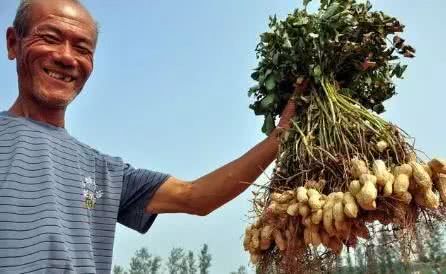
In recent years, due to the sluggish prices of corn and soybeans, there is not much choice when planting summer grain crops, and many farmers have chosen to switch to growing peanuts. Only with high peanut yields can farmers increase their income, and for peanuts, their fertilizer demand is still relatively high. For high-yield peanuts, it is not accurate to say what fertilizer to apply for high yield; rather, it is more appropriate to say what fertilizer to apply at what stage to achieve high yield!
For peanuts, we still need to have a basic understanding of them. One major characteristic is that they can form root nodules, which is a major feature of leguminous plants. The nitrogen-fixing characteristic of rhizobia also determines that peanuts do not need as much nitrogen fertilizer as other crops.
Sowing stage + seedling stage
Since peanut root nodules have not yet fully developed at the seedling stage, nitrogen fertilizer needs to be applied during sowing and cultivation. If peanuts are sown on hard stubble, nitrogen fertilizer should also be applied as a top dressing during the seedling stage as much as possible to promote peanut growth and development. Second is the organic fertilizer we often mention. Since peanuts have a strong nutrient demand during their growth period, and organic fertilizer has a lasting effect, an adequate amount of organic fertilizer is the foundation for high-yield peanuts. At the same time, it is also very necessary to apply phosphorus and potassium fertilizer in the base fertilizer. (Control nitrogen fertilizer at 8 kg, phosphorus and potassium fertilizer at 20 jin each, and organic fertilizer at 50 jin.)
Flowering and pod stage
At this time, peanuts are about to shift from vegetative growth to reproductive growth, and their demand for nutrients rises sharply. Therefore, when they are about to enter flowering, an adequate amount of fertilizer needs to be supplemented to meet the peanut's flowering needs. But as mentioned earlier, peanuts themselves have nitrogen-fixing ability, so what needs to be supplemented at this time is not nitrogen fertilizer, but phosphorus and potassium fertilizer. In production, potassium dihydrogen phosphate is commonly used. Of course, superphosphate + potassium chloride can also be chosen to supplement phosphorus and potassium fertilizer! (There are also many compound fertilizers available on the market nowadays.) In addition, it should be noted that if there are few flowers or sparse flowering, it may also be due to boron deficiency in the field, and boron fertilizer should be sprayed!
Pod swelling stage
At this stage, the pods enter the swelling stage, and the nutrient demand is very high. However, since the peanut plants are already relatively large at this time, it is recommended to choose spraying potassium dihydrogen phosphate! Still, nitrogen fertilizer should not be supplemented at this stage to avoid excessive vegetative growth! Proper fertilization control at this stage can delay premature senescence symptoms in peanut plants, resulting in large pods and plump kernels!
The above is a strategy on peanut fertilization shared with you by Science Agriculture. We hope it is helpful to you.