In 2018, the rice purchase price was significantly lowered. Will rice farmers keep planting?
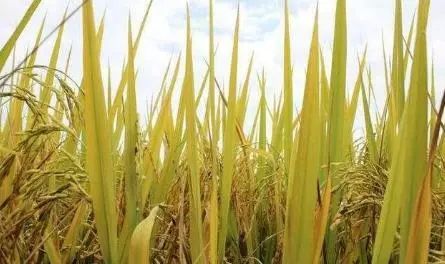
In 2018, the minimum purchase price for rice was lowered somewhat, but rice farmers' returns did not decline. For 2018, the minimum purchase price for rice was indeed lowered somewhat, and in fact we still need to view this matter correctly. First of all, China's grain prices are indeed relatively high at present, and this is a prelude to aligning with international standards. Second, low grain prices are more conducive to marketization. Third, lowering grain prices does not mean farmers' incomes fall. Let us discuss this below.
China's grain prices are on the high side
At a certain meeting of the Ministry of Agriculture in December 2017, it was stated that a policy of separating price from subsidy should be implemented for China's grain prices, that is, to push China's grain prices to align with the international market. The current situation is that China's agricultural products hold no advantage at all in the world; whether wheat, corn or soybeans, they are all much higher than international grain prices, and this is also a major reason why Russian wheat and American soybeans flood into China.
Low grain prices are more conducive to marketization
There is good reason for saying this, and it is not blind. First, the current high grain prices in the market directly force grain processing enterprises to purchase imported grain, leaving domestic grain unwanted, and this situation can be described as a true reflection of China's current soybeans. What is extremely contradictory now is that China, on the one hand, purchases large quantities of imported genetically modified soybeans, while leaving domestic non-genetically modified soybeans unused. Taking 2017 as an example, domestic soybean output was only 14 million tons, while imported soybeans reached 95.53 million tons. Under such circumstances, domestic soybeans are still unwanted. Domestic soybean farmers still say that the soybeans in their hands cannot be sold. If this continues, the only ones hurt can be domestic farmers. It can also be said that the current market strategy brings no real benefit to domestic farmers; what looks like a superficial benefit actually hides a deep crisis behind it! For farmers, their vision really must be long-term!
The rice support price was lowered, but farmers' incomes did not decline
In April this year, there was news in China that, to promote reform of China's rice purchasing and ensure farmers' interests, a subsidy plan would be implemented this year in China's main rice-producing areas, with specific measures formulated by each locality. At that time, the relevant subsidy funds would be issued specifically by the central government treasury!
It can be said that this strategy was adopted in response to this year's lowering of the rice market support price, and it also indirectly confirms the fact that China's grain will gradually move toward marketization in the future. While grain prices continue to be lowered, the processing motivation of grain processing manufacturers has been stimulated, but protecting farmers' interests is a problem right before our eyes. Only by increasing subsidy intensity can farmers' enthusiasm for growing grain be raised, and this strategy is not unique to China; even in the United States, with its developed agriculture, relevant subsidies have been adopted for agriculture.
Therefore, for farmers who intend to plant rice this year, it is believed that they have already made their choice, and under the broad background of national policy support, farmers' interests will certainly be safeguarded.