Snake plant not growing well? Check whether your fertilizing season is right - fertilizing differs across the four seasons
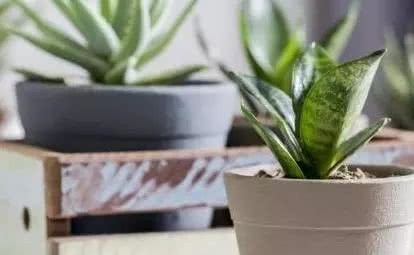
Snake plants have become quite popular in recent years, and many friends who love growing flowers like to keep one or two pots of snake plants. There are many varieties of snake plants and they look beautiful, especially those that can be coaxed into blooming, which are even more beautiful. What's more, growing a snake plant indoors can also help purify the air. Here I'd like to talk with you about how to care for snake plants.
The growing habits of snake plants
If you want to know what fertilizer suits snake plants, you first need to understand their growing habits, so you can minimize mistakes. Snake plants are fairly adaptable and suit a warm, humid growing environment. They tolerate shade and drought, dislike soil that is too heavy and clay-like, fear waterlogging, and prefer loose, fertile, sandy soil.
Fertilizing snake plants in spring
Spring is when snake plants begin to enter their growing season, and for young snake plants it is a good time to repot. Repotting naturally calls for an appropriate amount of base fertilizer. With enough base fertilizer, later growth will be vigorous. Still, repotting is also very delicate work, and you should try to avoid damaging the snake plant. When repotting, carefully take the snake plant out of the pot, shake off the soil from its roots, and trim the old roots a little.
Base fertilizer should be added to the bottom of the potting soil; the base fertilizer can be rotted cake fertilizer or rotted chicken manure. After potting the snake plant, be careful not to rush to water it - wait a week before watering. About every twenty days or so, you can give the snake plant a dose of rotted cake fertilizer, and the concentration should be light. You can also use granular slow-release fertilizer, about ten granules is enough, and avoid contact with the roots.
Fertilizing snake plants in summer
Summer temperatures are high and evaporation is strong, but it is also the season when snake plants are most prone to problems. Snake plants in the south in particular tend to develop various diseases after the plum rain season begins, because the weather is too humid and muggy. In summer, snake plants naturally cannot go without fertilizer either. In summer, snake plants like light fertilizer, and the fertilizer must not be too concentrated, as that easily burns the roots. Flower lovers can apply a dose of rotted cake fertilizer about every twenty days, and be sure to fertilize in the evening to avoid fertilizer burn. Also spray water on the leaves often to prevent the leaves from drying out.
Fertilizing snake plants in autumn
After autumn arrives, the weather gradually turns cold, and flower lovers should move their snake plants indoors in time to avoid frost damage. Many flower lovers' snake plants bloom in autumn, and snake plant blooming is a relatively rare event. In autumn, flower lovers can give snake plants an appropriate application of phosphorus and potassium fertilizer to promote flower bud differentiation. Because snake plants are fairly tolerant of poor soil, the fertilizer should not be too concentrated. Alternatively, lightly applying slow-release fertilizer is also fine.
Fertilizing snake plants in winter
Winter temperatures are low, and what flower lovers need to do is keep their snake plants warm to avoid frost damage. Because the temperature is low, snake plants grow very slowly, and at this time you should stop fertilizing to avoid root rot.
The above comes from Science Agriculture.