Tainan Beef Soup: Chen Chih-tung walks you through the journey from pasture to table
95% of the beef source for Tainan beef soup is dairy cattle. These dairy cattle are divided into dairy bulls, steers, culled cows, and "119" cattle, but you have no way of knowing which type of cattle you are eating.
Everyone knows that Tainan beef mainly comes from the Shanhua slaughterhouse, but how does the journey from pasture to slaughterhouse to table actually go? Where do the cattle come from? Who raises them? Who does the slaughtering? How high are the costs of raising cattle? What is the cattle-raising environment like? Most people are not clear on these questions.
During this period, while interviewing for stories on the Chianan Canal and Chianan Plain cuisine, when I got to beef soup, I discovered that not only is the general public unclear about where the beef comes from, but even many beef soup shop owners are unfamiliar with Taiwan's beef cattle industry. So I followed the trail back to the source, and over more than 3 months gradually compiled the information below.
Exploring the source of meat ingredients has never been a comfortable topic. During this time I saw many images I did not want to see, but I still pushed myself to watch the whole process. My thinking is this: since we are going to eat it, we have a responsibility to understand it, and only by understanding it can we know how to oversee the entire process and ensure that farmed animals never experience any suffering in their lives.
The content below is mainly based on interviews with meat suppliers, butchers, the Council of Agriculture's Central Animal Husbandry Association, veterinarians, beef cattle farms, dairy farms, beef soup operators, the Council of Agriculture's Animal Protection Division, and the Deputy Director of the Council of Agriculture's Animal Husbandry Department, among other units and experts. There will be no bloody images below, no emphasis on tragedy, and no intention to harm beef cattle farmers or beef soup operators. Names of people and shops have been obscured as much as possible. The goal is simply to explain things clearly, so everyone knows the source and process of the beef they put in their mouths.
If there is an opportunity, I hope even more that this can bring some positive help to improving the beef cattle raising environment. This is also the main purpose of this report.
Where does the beef for Tainan beef soup come from?
Taiwan's domestic beef accounts for only 6% of Taiwan's total beef market, with the rest imported from the United States, Australia, New Zealand, Japan, and elsewhere. This number means we eat about 36,000 head of Taiwanese cattle a year. At present, Taiwan's beef cattle sector includes the Council of Agriculture working with a group of young farmers and Chiayi's Hongjing Meat Products and other units to import more than 400 head of Angus for trial raising; the Kinmen Livestock Research Institute attempting to breed heat-tolerant Brangus crossbreeds; the Hengchun Livestock Research Institute promoting Taiwan's native beef-type yellow cattle for many years; and former President Lee Teng-hui entrusting about 20 head of Wagyu left behind by the Japanese at Qingtiangang to Hualien's Zhaofeng Farm for breeding. Aside from these, more than 95% of the beef used for Tainan beef soup is dairy cattle.
These beef-type dairy cattle are mainly divided into three categories: dairy bulls and steers, culled cows, and "119 cattle."
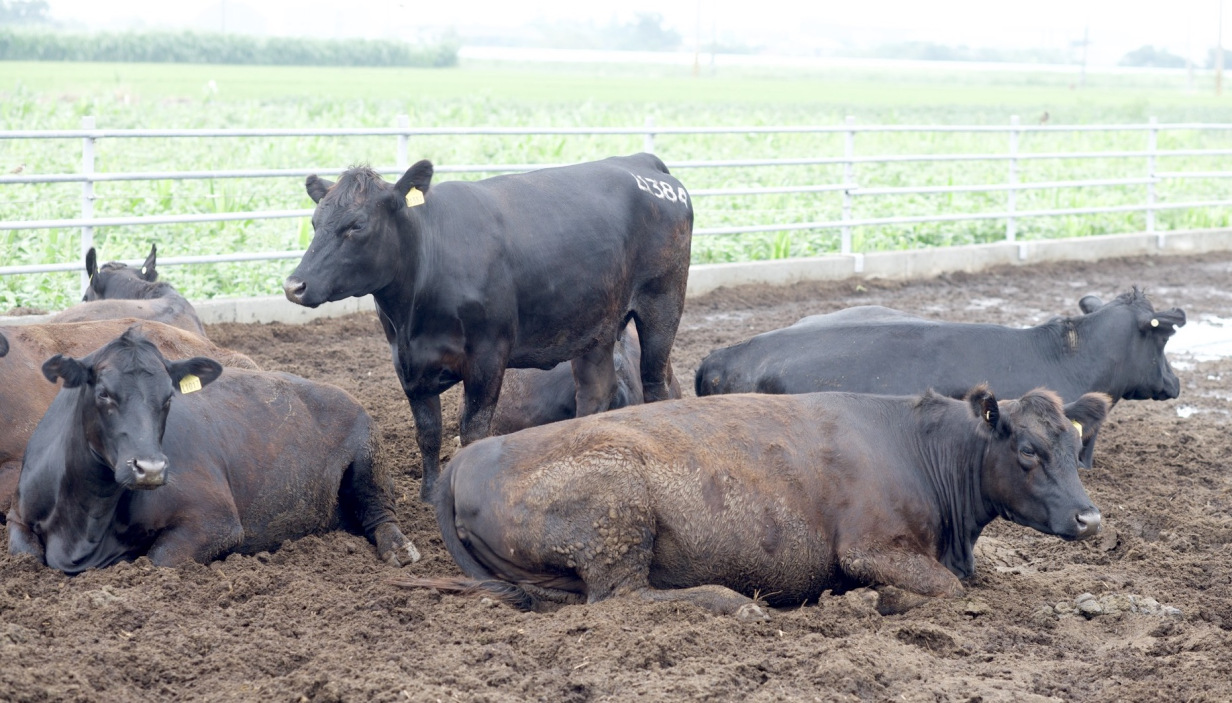
The raising environment for dairy bulls is not good. This is a problem of industrial structure and cost. At present, what I can do is present this relatively unfamiliar side of the industry, and I hope that one day, all poultry and livestock in Taiwan will dare to openly disclose and welcome photography of their raising, auction, and slaughter processes. If they dare to disclose openly and welcome photography, that means the entire process has been done well enough, rather than there always being so much mystery and concealment as there is now.
I also hope that in the future, when everyone drinks beef soup, they can ask the shop one more question: "Where does your beef come from? What kind of cattle is it? Have you seen their raising environment?" When shop owners feel that customers care about this issue, they will go back and ask the meat suppliers, and when the meat suppliers feel the pressure, only then will there be a possibility of improvement in the environment for beef cattle. That is what I hope for.