What Types of Medicinal Leeches Are There? With a Complete Picture Guide
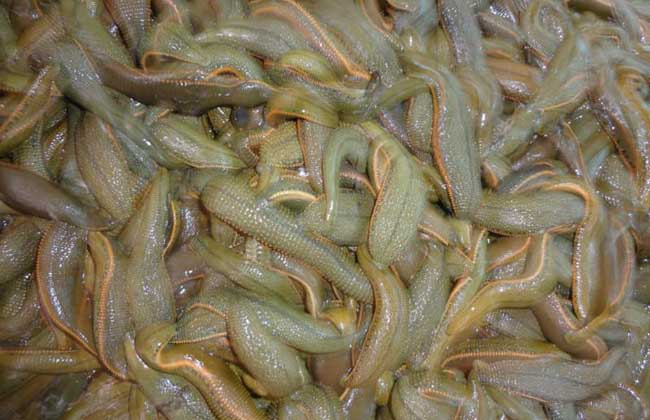
The leech, scientifically known as Hirudo, is an invertebrate of the class Hirudinea, order Arhynchobdellida, family Hirudinidae. There are 400 to 500 species in the world, about 100 in China, of which 89 have been discovered. Most live in freshwater, while some are terrestrial and amphibious, and a few live in salt water; some are also terrestrial and amphibious. Let us take a look together at the complete picture guide to types of medicinal leeches below!
Whitmania pigra (broad-bodied golden-lined leech)
Whitmania pigra is currently the main species bred in China. Its body is large and flat, spindle-shaped, with a convex back and a flat belly, the front end tapering and slender, and the rear end blunt and rounded. Adults are 6 to 15 cm long and 1 to 2 cm wide. The back is usually dark green, with 5 longitudinal stripes made up of alternating black and pale yellow markings; the belly is pale yellowish white with many irregular dark green spots. The male and female gonopores are separate, each opening at the center of a ring; the male pore opens between body rings 33 to 34, and the female pore opens between body rings 38 to 39. There are 10 eyes arranged in an arc on the dorsal side of the head. The palatal teeth are not well developed, the anterior sucker is inconspicuous, and the posterior sucker is round and large with strong suction. The anus opens on the dorsal side of the last two rings. It feeds mainly by sucking the blood of animals, and also ingests plankton and mollusk larvae in the water. The main features of Whitmania pigra are its large size, fast growth, high reproductive rate and ease of capture, making it the main species currently promoted for breeding.
Whitmania acranulata (slender golden-lined leech)
Whitmania acranulata, also known as the tea-colored leech and willow-leaf leech, has a slender body in the shape of a lance, with a very small head. The front quarter is slender and pointed, and the rear half is the widest. The body is 28 to 67 mm long and 3.5 to 8 mm wide, and the tail sucker is very small. The dorsal side of the body is tea-brown, with 6 longitudinal stripes formed by yellow-brown or black markings. Each longitudinal stripe appears to have 1 white papilla on the middle ring of each segment. The black pigment on the mid-dorsal stripe enlarges in a regular pattern. There is 1 yellow longitudinal band on each side of the body. The ventral side is grayish yellow, and each side edge has 1 band formed by clustered dark brown spots. The male gonopore is located at ring 35, and the female gonopore is located at ring 40. The anus is located on the boundary line between ring 105 and the tail sucker, and the anterior sucker is very small, with the mouth opening in front of its rear edge. It feeds on aquatic oligochaetes and insect larvae. Although its underdeveloped jaws can pierce the skin, it cannot suck blood.
Hirudo nipponia (Japanese medicinal leech)
Hirudo nipponia has a narrow, elongated body, slightly cylindrical, with the back and belly slightly flattened: the front end is blunt and rounded, and the rear end is thick. The body is 3 to 5 cm long, 0.4 to 0.5 cm wide, and weighs about 5 grams. The back is dark green, with 5 yellow longitudinal lines; the back is flat with no mottled markings. The body has 103 rings in total. The grooves between rings 6 to 7 and rings 8 to 9 disappear on the ventral side, making them into two rings, and the previous ring forms the rear edge of the anterior sucker. There are 5 pairs of eyes, large and obvious, arranged in an arc on the dorsal side of segments 2 to 6. The clitellum is inconspicuous and occupies 15 rings in total (that is, rings 26 to 40). Both the male and female gonopores are sunken, the penis is slender, and the anus is mid-dorsal at ring 103. The tail sucker is bowl-shaped and faces the ventral side, with extended body-back stripes on its dorsal side. It mainly sucks the blood of humans and livestock, and in nature mainly feeds on the blood of fish and other animals. It is not easy to raise artificially on a large scale, and in medicine it is mostly used as a live leech and not used to process medicines. There is a large demand for medicinal leeches abroad, but they must be live.
Whitmania laevis (smooth golden-lined leech)
Whitmania laevis has a slightly spindle-shaped body, gradually tapering toward the front. The rear is relatively wide and round, with little change in width over the rear half of the body, and the tail sucker is relatively small, about 1/3 of the body width. The clitellum is at segments 10 to 13, and this part is obviously swollen in mature individuals. The length is generally 32 to 81 mm, and the body width is 5 to 12 mm. The back is usually brown, with 5 yellow longitudinal stripes, of which the pair at the lateral middle is the widest. The body is divided into 105 rings, and the anus is mid-dorsal on the last ring. There are 5 pairs of eyespots on the head, and the anterior sucker is small. The mouth opening is in front of its rear edge. Its body is relatively small, and its living habits are similar to those of Whitmania pigra. It often feeds on snails (river snails and pond snails) and insect larvae, among others. Its reproductive output is small and its yield is low, so it is not suitable for artificial large-scale breeding.
Poecilobdella javanica (rod-striped cattle leech)
Poecilobdella javanica has a body length of 100 to 160 mm, with the largest specimen reaching 225 mm; the maximum body width is 10 to 19 mm, and the diameter of the posterior sucker is 10 to 19 mm, often equal to the maximum body width. The body has 103 rings. There are 5 pairs of eyespots, located on the dorsal side of body rings 2, 3, 4, 6 and 9. The male and female gonopores are separated by 7 rings. The body surface color is extremely vivid; when alive, the back is grass green, and the belly is pale gray-green or brick red. There is 1 dark brown longitudinal stripe in the center of the back, extending from the front end to the anal pore and broken into 22 rod-shaped stripes. On the true side of the body there is 1 band-shaped transverse stripe, brownish yellow or bronze in color, which is why it is called the "copper-edged leech." Its living habits and medicinal functions are similar to those of Whitmania pigra, and because it has a large body, high yield and is easy to raise, Poecilobdella javanica can also be used as an excellent species for artificial breeding on a large scale.