How to build a sika deer farming site? A complete analysis of the construction plan
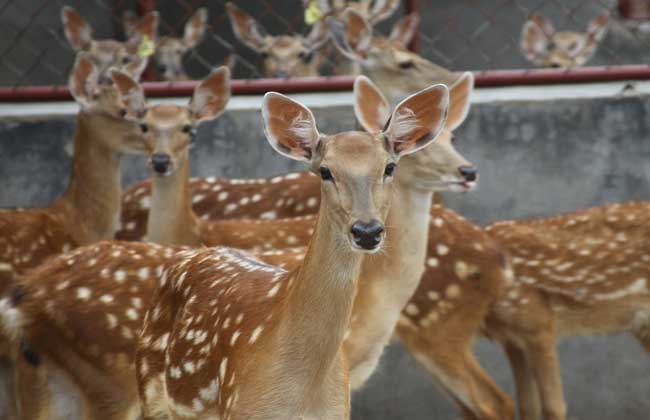
Sika deer have strong adaptability, tolerate coarse feed, have few diseases, and are easy to raise. They mainly feed on tender branches, leaves, crop straw, pumpkins, sweet potatoes, and bran, and use very little grain, making them suitable for farming at agricultural and forestry farms in poor mountainous areas. Now let us take a look at the sika deer farming site construction plan!
Farming site selection
The deer farm should be built in a shaded area with relatively high terrain and abundant water and grass, and it is required to be more than 100 m from the main highway. Building the site at the edge of hillside woodland or among shrub forests is most suitable.
Farming site planning
Small deer farms do not have strict requirements for the site area; it is enough to mark out a place for building deer sheds. Forest clearings and hillside shrubland can both serve as deer exercise yards.
Design and construction of deer sheds
Sika deer sheds require a dry interior, warm in winter and cool in summer, with a floor that is impermeable and not slippery, and manure that is easy to discharge outside the shed. The deer shed should face southeast from a northwest orientation, so that morning and evening sunlight can shine into the deer shed and achieve the purpose of natural lighting and disinfection. Deer sheds in the south mostly use a brick (wood) and asbestos tile shed-style structure. The specific design is as follows.
1. Deer shed specifications and number of deer raised: A small deer farm raising 30 breeding deer needs to build 1 deer shed of 90 sq m, 18 m long, 5 m deep, and 2.5 m high (to the eaves drip), divided into 6 pens. Among them, 5 pens can raise 30-40 deer, using brick (wood) posts to support the frame, covered with asbestos tiles on top, with walls sealed on the left, right, and back, and the front fully open; 1 pen has an enclosing wall and is fitted with doors and windows, serving as a dormitory, veterinary room, and feed-mixing room.
2. Ground setup inside the shed: The entire ground inside the shed should be 5-10 cm higher than the exercise yard, with a cement floor, and the floor should be padded with bamboo and wood as bedding for the deer to rest. The urine ditch of the deer shed is outside the shed and shared with the eaves drip ditch.
3. Sika deer exercise yard: The exercise area per deer is calculated as 10 sq m for male deer, 12.5 sq m for female deer, and 7 sq m for growing deer, with a total exercise yard area of 410 sq m, and male deer, female deer, and growing deer separated from one another. The exercise yard fence is 1.8 m high and built with bamboo, wood, and wire mesh. Within the exercise yard, set up hay racks, feeding troughs, and drinking basins, and add rain shelters above the hay racks and feeding troughs.