Detailed Explanation of Key Points of Alligator Snapping Turtle Greenhouse Farming Technology
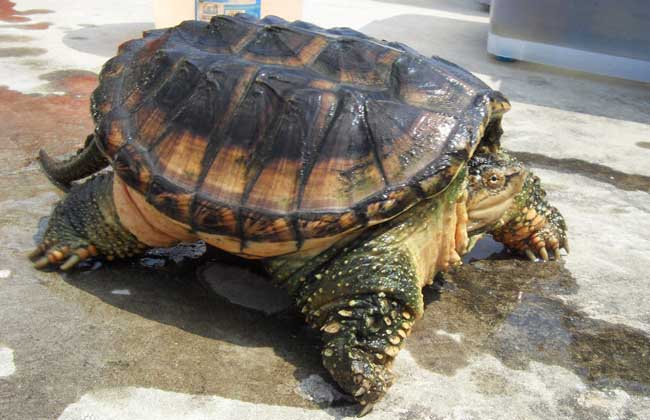
Alligator snapping turtles can be raised at natural temperatures in southern China. In northern China, they can be raised in greenhouses, with heat preservation measures taken in winter to keep the water temperature at around 28-31°C, such as using geothermal water, in order to increase the growth rate of alligator snapping turtles and boost economic returns. Now let us take a look at alligator snapping turtle greenhouse farming technology!
Growth Conditions of Alligator Snapping Turtles
The alligator snapping turtle is an aquatic turtle that prefers freshwater, often lying hidden in mud, sand and weeds in the water. In the wild, it often digs burrows and lives in groups in winter. It likes quiet, and once startled it will immediately flee; when it finds it cannot escape, it will turn to attack the enemy. Its survival temperature is 3-45°C; it is frequently active at 20-35°C, with optimal growth at 28-31°C; activity decreases at 15-17°C; it hibernates below 10°C and enters deep hibernation below 5°C.
Greenhouse Farming of Alligator Snapping Turtles
1. Greenhouse farming conditions: Conditions of the farming site. In hot summer, the indoor water temperature should not exceed 35°C. They can also be raised in plastic greenhouses, greenhouses, residential balconies, basements or idle rooms. Natural water bodies with a mud-sand bottom are more ideal. For juvenile turtles, 5-10 groups, or for hatchling turtles, 30 groups; be sure to raise them in separate ponds by size and specification, and do not mix them, so as not to affect or harm the growth of small turtles.
2. Strengthen feeding management: In early spring and early winter, feed once a day at noon. In late spring and early autumn, which is the peak feeding season, feed twice a day, with 40% fed at 9 a.m. and 60% fed in the evening. Implement the "three fixeds" in feeding (fixed time, fixed quality, fixed quantity). Generally, feed should be finished within 120 minutes; if not finished, clean it up promptly. Large feed should be cut into small pieces, and spoiled feed must not be fed, so as to prevent the water from becoming foul.
3. Pay attention to water changing and disinfection: For turtle ponds with a large area, change the water once every 30 days; for ponds of 20-30 sq m, change the water once every 7-10 days. For artificial farming tanks, plastic buckets and basins, because the area is small, change the water promptly after feeding every day. In summer, when the water temperature is high, the pond water must not be lower than 50 cm; when the outdoor temperature is high, they can be moved indoors. A basement maintains a suitable temperature year-round, and alligator snapping turtles likewise grow normally. Also disinfect regularly.
4. Breeding methods of alligator snapping turtles: Wild alligator snapping turtles begin laying eggs after 3 years of raising, while artificially raised ones begin after only 18 months; those weighing more than 2 kg begin to carry eggs. Natural mating generally occurs in April-May and September-October. The egg-laying period is May-September. Female turtles lay eggs at night, in 3-4 batches, producing about 30-120 eggs per year. Keep a constant temperature of 30°C and a relative humidity of 80-90%, and hatchling turtles emerge after 40-50 days of incubation.
5. Disease prevention and control of alligator snapping turtles: As long as strict attention is paid to feeding and disinfection of juvenile turtles, they generally rarely become ill. If there is an occasional minor illness, isolate and raise them promptly and treat with the right medicine. Generally, soak and wash with malachite green or concentrated potassium permanganate solution for 20 minutes. For external injuries and inflammation, use chlortetracycline; for colds, feed cephalosporin mixed with feed; for enteritis, feed norfloxacin; for indigestion, administer multienzyme tablets or yeast tablets.
6. Overwintering management of alligator snapping turtles: After overwintering, as the water temperature rises, the turtles begin to feed. Frequently feed animal viscera, small fish and shrimp to strengthen nutrition and enhance disease resistance. Keep the pond water fresh to prevent the water quality from irritating the eyes.
Greenhouse Farming Benefits of Alligator Snapping Turtles
The cost composition of alligator snapping turtle greenhouse farming mainly includes seedlings, feed, energy consumption and disease prevention. In addition, the survival rate is one of the important factors affecting cost. According to analysis, the price of alligator snapping turtle hatchlings was 130 yuan each at the farmer price in 2014. At a survival rate of 88%, the seedling cost converted per harvested commercial alligator snapping turtle is about 150 yuan each. Feed is calculated by the weight gain coefficient; compound feed is generally used, with a coefficient of 1.1, meaning 1.1 kg of feed is needed to gain 1 kg of weight.
To raise alligator snapping turtle hatchlings into commercial turtles of 4 kg specification, the farming cycle is 18 months, consuming 4.4 kg of feed. The feed price is 12,000 yuan per ton, that is, the feed cost consumed per commercial alligator snapping turtle averaging 4.4 kg is about 53 yuan. The energy consumption cost of water, electricity, coal, oxygen, etc. totals 10 yuan per alligator snapping turtle, and disease-prevention medication is 5 yuan per turtle. The total farming cost is 218 yuan per turtle.
The selling price of commercial alligator snapping turtles is calculated at the current 88 yuan per kg. The sales revenue per commercial alligator snapping turtle averaging 4.4 kg is about 387 yuan, and the farming profit is 169 yuan per turtle.
Generally, a greenhouse area of 750 sq m is stocked with 2,500 alligator snapping turtle hatchlings. Calculated at a low survival rate of 80%, 2,000 commercial alligator snapping turtles are harvested. Still calculated low at a profit of 150 yuan per alligator snapping turtle, this greenhouse can obtain a profit of 300,000 yuan.