What is the typical market price of a partridge per bird?
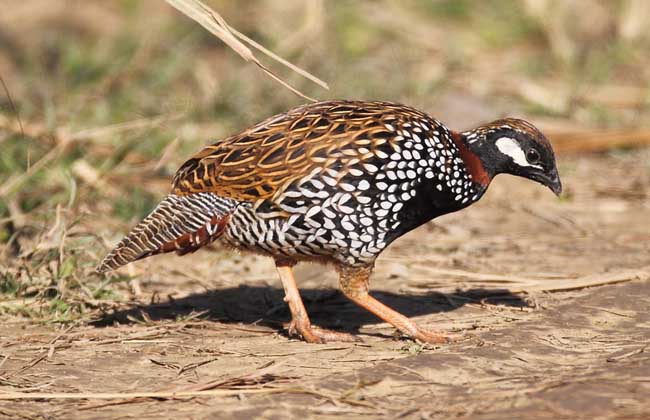
The partridge, also known as the Chinese francolin, is a type of bird. It is shaped like a chicken but smaller, and its feathers are mostly a mix of black and white, with the eye-shaped white spots on its back, chest and belly being especially prominent. Its meat tastes better than that of the pheasant and is a top-grade game bird, fetching a high price on the market. Let us take a look below at how much a partridge costs per bird!
How much does a partridge cost per bird?
The American partridge costs just over ten yuan per bird, while the Chinese francolin varies in price from place to place, generally around 85-150 yuan. Partridge eggs generally cost 2-3 yuan each.
The nutritional value of partridge
1. Partridge meat: Partridge meat is rich in protein and fat and contains the 18 amino acids essential to the human body as well as relatively high levels of trace elements such as zinc and strontium, and is rich in various vitamins and minerals such as iron and potassium. It has the effects of tonifying yang and nourishing the kidneys and strengthening the body, and is an excellent tonic suitable for men and women, young and old alike.
2. Partridge eggs: Partridge eggs are a tonic with relatively high nutritional value. The egg white is thick and dense, and the protein, amino acids, lecithin, cephalin, and vitamins A, D, E, K and B group, as well as zinc, iron, calcium, iodine, selenium and so on in the egg are all higher than those in ordinary chicken eggs. In particular, the cholesterol in the egg is far lower than that in ordinary chicken eggs, quail eggs and so on (20-40% lower than ordinary chicken eggs). Eaten when boiled to seven or eight tenths done or after cooking, the egg has a mellow fragrance with no fishy smell, and is very easily digested and absorbed. Used over the long term, it boosts physical strength in middle-aged and elderly people, improves intelligence, delays aging and raises work efficiency; it especially promotes intellectual development in children, replenishes the brain and enhances memory; for those who are frail and prone to illness it can raise disease resistance, and it can play a supporting role in restoring health.
The difference between the partridge and the chukar partridge
The chukar partridge currently raised in production differs from the wild partridge tamed by the ancients. The American partridge now raised as commercial meat stock is in fact not a partridge, but a chukar partridge.
1. The obvious difference between the partridge and the chukar partridge is that the partridge's beak is black or brown, while the chukar partridge's beak is red.
2. In animal classification, the chukar partridge belongs to the class Aves, order Galliformes, family Phasianidae, genus Alectoris, while the partridge belongs to the class Aves, order Galliformes, family Phasianidae, genus Francolinus.
3. The partridge is distributed across the tropical and subtropical regions of the Old World, with only one species in China. The chukar partridge is distributed across southern Europe, northwestern Africa and central Asia, and has 7 subspecies in our country, distributed in **, Qinghai and Gansu, and from North China to the southwestern part of Northeast China. Wild chukar partridges are easier to tame than wild partridges.