Partridge farming technology video, with a detailed explanation of farming methods
Because of farming characteristics such as fast growth and strong reproductive capacity, partridges have thick meat and fine bones, a fresh and nourishing taste, rich nutrition, and low fat content, and also have medicinal effects such as tonifying the kidney and supporting yang, and resolving phlegm and directing qi downward. Therefore, they have very high economic benefits and are a newly emerging farming industry with broad prospects. Now let us take a look at the partridge farming technology video together!
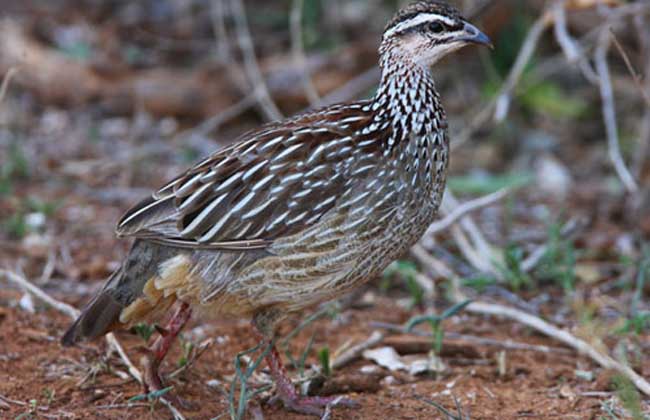
Selection and identification of breeding partridges
1. Partridges are selected once at 7 days of age, and weak chicks and deformed chicks should be culled. Chicks with no hard lump on the abdomen, that are lively and have a strong appetite should be kept. A second selection is carried out at 16 weeks of age. At this time, male and female partridges can already be distinguished. In body size, male partridges are larger than female partridges; the head of the male partridge is larger and wider than that of the female, the neck is shorter than that of the female, and there is a protruding spur on both feet; female partridges occasionally also have a spur on one foot, but the spur is smaller. The accurate method for distinguishing male from female partridges is the vent sexing method: in male partridges, at the central position of the cloacal folds, there is a round protrusion, while female partridges do not have one or have only a small nodule.
2. Male partridges should be selected as healthy birds with a tall body, a sturdy skeleton, a broad breast, and bright orange-red beak and feet. The selection standard for female partridges is a slender neck, a well-proportioned body, bright eyes, glossy plumage, and lively activity. At this time, male and female partridges are openly moved into cages for rearing. At 28 weeks of age, a third strict selection is carried out in combination with vaccination.
Farming conditions for partridges
1. Lighting: For partridges from 4 months to 7 months of age, natural lighting is used; only after 7 months of age is artificial light used to stimulate egg laying. There should be 16 hours of light and 8 hours of darkness per day. Light, as an excitatory factor, can promote reproductive function and increase the egg production rate. The light intensity is 3 watts per sq m, with lights 2 m above the ground, to prevent bulbs from drying and cracking. For example, in a 20 sq m partridge house, 4 15-watt bulbs should be installed evenly. Light duration and light intensity must not suddenly become longer or shorter, or suddenly higher or lower, otherwise egg production will be seriously affected. Before egg laying, after the male partridges have already received 2 weeks of light stimulation, male and female partridges are then transferred together into the partridge house at a ratio of 1:3 for light stimulation together, and after 2 weeks the female partridges begin to lay eggs. Light stimulation should be later rather than earlier; for example, stimulation at 32 weeks of age gives the best egg production.
2. Temperature: The suitable temperature during the partridge egg-laying period is 15°C-25°C. Above 30°C, both egg production and fertilization rate are affected. Below 5°C, the partridge house should be heated so that the temperature is not lower than 8°C.
3. Environment: Partridges are easily startled, so the environment around the partridge house must be quiet. During the egg-laying period, stress caused by fright can make the egg production rate drop sharply. Outsiders should not enter the partridge house. The color of the keeper's work clothes, water troughs, feed utensils, and so on should be relatively fixed.
Farming equipment for partridges
Partridges can be raised on the ground or in multi-tier three-dimensional cages, but cage rearing has obvious advantages over ground rearing in both management and disease reduction.
1. Multi-tier three-dimensional cage rearing: the bottom of the cage is 30 cm above the ground; less than 30 cm makes it inconvenient to clean manure under the net. The partridge cage size is 120 cm × 80 cm × 40 cm, and each cage can hold 3 groups of partridges. Partridges should not be raised in a single group; the fertilization rate of raising multiple groups is significantly higher than that of raising a single group.
2. The bottom net of the cage house can use 1 cm × 1 cm steel plate mesh or plastic mesh; the front, back, and sides can be made of bamboo strips; the frame can use 2.5 cm × 3 cm wooden strips, tilted forward and backward by 5 degrees to make it easier for eggs to roll out.
3. Feed troughs and water troughs are placed outside the cage.
Farming feed for partridges
1. After partridges reach 4 months of age, body maturity is basically complete. Feed them layer feed with 17% protein. To prevent female partridges from becoming too fat and affecting egg laying, feeding should be restricted.
2. The daily feeding amount for female partridges should be controlled at 24-28 grams; add 20%-30% roughage to the feed. After 6.5 months of age, roughage can be removed, and the daily feeding amount should preferably be 35 grams.
3. When female partridges enter the peak egg-laying period, the protein content in the feed should be increased. Add 3% imported fish meal and 4% soybean meal to the feed, so that the protein content of the feed reaches 20%, and maintain this until the end of egg laying. During the egg-laying period, feeding is not restricted; the feeding amount should follow the principle that the feed trough is never empty. The feed must be fresh; moldy and spoiled feed will reduce egg production.
Disease prevention and control for partridges
1. At 6 months of age, partridges are vaccinated with the trivalent oil adjuvant vaccine for Newcastle disease, infectious bronchitis, and egg drop syndrome. At the same time, deworm them once.
2. After 2 weeks, partridges are given one prevention treatment for blackhead disease, with drugs such as Sanzi anticoccidial powder or Liwuling, etc. After that, prevent blackhead disease once every 2 months.
3. Pay attention to preventing diseases such as infectious rhinitis.