What is the market price of a Chinese francolin
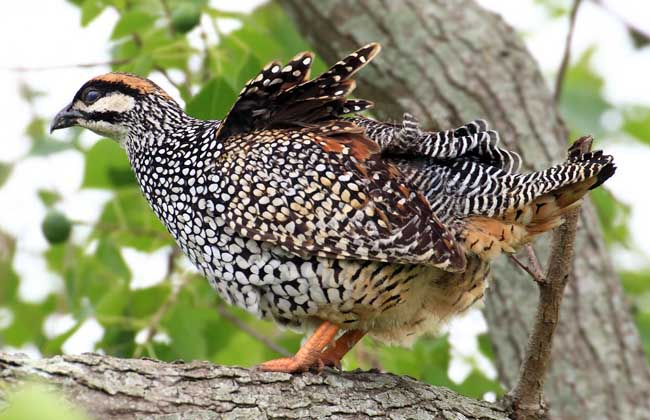
The Chinese francolin, also known as the Chinese partridge, Yuezhi, Huainan, etc., is a bird of the order Galliformes, family Phasianidae. It lives in dry valleys among low mountains and on rocky and sandy slopes of hills, mostly in environments such as scrub, grassland and barren hills, and sometimes also appears in small patches of woodland and bamboo forest near farmland. It feeds on insects such as grasshoppers, locusts, crickets and ants. Now let us take a look at how much a Chinese francolin costs!
How much does a Chinese francolin cost?
Prices for the Chinese francolin vary from place to place, generally around 85 to 150 yuan, and francolin eggs generally cost 2 to 3 yuan each. The Chinese francolin is more handsome than the American partridge, but smaller in size. The male has a body length of 282 to 345 mm and a body weight of 292 to 388 g, while the female has a body length of 224 to 305 mm and a body weight of 255 to 325 g. When buying, pay attention to distinguishing it from the American partridge.
Differences between the Chinese francolin and the American partridge
1. Chinese francolin: The Chinese francolin is a bird of the order Galliformes, family Phasianidae, with conspicuous white spots on the nape, upper back, underparts and both wings, white bars on the back and tail, a black head with chestnut eyebrow stripes, a broad white band running from below the eye to the ear coverts, and a white chin and throat. The female resembles the male, but the underparts are yellowish with black spots, and the upperparts are mostly brownish. The iris is reddish brown, the bill is nearly black, and the feet are yellow.
2. American partridge: The American partridge generally refers to the chukar partridge, a bird of the genus Alectoris in the family Phasianidae. The bill and feet are coral red, the iris is chestnut brown, and there is a broad white stripe above the eye. A complete black ring surrounds the sides of the head and the yellowish-brown throat. The upperparts are purplish brown, the chest is grey, the belly is brownish yellow, and each flank has more than ten parallel black and chestnut bars. The body length is 27 to 37 cm and the body weight is 440 to 580 g, slightly larger than a quail.
Hatching techniques for the Chinese francolin
1. Egg selection: For hatching Chinese francolin eggs, use breeding eggs no more than two weeks old as far as possible, and strictly select out double-yolked and deformed eggs. After selection, soak the breeding eggs in 30°C warm water with 0.1% potassium permanganate for 3 minutes, then take them out and let them dry before setting them for incubation.
2. Temperature: Temperature is the key to the success or failure of hatching Chinese francolin eggs. During the early incubation period of 1 to 7 days, keep the incubator temperature at 37.8°C; at 8 to 20 days, 37.5°C; and at 21 to 24 days (that is, hatching), 37.2°C.
3. Humidity: Humidity should be adjusted according to each stage of embryonic development. In the early incubation period, the relative humidity should be kept at 60 to 65%, in the middle period at 55 to 60%, and in the late incubation period, in order to make the moisture in the air and carbon dioxide act together on the eggshell, turning sodium carbonate into calcium carbonate and making the eggshell brittle, which helps the chick francolin break the shell, the humidity should be raised to 65 to 70%.
4. Turning eggs: When hatching Chinese francolin eggs, in order to heat the breeding eggs evenly and ensure normal embryonic development, the eggs must be turned manually or naturally. Starting from the second day after setting, turn them generally once every 2 to 3 hours, and this can be stopped on the 20th day.
5. Candling: The first candling is at 5 to 7 days, mainly to check the fertilization of the breeding eggs. In normal eggs, the eye spot on the embryo can be seen, and the inside of the egg is reddish with blood streaks. The yolk is enlarged and shifted to one side. Infertile eggs show no change at all, with an intact yolk and transparent egg white, and infertile eggs should be removed in time. The number of candlings should be carried out according to the specific situation, mainly to check embryonic development and promptly remove dead embryo eggs.