Key Technical Points for American Partridge Farming and Market Price Analysis
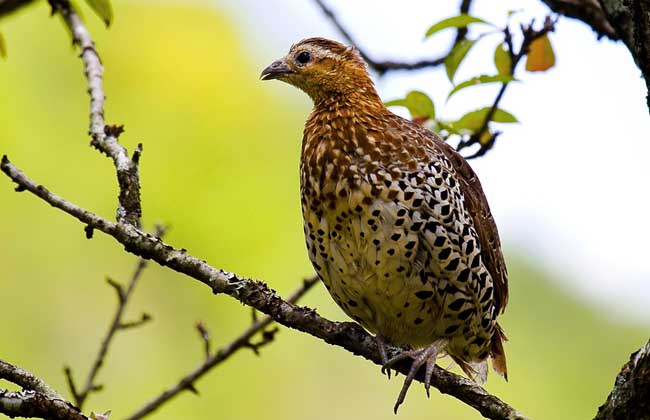
Living Habits of the Partridge
Partridges like to move about alone or in pairs on dry, bare rocky slopes. At dawn and dusk they often descend into valleys to feed, and at night they roost in grass or thickets. They have no fixed habitat and change their roosting spot every night. They fly fast, usually in a straight line, and when startled they tend to fly to higher ground. They run fast and are also strong fliers, often making short straight-line flights. When startled they immediately fly upward and hide deep in the thickets, where they are hard to spot.
The partridge's call is loud, and it calls frequently during the spring breeding season. At dawn, the male bird perches on a higher rock or tree stump and calls loudly. When one bird calls loudly, several males respond from mountain tops in different directions, one after another. The call somewhat resembles “xing bu de ye ge ge.” Males are aggressive; it is generally believed that “one hilltop, one partridge, and crossing the boundary means a fight.” Hunters often use a female bird as a decoy, shutting it in a bird cage with a trap door and placing it in the mountains to lure and catch male birds.
The partridge is an omnivorous bird. It is fond of eating grasshoppers, ants and other insects, and also eats wild fruits, weed seeds and tender plant shoots. After the autumn harvest, it often goes into farmland to peck at fallen grain, or steals foxtail millet, sweet potato, Pinellia ternata and so on. It also eats fruit pulp, grass seeds and rice grains, as well as crickets and other insects.
Distribution Range of the Partridge
1. Global distribution: distributed in Cambodia, China, India, the Lao People's Democratic Republic, Myanmar, Thailand and Vietnam.
2. Distribution in China: distributed in Inner Mongolia, Anhui, Zhejiang, Fujian, Guangdong, Guangxi, Yunnan, Guizhou and Hainan Island, and occasionally seen in Yantai, Shandong.
Market Prices of Partridges
American partridges cost about ten-plus yuan each. Prices for Chinese partridges vary from place to place, generally around 85-150 yuan. Partridge eggs generally cost 2 yuan to 3 yuan each.
Nutritional Value of the Partridge
The partridge is also called the stone chicken or red-legged lesser bamboo chicken. Partridge meat is a very good nourishing tonic. The partridge has fine bones and thick flesh, and its meat is tender, tasty and rich in nutrients.
1. The protein content of partridge meat is 30.1%, which is 6.8% higher than that of guinea fowl and quail, and 10.6% higher than that of broiler chicken.
2. It contains the 18 amino acids essential to the human body and 64% unsaturated fatty acids. It has the nutritional characteristics of high protein, low fat and low cholesterol.
3. The fat content is 3.6%; it is 4.1% lower than that of guinea fowl and 4.2% lower than that of broiler chicken.
Farming Value of the Partridge
The partridge is a rare and precious wild game bird that combines meat use, ornamental value and medicinal use. The protein content of its meat is as high as 30%, the highest level among poultry, and it was a nourishing medicinal food for emperors through the ages.
The partridge is small and delicate, with fine bones and thick flesh and tender muscle. It is not only tasty and fragrant, but also contains various amino acids and trace elements such as zinc that the human body needs. It is a premium tonic, especially for taurine, known as the “brain gold,” of which every 100 grams of partridge meat contains 27.38 mg.
According to records in classic works of ancient China such as Tang Materia Medica, Compendium of Materia Medica and Yilin Summary, the partridge has qi-benefiting and nourishing effects such as “benefiting the five viscera, opening the spleen and stomach, and nourishing the heart and mind,” and is an ideal medicinal food for modern times.