Detailed Explanation of Efficient Artificial Breeding Techniques for Wild Geese
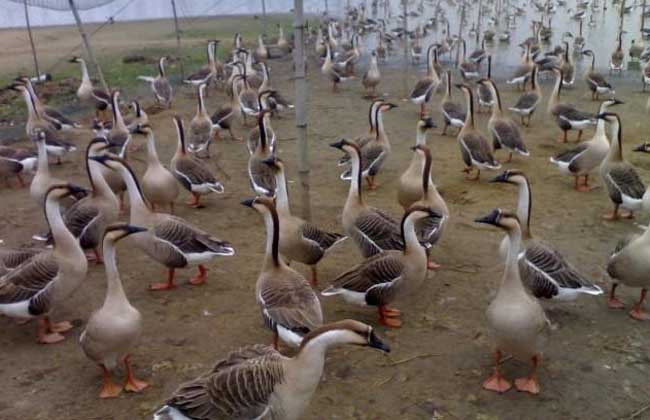
Wild geese, also known as wild swans, are the collective name for the swan goose, greylag goose, bean goose, snow goose, and others in the genus Anser of the family Anatidae. They are large migratory birds and one of the important waterfowl in our country, and are Class II nationally protected animals. Wild goose meat has a high protein content and is a high-protein, low-fat food; the eggs are rich in calcium, phosphorus, iron, and other mineral elements essential to the human body, and have extremely high nourishing and health-care benefits, making them a traditional premium wild delicacy. Their down is light and soft with good warmth retention and can be used as filling material for clothing, quilts, and the like, while the harder feathers can be made into fans and other handicrafts. In recent years, wild geese have been decreasing day by day, and artificial domestication not only yields significant economic benefits but can also effectively protect this excellent breed.
Artificial Incubation of Wild Goose Breeding Eggs
1. Disinfection of breeding eggs: After being laid, breeding eggs are often contaminated by litter and feces, with a small amount of bacteria on the surface, and after 30 minutes the bacteria can enter the interior of the breeding eggs through the shell pores. Therefore, breeding eggs should be disinfected in a timely manner. First place the breeding eggs in a disinfection cabinet, prepare 28 milliliters of formalin solution and 14 grams of potassium permanganate per cubic meter, pour the formalin into a glass or enamel container (because a large amount of bubbles will be produced during the reaction, the volume of the container used should be 5 to 7 times larger than the volume of formalin used), then pour in the potassium permanganate, close the doors and windows, and after a few minutes formaldehyde vapor will escape; after 12 to 24 hours, open the doors and windows to release the residual gas, and move the breeding eggs into the storage room.
2. Preheating: Preheating the breeding eggs before incubation allows the embryos to adapt to the external environment and prevents the breeding eggs from sweating. First use potassium permanganate or drugs such as JunDuSha or BaiDuSha to prepare the required concentration according to the instructions, soak the breeding eggs in the solution for 3 to 5 minutes, remove and air-dry them, and place them in the incubation room to preheat for 6 to 8 hours.
3. Incubation management
(1) Control of temperature and humidity: For breeding eggs set in batches, variable-temperature incubation is mainly used, with the temperature variation range controlled at 30°C to 37°C; high at first and then low, gradually decreasing the temperature; for breeding eggs set in separate batches, constant-temperature incubation at 38°C to 38.5°C is used. The principle for humidity control is high at both ends and low in the middle. Maintain 65% to 70% from day 1 to day 3, control it at 60% to 65% from day 4 to day 28, and raise it to 70% to 75% from day 29 to day 31. In addition, while ensuring normal temperature and humidity, ventilation should be as smooth as possible.
(2) Turning, candling, and cooling of eggs: Automatic incubators turn the eggs once every 2 hours; when turning manually or using traditional incubation methods, turn once every 3 to 4 hours, with a turning angle of 45 to 90 degrees. Wild goose breeding eggs need to be candled three times during the entire incubation period. The first is carried out on the 5th day after incubation, to remove infertile eggs and dead eggs. The second is carried out on the 10th day, to remove eggs with dead embryos and promptly identify the cause and adjust the incubation conditions. The third is carried out on the 26th day, mainly to observe embryonic development and decide the time to transfer the eggs to the hatching tray. For machine incubation, open the machine door twice at fixed times each day, and after 16 days of incubation also pull out about 2/3 of the breeding eggs from the egg trays for cooling, with the cooling time controlled within 30 minutes. For traditional incubation, cooling can be done by reducing the covering material and increasing ventilation.
4. Assisted hatching: Wild goose breeding eggshells are relatively thick, and the egg tooth of the goslings is not very sharp, so some young birds cannot hatch normally; therefore, assistance should be provided at the appropriate time during hatching. For eggs in which the allantoic blood vessels have withered and the inner shell membrane has turned yellow, gently open the blunt end of the egg with scissors or the like, peel away about 1/3 of the shell, and gently pull out the gosling's head by hand, placing it in the hatcher to let it finish hatching on its own.
Feeding and Management of Goslings
Goslings refer to young geese from hatching to the end of 1 month of age. This period is the key stage of artificial domestication, and because goslings have incomplete digestive function and poor body temperature regulation ability, they require careful feeding and management.
1. Temperature and density. Newly hatched goslings are afraid of cold and tend to huddle and crush one another, causing injury or death, so appropriate temperature and density must be maintained. From 1 to 4 days of age, maintain 30°C to 28°C, with 20 to 25 birds per square meter; from 5 to 14 days of age, maintain 27°C to 25°C, with 15 to 20 birds per square meter; from 15 to 30 days of age, maintain 24°C to 18°C, with 10 to 15 birds per square meter; after 30 days of age, they can be raised without supplemental heat.
2. Drinking water and feeding. The first drinking of water by goslings is also called "mouth moistening." From 12 to 18 hours after hatching, place a 0.01% potassium permanganate aqueous solution 2 cm to 2.5 cm deep in a water tray and put the goslings in the water to drink freely for 3 to 5 minutes. After drinking, they can begin feeding. The starter feed is soaked broken rice mixed with chopped vegetable leaves, or moistened compound feed plus vegetable leaves, in a ratio of 1:2 to 3. The green feed fed to goslings must be fresh, washed clean, and finely chopped; the concentrated feed should be soft rather than hard, but must not be too sticky. From 1 to 3 days of age, scatter the feed on newspaper or plastic sheeting and let them eat freely, feeding 4 to 5 times a day; after 4 days of age, they can be fed from troughs, feeding 6 to 7 times a day, and the proportion of green feed should be increased to 70% to 80%. After 21 days of age, the digestive capacity of goslings is greatly enhanced, and some grain feed or crushed corn can be appropriately mixed in. Goslings drink a relatively large amount of water, so an uninterrupted all-day water supply should be ensured.
3. Moisture prevention and disease prevention. A damp environment often triggers various diseases, so the brooding room must be spacious and bright, with sufficient light and smooth ventilation. Litter must be clean, dry, and free of mildew, and equipment should be frequently cleaned, dried in the sun, and disinfected. The exercise yard should be swept every day to maintain hygiene. Garlic juice, penicillin, and the like can also be added to the feed or drinking water to prevent disease.
4. Grazing. To strengthen the goslings' physique and help them adapt to the surrounding environment as quickly as possible, on clear days, goslings that have reached 7 days of age can be driven to the grazing area in the morning for free activity for 20 to 30 minutes; after 15 days of age, the flock can be driven into shallow water to swim for 30 to 50 minutes, once in the morning and once in the afternoon; after 30 days of age, they can be grazed all day.
Feeding of Commercial Meat Geese
Geese from 1 month of age until before entering the breeding period are young geese. Young geese have a large feed intake and strong stress resistance and are in the stage of fastest growth and development. During this stage, they can be grazed all day, with some concentrated feed appropriately supplemented when they return from grazing. Once the main wing feathers have fully grown, they can be fattened.
Fattening commercial meat geese mainly involves restricting their activity, reducing the consumption of nutrients in the body, and promoting meat growth and fat deposition. Before fattening, according to the number of geese, use wooden strips, branches, straw, and the like to partition off several small pens, with a pen height of 60 to 70 cm. Feed troughs and water troughs are hung outside the pens, and the geese eat through the gaps in the pens. Generally, each pen is about 1 square meter and holds 2 to 3 meat geese. Before starting fattening, deworm the geese. Before fattening, feed 3 to 4 times a day, with corn as the main feed, plus 15% soybean cake, 5% wheat bran, 10% leaf meal, and 0.35% table salt, with chopped green feed added once at noon, and ensure all-day drinking water. Fattening in this way for 2 to 3 weeks, when they reach about 4 kilograms, they can be marketed.