Do Geese Swim? Understanding the Habits of Geese
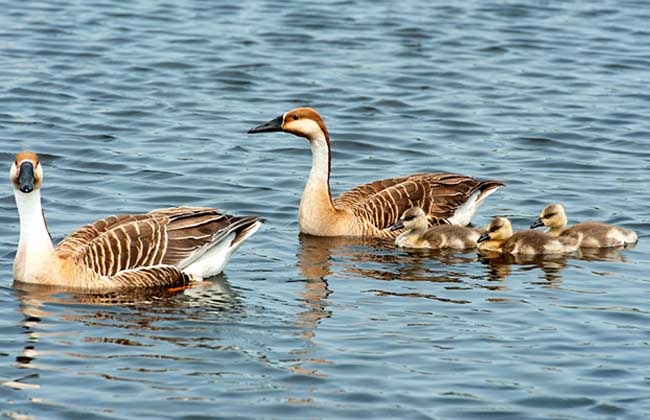
Geese belong to the class Aves and the family Anatidae, and are the collective name for the various species in the subfamily Anserinae. The species commonly seen in China include the swan goose, greylag goose, bean goose, and greater white-fronted goose, and they are Class II nationally protected animals. Today, the editor will introduce to you whether geese can swim and other related knowledge!
Do Geese Swim?
Geese can swim. Geese belong to the class Aves and the family Anatidae, and are the collective name for the various species in the subfamily Anserinae; they are a type of large swimming bird. In shape they somewhat resemble the domestic goose, though some are smaller. The bill is broad and thick, the bill nail is relatively broad, and the biting edges have rather blunt comb-like projections. Males and females have similar plumage colors, mostly light grayish brown, with markings.
Geese live in groups by the water, often in flocks of hundreds or thousands. When roosting at night, some geese specially stand guard around the flock; if an attack occurs, they call out as a warning. Their main foods are tender leaves, fine roots, and seeds, and they occasionally peck at grain in farmland. Each year after the Spring Equinox they fly back north to breed, and after the Autumn Equinox they fly south to overwinter.
Can Geese Fly?
Geese can fly. Not only can geese fly, they are also outstanding aerial travelers. Every autumn and winter, they fly in flocks in a vast and mighty stream from their homeland in the Siberia region to southern China to spend the winter. The following spring, after a long journey, they return to Siberia to lay eggs and breed. Geese fly very fast, able to cover 68-90 kilometers per hour, and the long journey of several thousand kilometers takes one to two months.
During long-distance travel, the formation of the goose flock is organized very tightly; they often line up in a V shape or a straight line, and while flying they constantly make “honk, honk” calls. These calls of the geese serve as signals for looking after one another, calling to each other, taking off, and resting.
What Do Geese Eat?
Geese are omnivorous waterfowl, often dwelling by the water or in marshes where aquatic plants grow thickly, feeding on some non-toxic wild grasses, pasture grasses, and grains without any special odor, as well as snails, shrimp, and the like.