What do wild geese eat? An introduction to the diet and main food types of wild geese
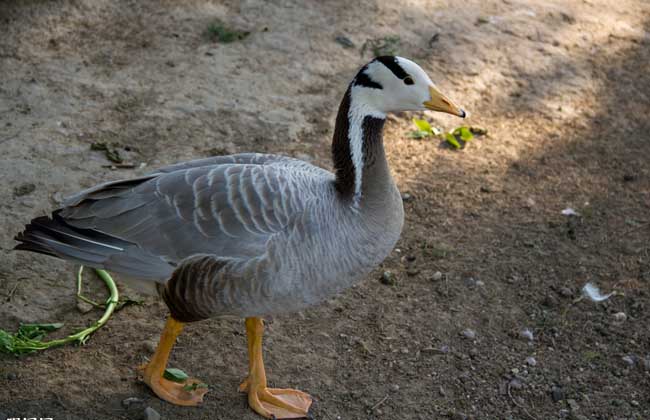
Wild geese belong to the class Aves, family Anatidae, and are the general name for the various species of the subfamily Anserinae. They are second-class nationally protected animals and omnivorous waterfowl, often dwelling by the water or in marshes overgrown with aquatic plants, feeding on some non-toxic, odorless wild grasses, pasture grasses, grains, and snails, shrimp, and the like. Let's take a look below at what wild geese eat!
What do wild geese eat?
Wild geese are typical plant-eating flocking waterfowl. In the wild state they feed on tender plant leaves, fine roots, and seeds, mostly weeds. When raised artificially, they can be herded in large flocks to eat tender grass and graze on wheat, mainly active in rice stubble fields, riverbank mudflats, hillsides, and the like, without supplementary feeding, and can reach the adult goose level of about 5 kg. Under confined rearing conditions, they can be fed various weed meals and the straw of various crops, such as corn stalks, soybean stalks, peanut vines, and the like, and during the breeding period (February to June) it is enough to appropriately increase some concentrated feed. Although the reproductive rate of wild geese is lower than that of poultry, their herbivorous capacity is strong. Raising one adult goose weighing 5 kg consumes only 2 kg of concentrated feed (during the brooding period) over its entire life, which is unmatched by any other livestock or poultry species.
Classification of wild goose feed
1. Cereal grains: including corn, wheat, wheat chaff, barley, oats, sorghum, broken rice, paddy, millet, low-grade flour (secondary flour), and the like. If sorghum is used for feeding, it must be crushed, or soaked soft in water, or fed after the sorghum sprouts. The outer hull of paddy is very hard, so it must first be ground into powder before feeding; because the hull of paddy has a high fiber content, it should be fed sparingly.
2. Bran and middlings: including wheat bran, corn bran, mixed bran, and the like. These three feeds all contain very high crude fiber and generally cannot exceed 20% in the feed.
3. Distiller's grains and dregs: including distiller's grains, brewer's grains, okara (tofu dregs), sugar beet pulp, and the like, all of which can be used to feed geese.
4. Green fodder: including various vegetables, artificially planted pasture grasses, and wild non-toxic green grasses, wild vegetables, water weeds, and the like. Green fodder contains relatively complete nutritional components and is rich in vitamins, is easy to digest, and geese love it very much. Moreover, green fodder has fairly wide sources and low cost, making it a good feed for raising geese. Silaged radish leaves, alfalfa, and green grass are also good feed and can be fed to geese in large quantities.
Feed ratios for wild geese at different stages
1. Wild geese 3 to 10 days old: feed a mixture of broken rice that has been washed clean and soaked thoroughly with cleaned and chopped vegetable leaves, tender grass, water weeds, duckweed, and other green fodder. The ratio of concentrated feed to green fodder is 8 to 10:1.
2. Wild geese 11 to 20 days old: mainly feed green fodder, with the ratio of concentrated feed to green fodder at 1:4 to 8. As the days of age increase, the goslings can be herded to graze on grass.
3. Wild geese 21 to 30 days old: increase the proportion of green fodder, with the ratio of concentrated feed to green fodder at 1:9 to 12. For those raised by herding, the grazing time can be gradually extended.
4. Wild geese 4 weeks to 2 months old: they can make great use of green fodder, and feeding green fodder or raising them by herding is the most suitable and also the most economical rearing method.
5. Wild geese over 2 months old: fattening geese are given increased concentrated feed for fattening. The feed mixing ratio: corn and barley 60%, bran and middlings 30%, soybean cake 8%, salt and grit 1% each, plus green grass, broken wheat, boiled potatoes, and other feed mixed together for feeding. Adding 2% to 3% bone meal or shell meal to the feed helps the bone growth of geese and prevents the occurrence of soft leg disease. Feed 4 times a day, with the last feeding at 9 to 10 p.m., and provide enough drinking water. In the early fattening stage, the ratio of concentrated feed to green fodder is 1:1; in the late fattening stage, the ratio of concentrated feed to green fodder is 1:4. When live geese reach 3 to 3.5 kg, they can be marketed.