What are the living habits of wild geese? A comprehensive guide in one article
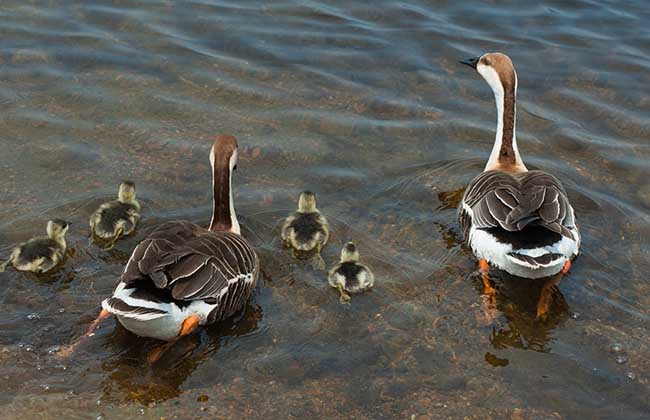
Wild geese is the general name for birds of the genus Anser. Their common features are a relatively large body, a relatively high base of the bill, a bill length almost equal to the length of the head, strong tooth-like projections along the edge of the upper bill, and a strong bill nail that occupies the entire tip of the upper bill. Now let us take a look at the living habits of wild geese!
Wild geese are migratory birds
Wild geese fly back north to breed after the spring equinox each year, and fly south to overwinter after the autumn equinox. They are excellent aerial travelers. Every autumn and winter, they fly in flocks in a mighty procession from their old home in the Siberia region to southern China to spend the winter. In the spring of the following year, after a long journey, they return to Siberia to lay eggs and breed. Wild geese fly very fast, capable of flying 68-90 kilometers per hour, and the long journey of several thousand kilometers takes one to two months.
During the long journey, the formation of the goose flock is very tightly organized. They often line up in a V shape or a straight line, and while flying they constantly make "honk, honk" calls. These calls of wild geese serve as signals for looking after one another, calling, taking off, and resting.
Wild geese are gregarious
Wild geese are one of the bird groups familiar to people. During migration they always gather in groups of dozens, hundreds, or even thousands, flying in formation close behind one another, which the ancients called a "goose formation." The "goose formation" is led by an experienced "lead goose." When accelerating, the flock lines up in a "V" shape, and once it slows down, the flock changes from the "V" shape to a long "straight line" formation. This is an effective measure adopted for long-distance migration.
Goose flocks form groups of 6, or multiples of 6. A goose flock is an aggregation of several families, or rather several groups.
The "lifelong devotion" of wild geese
Wild geese never live alone, and odd numbers rarely appear in a flock of wild geese. When one dies, the other will also kill itself or waste away and die.
The diet of wild geese
Wild geese have strong adaptability and are omnivorous waterfowl. They often inhabit watersides or marshlands overgrown with aquatic plants, feeding on some non-toxic wild grasses, pasture grasses, grains, and snails, shrimp, and so on that have no special odor. They sometimes also wander in lakes and like to mate in water. They are highly gregarious and good at fighting. In spring they move about in small groups of 10-20 together, and in winter hundreds gather together to forage and rest. When roosting, there are wild geese on guard; if they detect anything unusual, they cry out loudly and the flock flees. When living in groups, they establish a hierarchy through fighting, and the prince goose has priority rights to feed and mate.