Free-range chicken farming technique video tutorial, with a detailed explanation of farming methods
Free-range chicks have characteristics such as tolerance to coarse feed, strong broodiness and strong disease resistance, and their meat is delicious. Free-range eggs sell very well in urban and rural markets, and egg prices are also higher than ordinary eggs. The chicken meat and eggs are of excellent quality and rich in nutrients, with broad market demand prospects. For farmers with certain conditions, the cost of free-range chicken farming is relatively low, making it a breed very suitable for farmers and farms to raise. Now let us briefly discuss some simple techniques for free-range chicken farming.
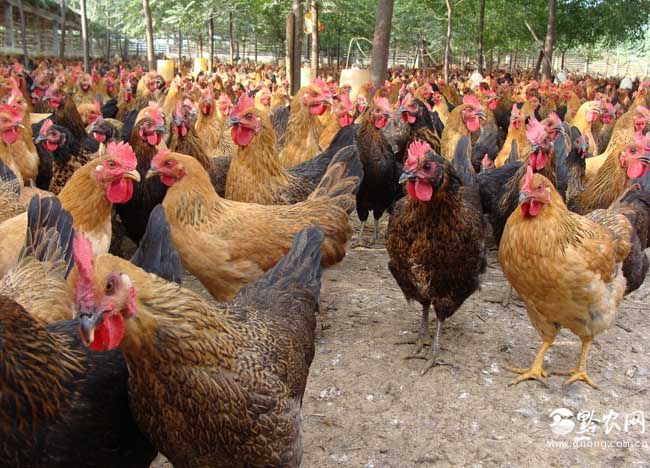
The farming environment for free-range chickens
For free-range chickens, choose natural grasslands, natural hillsides, orchards and fields with a superior ecological environment that are suitable for grazing. It is required that there be no major pollution sources within a 5 km radius around the site and buildings, that there be abundant forage, and that there be a small stream or mountain spring water, which is best; the hillside slope should preferably not exceed 25°, and the site should be sheltered from the wind and face the sun, shaded by green trees, with abundant water sources and convenient access to water. Large-scale farming also requires guaranteed road access and power supply, to facilitate the transport and processing of feed and products. For the size design standards of the chicken house and exercise yard, generally the chicken house is calculated at 0.1 sq m per chicken, and the exercise yard at 1 sq m per chicken; the exercise yard is best enclosed with bamboo fencing and plastic netting.
Breed selection for free-range chickens
For free-range chicken farming, breeds should be selected according to market demand and production needs. Generally, meat-type chicken breeds, dual-purpose chicken breeds, male chicks of layer-type chicken breeds and rural native chickens can all be used as ecological meat chicken breeds, and can be selected according to local conditions; usually dual-purpose chicken breeds are best.
The farming season for free-range chickens
For raising free-range chickens, a suitable brooding season must be chosen to facilitate grazing management of ecological chickens. According to the climate characteristics of mountainous areas in various places, it is generally best to choose March to June for brooding. This is because during this period the temperature rises from low to high and there is sufficient light, which is beneficial to the growth and development of the chickens and helps increase the brooding survival rate.
Nutritional supply for free-range chickens
During the brooding and growing stages, the feed supply and supplementation for chicks, growing chickens and adult chickens must be ensured according to the nutritional needs of the chickens at each growth stage. Generally, before grazing, they should be fed 5 to 6 times a day, while ensuring sufficient clean drinking water. After entering the free-range period and having a relatively strong ability to forage freely, artificial supplementary feeding can gradually be reduced to 2 to 3 times a day, and care should be taken to feed less in the morning and more in the evening.
Farming methods for free-range chickens
Free-range training for chickens is a key part of raising them, and it should start from the young chicks. After the chicks are raised indoors for 4 weeks and their body weight reaches about 200 grams, they are then switched to free-range raising in a field with grass and fencing, and the chickens are purposefully trained to form conditioned reflexes. After a certain period of training, the chicks will come back to eat and drink when they hear human-made sounds. At this time, seize the opportunity to train the flock's ability to find feed and catch forage. After about 4 to 6 weeks of training, the chicks have formed conditioned reflexes, and their foraging ability and self-protection ability are greatly improved. When the individual body weight of the chickens reaches about 500 grams, they already have the basic conditions for free-range raising, and the flock can be released into a pre-enclosed grazing area to begin natural ecological raising of the chickens, allowing the flock to fully display their abilities in the open hills and fields, freely catching insects, searching for grass seeds and pecking at tender grass.
The growth period of free-range chickens is mainly based on free-range raising, and they spend most of their time active in the wild; moreover, the growth period of ecological chickens is relatively long, generally requiring 4 to 5 months, and they may be infected with various diseases at any time. For this reason, immunization work for the chickens must be effectively carried out. In the prevention and control of chicken diseases, "importance" lies in prevention, and "value" lies in early action. From the first day after hatching, the Marek's disease vaccine should be administered. At the same time, under the guidance of a veterinarian, vaccination injections should be carried out for Newcastle disease, infectious bronchitis, avian influenza, fowl cholera, bursal disease, fowl pox and other vaccines. In addition, attention should also be paid to the timely prevention, control and treatment of other diseases, so as to ensure the healthy and robust growth of ecological chickens.