Free-range chicken farming techniques: chicken coop construction and cost-profit analysis
The nutritional value of free-range chicken
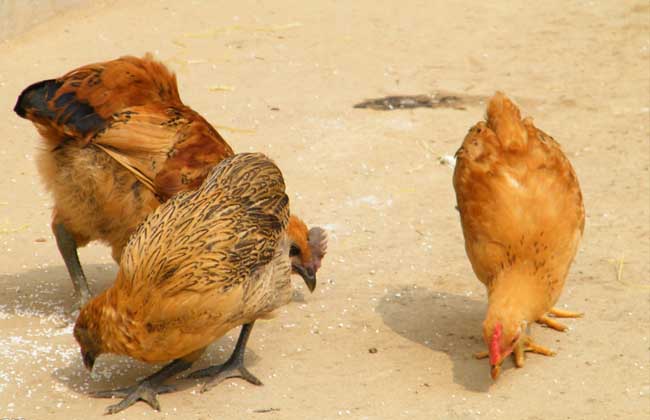
Most of the chicken we commonly eat is crossbred chicken raised on feed, while free-range chicken is raised by free ranging, so free-range chicken drinks water from nearby mountain springs and eats various plants and small insects in its surroundings, which is why free-range chicken has relatively high nutritional value, mainly shown in:
1. Compared with the broiler chicken we raise, free-range chicken meat is firmer, and its meat structure and nutritional ratio are more reasonable. Free-range chicken meat is rich in protein, trace elements and various nutrients, and its fat content is relatively low. It has important value for our body's health care. It is a meat product that we Chinese people relatively like, and belongs to high-protein meat.
2. Free-range chicken is rich in amino acids. Amino acids play a very important role in the human body. They are the most basic substances that constitute our body's proteins and are related to life activities, are the basic units that constitute protein molecules in organisms, are the basic substances of our life, and have a close relationship with human life activities. They are indispensable nutrients in our human body. These nutrients in free-range chicken meat are of very important significance to the growth and development of our human body.
3. The skin of free-range chicken meat is rich in collagen protein, which can be quickly absorbed and utilized by the human body. It is a very good collagen. When we cook free-range chicken, we will find the difference in meat quality between free-range chicken and the chicken we buy in the market. Free-range chicken can be used as a nourishing food. In the past, after pregnant women gave birth, stewing soup with free-range chicken could promote the body's recovery. Stewed free-range chicken soup is also a good choice in the recovery diet after illness. Eating free-range chicken often can strengthen our body's constitution and improve our body's immunity. There are many ways to prepare free-range chicken. It can be prepared by clear stewing, roasting, air drying and various other methods. It is truly green and pollution-free meat food.
The farming characteristics of free-range chicken
1. All parts of China have free-range chicken breeds with local characteristics. Try to choose free-range chicken suitable for local farming.
2. Feed is very particular. Grass chicken must eat green grass, insects, miscellaneous grains and other "standard feeds." Eating formulated compound feed is absolutely not allowed. Breeders even more must not carry out "force-feeding" style feeding on them.
3. They must be on the grass of a spacious farm, letting the grass chicken actively look for food. Air is the factor with the greatest impact on chicken meat quality. Chickens grown in a suppressed environment not only taste bad, but can also have adverse effects on the human body.
4. The reason grass chicken has a strong "chicken flavor" is precisely due to exercise. Because when the chicken exercises, the muscles can fully grow and develop, intramuscular fat is abundant, the proportion of aromatic substances in the fat increases, and the taste is naturally very fragrant.
Construction of free-range chicken farming sites
1. Site selection: Free-range chicken farming should choose a suitable site. Generally, it is advisable to choose a place sheltered from the wind and facing the sun, with flat terrain, high and dry ground, convenient water access, far from villages, and convenient transportation.
2. Site disinfection: For building a site, the brooding house can use 5%-10% limewater or 1:600 Baidusha, 1:1200 Xiaoduxiwei, 2% caustic soda, etc. for site spray disinfection. For farming with an old site, the ground must be cleaned and washed. On the basis of the above disinfection methods, use potassium permanganate 14g/m3 plus formaldehyde 28mL/m3, seal for fumigation disinfection for 1-2d, put drinkers, feed buckets and other utensils in together for disinfection, then open ventilation for 1-2d.
3. Raising area: For free-range chicken farming, according to the raising scale, calculate at 15 birds/m2. The brooding house can be set at one side inside the pen, with area calculated at 35 birds/m2, and heat preservation lamps installed.
Common free-range chicken breeds
1. Liangping Red-feather Free-range Chicken: Liangping County is a semi-hilly region county with "two troughs and one flat" and high forest coverage. People have always loved raising locally self-bred and self-reproduced red-feather free-range chicken, and over a long period a strain has formed, so it is named Liangping Red-feather Free-range Chicken.
2. Peng'an Free-range Chicken: Peng'an Free-range Chicken has quite bright feather color and an especially beautiful appearance. It eats five grains and small insects, all natural and pollution-free feed. Free-range chicken meat has very few residues of antibiotics and hormone drugs, exercises more, has almost no fat, and correspondingly the essence of the meat is reflected. It drinks mountain spring water, listens to music, and is allowed to play freely among the woods. It is truly green, delicious and nutritious food.
3. Youfu Free-range Chicken: Youfu Free-range Chicken has tender meat and is rich in amino acids. Amino acids play a very important role in the human body and are the most basic substances related to the life activities that constitute our human body's proteins.
4. Gushi Free-range Chicken: Gushi Free-range Chicken is named because it is mainly produced in Gushi. It has a medium body size, a triangular body, yellow or yellow-brown feathers, and blue beaks and legs. It belongs to the dual-purpose meat-and-egg chicken breed, and has the advantages of tolerance to rough feed, strong stress resistance, tender meat, delicious meat and fresh soup, and unique flavor.
5. Yifeng Free-range Chicken: Yifeng Free-range Chicken is in Yifeng County, Jiangxi Province, located at the southern foot of the middle section of the Jiuling Mountains in northwestern Jiangxi. The county's normal landform composition is roughly "seven parts mountain, half part water, half part field, one part roads and manors." Yifeng is a major agricultural county. Villagers mostly raise local chicken breeds, which villagers call "free-range chicken."
6. Quanlin Free-range Chicken: Quanlin Free-range Chicken meat is tender, with a delicious taste, suitable for many cooking methods, and is nutritious, with a nourishing and health-preserving effect. Chicken meat is not only suitable for stir-frying and stewing soup, but is also relatively suitable as a cold dish or cold-mixed meat. The whole chicken can be eaten, and its nutritional effects are rich. It can be seen everywhere, so people folk-call chicken a "good medicine for relieving the world."
7. Subei Free-range Chicken: Subei Free-range Chicken has quite high fame in Jiangsu, Zhejiang, Shandong, Anhui, Shaanxi and other regions. Subei Free-range Chicken is deeply loved by people for its small body size, good meat quality and strong disease resistance. There is a custom in the coastal areas of Shandong: before boarding a boat to go to sea, one needs to worship the gods to pray for safety, and Subei Free-range Chicken is used. Widely used is the new Subei breed Xiangyue Grass Chicken cultivated by the Guannan Xingwang Breeding Base in Lianyungang, Jiangsu. The grass chicken is also free-range chicken, with a large comb, thin blue legs, yellow skin, and a well-proportioned body, and is deeply loved by Shandong people. It has become a scenic line of Subei Free-range Chicken in other provinces and cities.
8. Shuzhong Free-range Chicken: Shuzhong Free-range Chicken refers to local free-range chicken living in the Chengdu Plain of Sichuan. Due to mutual crossbreeding among breeds, the chicken's feather colors include "black, red, yellow, white, brown" etc., and the skin of the feet also includes yellow, black, gray-white, etc. Sanhuang Chicken, Xinghua Chicken and Ma Chicken are all relatively good breeds. Among them, a representative purely free-range chicken can be seen at Yidian Tianyangguang Forest Farm in Qingcao Mountain, Group 4, Gufodong Village, Huanglongxi Town. The chicken here is delicious, the soup is rich, and it reminds people of the rich fragrance of chicken in childhood, and is deeply loved by local Chengdu people.
Epidemic prevention techniques for free-range chicken
1. Fowl pox: At 15-35 days of age and 90-140 days of age, inoculate avian pox vaccine once each time by prick. After 4-5 days, scabbing at the inoculation site indicates effectiveness, and the protection rate is generally 100%. For parasitic diseases of free-range chicken, only improving the raising environment, strengthening nutrition and disinfecting raising tools is the most effective prevention route.
2. Avian influenza: At 20 days and 120 days of age, when laying for half a year or about to enter the high-incidence period of influenza, and half a year after the last inoculation of egg-drop oil vaccine, inject once per bird with 0.5 mL of egg-drop oil vaccine intramuscularly.
3. Vaccination
① At 7-14 days and 25-28 days of age, use clone 30 vaccine by nasal drip and eye drop, and at the same time add 1 million units each of penicillin and streptomycin per 500 chickens. Haitian, Haida, Lanxing, Pushaping and others can also be mixed and used.
② At 55-60 days of age, mix Newcastle disease strain I and clone strain I vaccine at 1:1.5 and inject intramuscularly.
③ At 125 days of age, inject intramuscularly with newcastle-bronchitis-egg drop triple vaccine and influenza dual oil vaccine, 0.5 mL per bird.
④ At 306 days of age, repeat intramuscular injection with clone strain I.
⑤ At 440 days of age for free-range chicken (before slaughter), use attenuated vaccine (strain II or strain IV vaccine) in drinking water.
4. Marek's disease
① Within 24 hours after chicks hatch, inject Marek's disease vaccine.
② Strictly disinfect the incubator, breeding eggs and incubation room. Strictly disinfect the brooding house site and utensils.
③ Chicks introduced from high-incidence areas must be given a second Marek's disease vaccine.
④ Within the first month of age of young chickens, breeders should avoid moving between houses and must isolate.
⑤ Once disease occurs, eliminate sick chickens immediately. For threatened chickens, use Jikangsan mixed into feed and Anli 2000 for disinfection to strengthen prevention.
5. Infectious bursal disease
① If breeding chickens were not vaccinated against bursal disease before laying or were not vaccinated again half a year after oil vaccine inoculation, their offspring should be given attenuated vaccine by mouth drop at 5 days of age. If breeding chickens are subcutaneously injected with 0.2 mL of oil vaccine per bird while receiving attenuated vaccine, then free-range chicken do not need further epidemic prevention at 15 days and 32 days of age.
② If breeding chickens were vaccinated again half a year after inoculation, their offspring can be given attenuated vaccine by mouth drop at 14 days of age. If breeding chickens are subcutaneously injected with 0.2 mL of oil vaccine per bird while receiving attenuated vaccine, free-range chicken do not need further epidemic prevention at 24 days of age.
③ In areas where bursal disease breaks out, using hyperimmune yolk in drinking water at 1 day of age and immunizing once each at 5 days, 15 days and 32 days of age gives better results.
④ For commercial chickens, use hyperimmune yolk in drinking water at 1 day, 7 days, 14 days and 21 days of age, and afterwards epidemic prevention may not be needed.