Fox Farming Techniques and Daily Feeding Management Methods
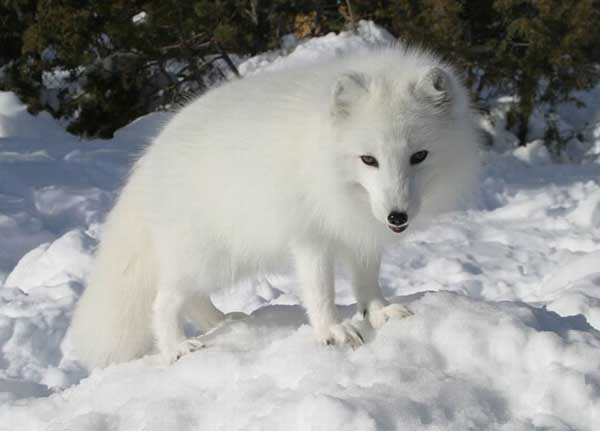
Foxes are rare animals. In animal taxonomy, they belong to the order Carnivora, family Canidae. At present, the two species mainly raised in captivity are the blue fox (also known as the Arctic fox) and the silver fox. Foxes have a high reproductive rate, strong disease resistance, omnivorous feeding habits, and are easy to raise. Here, the editor introduces the farming techniques for foxes at different growth stages.
Fox Farming Techniques
Foxes are carnivorous animals, feeding mainly on rodents, fish, frogs, mussels, shrimp, crabs, earthworms, birds and their eggs, insects, and the carcasses of healthy animals. Under captive rearing conditions, formulated feed is the mainstay, and during important rearing stages, supplementing with some animal meat scraps such as intestines, stomach, head, and bones as feed can basically meet the needs of foxes.
1. Farming before mating: Fox farming is mainly based on silver foxes and blue foxes. The preparation period for mating for silver foxes is from December to January of the following year; the preparation period for mating for blue foxes can be extended to February. The main task during this period is to adjust the nutritional level of the daily ration and increase the proportion of protein in the daily ration, so that the breeding foxes reach a medium-to-above body condition before mating. Different nutritional standards should be applied to breeding foxes that are too fat or too thin, so that their body weight reaches 5-6 kg before mating. At the same time, light exposure should be gradually increased to stimulate gonadal development, and breeding foxes should be kept in sunny places.
2. Farming during the mating period: The mating period for silver foxes is from February to March, and for blue foxes from March to April. During this period, breeding foxes should be provided with feed that is nutritious, highly palatable, and easy to digest, and the proportion of trace elements and multivitamins in the feed should be appropriately increased. Vitamin E 20-30 mg, scallions or garlic 4-5 g, and trace elements 1-1.5 g can be added per kg of feed.
3. Farming during pregnancy: Female foxes have a particularly strong demand for nutrition during pregnancy. Attention should be paid to providing feed with comprehensive nutrition and good quality, and it is essential to avoid feeding moldy and spoiled feed to prevent miscarriage. At the same time, the hygiene and disinfection of the fox housing should be done well, the fox housing should be kept quiet, and stress factors should be minimized as much as possible.
4. Farming during lactation: Female foxes have a poor appetite in the initial stage after giving birth, so it is best to feed small amounts frequently. After 3 days, feed 3 times a day, at fixed times and in fixed amounts. When the cubs reach 25 days of age, supplementary feeding should begin, generally 2 times a day. During supplementary feeding, fresh liver, fish, milk, eggs, etc. can be mixed into a paste to let the cubs eat, and after supplementary feeding they should be returned to their original nest.
5. Farming during the growing period: Fox cubs can generally be weaned and separated from the nest at 45-90 days of age. In production, this can be flexibly adjusted according to the growth and development of the cubs. Those that are strong and capable of living independently should be separated earlier; those that are weaker should have their separation time delayed. After separation, the cubs enter the growing period. Because the cubs grow and develop rapidly at this stage, and their fur grows quickly in the later period, they need a large amount of nutrients. Therefore, in production, the cubs should be allowed to eat well and be fully fed as much as possible to ensure their normal growth and development.
Sanitation Management of Fox Farms
Formulating effective sanitation and epidemic prevention measures for fox farms to reduce or eliminate the occurrence of fox diseases is of great significance for improving fox fur quality and economic benefits. Therefore, in daily feeding management, the principle of prevention being more important than treatment must be adhered to.
1. Epidemic prevention measures
① Regular vaccination: Regular vaccination to enhance the specific immunity of foxes is an effective measure to prevent epidemic diseases. Vaccination should be carried out 2 times a year (in December when retaining breeding stock, and in July 2 weeks after the cubs are separated and weaned), such as canine distemper vaccine and viral enteritis vaccine.
② Drug prevention: Adding some drugs to the feed can effectively prevent the occurrence of certain epidemic diseases. For example, adding oxytetracycline to the feed at 1 tablet per fox per week can not only prevent feed from becoming rancid, but also prevent the occurrence of intestinal diseases.
③ Cut off all transmission routes: When introducing breeding foxes, the veterinary department should be asked to conduct quarantine. In order to prevent the introduction of infectious disease sources, newly introduced breeding foxes must be kept in separate isolation for about half a month after arriving at the farm for observation, and only after confirming that they are disease-free can they be brought into the farm for rearing.
④ It is strictly prohibited for other animals such as dogs to enter the breeding farm: Other animals cannot be raised together with foxes in the same farm to prevent mutual transmission.
⑤ Regular disinfection: Disinfection is one of the important measures to prevent or eliminate infectious diseases. Therefore, the farm should spray the entire site with Baidusha or peracetic acid every month for preventive disinfection to control the occurrence of epidemic diseases.
2. Sanitation measures
① Remove harmful substances from feed: Fish and meat feed should have impurities removed before processing, such as sand, deteriorated fat, etc., and then be thoroughly rinsed with clean water before further processing and use.
② Drinking water must be clean and pollution-free: Water sources must be strictly managed, and sewage and harmful substances must not flow into them. Drinking water utensils should be frequently rinsed and disinfected to prevent mold growth.
③ Control feed spoilage: Do not feed foxes with feed that is not fresh or has spoiled. Practice has proved that if foxes eat rotten and spoiled feed, in mild cases they refuse to eat, lose appetite, and become infected with diseases; in severe cases, it causes death.
④ Cage and housing hygiene: The feces under the cages and housing should be removed promptly every day, and the ground should be rinsed. During the fox birthing period, the bedding grass in the wooden boxes should be changed frequently. The bedding grass is used for cold protection and warmth retention, and must be soft, dry, pollution-free, and free from mildew.
⑤ Feed hygiene: It is absolutely forbidden to purchase feed from epidemic areas. Many infectious diseases are shared diseases of livestock and foxes. If foxes eat meat feed made from diseased livestock, it will cause the occurrence of epidemic diseases.
⑥ Hygiene of feeding utensils: Feeding utensils should be disinfected frequently. Use 0.1% potassium permanganate solution to scrub feed buckets, water basins, and processing utensils, etc. They can also be disinfected by steaming or boiling.
Daily Feeding Techniques for Foxes
1. Principles for formulating the daily ration
The daily ration is the feed composition for each fox for 1 day. Various feed ingredients are reasonably combined to jointly form the daily ration. Scientifically formulating the daily ration is the concrete manifestation of standardized feeding. The formulation of the fox daily ration must follow the following rules.
① Attention should be paid to the important physiological characteristics of foxes as carnivorous animals. The formulation of the daily ration must be based mainly on animal protein feed and ensure the complete nutritional value of the daily ration.
② Attention should be paid to the differences in nutritional needs of foxes during different production periods throughout the year. On the premise of ensuring their maintenance needs, their production nutritional needs must also be met.
③ Make full use of local feed resources and strive for mixed matching of multiple varieties to ensure the palatability of the daily ration and the nutritional value of the mixed feed. At the same time, feeding costs should be scientifically and reasonably reduced.