How Do Tilapia Reproduce? Detailed Explanation of Breeding Technique Essentials
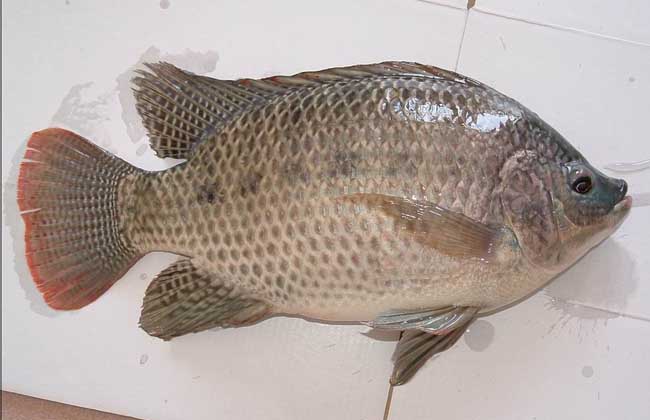
When artificially breeding tilapia, the overwintered brood fish can be moved to outdoor breeding ponds in spring when the water temperature rises to about 20°C. The breeding pond area should preferably be 1-2 mu, with a water depth of 1.5 m. Because tilapia has the habit of building nests to reproduce, the pond bottom used for breeding ponds should be loam or sandy loam. Let us take a look at tilapia breeding techniques together below!
Reproductive Characteristics of Tilapia
When the spring water temperature reaches above 20°C, tilapia exhibits reproductive behavior of building spawning nests. The suitable temperature range for female fish to spawn is 24-32°C, and the critical temperature is 20-38°C. In the middle and lower reaches of the Yangtze River in China, spawning generally occurs from May to September; in northern regions the time interval is shorter; in southern regions the spawning period may be longer, and in southern Guangdong, Hainan and other places they can reproduce throughout the year. Tilapia is a typical fish that spawns multiple times a year. In southern regions, they can reproduce once every 25-30 days in summer and autumn, and can reproduce 4-6 times a year. In the middle and lower reaches of the Yangtze River and East China, they can reproduce once every 30-35 days in summer and autumn, and can reproduce 3-5 times a year. In North China, they can reproduce 2-3 times a year.
Selection of Tilapia Brood Fish
Brood fish used for breeding should be selected as robust, disease-free, and injury-free fish. The size of brood fish should be 150-450 grams; 300-400 brood fish should be stocked per mu; the ratio of female to male brood fish is 2:1 or 3:1. Tilapia has the characteristics of early sexual maturity, a short spawning cycle, and mouthbrooding. It does not have strict requirements for breeding conditions, and generally small still-water ponds can breed them. In the Yangtze River basin, Mozambique tilapia and hybrid tilapia can reach sexual maturity 3-4 months after hatching, and after overwintering, the fry can reproduce and spawn within 1-2 months.
Overwintered brood fish have relatively weak constitutions, so before spawning they need intensive conditioning to promote the development of the gonads. Before the breeding pond is used for reproduction, 300-500 kg of base fertilizer should be applied per mu. After the brood fish are stocked, 50 kg of organic fertilizer should be applied every 1-2 days, and commercial feed such as rice bran and bean dregs should be fed, with the feeding amount at about 3% of the brood fish body weight. Generally, when the water temperature reaches 22-23°C, tilapia can become sexually excited and spawn. The fertilized eggs are yellow-brown, and the fertilized eggs hatch in the female fish's mouth. At a water temperature of 25°C, they hatch in 5-7 days. Newly hatched fry still live in the female fish's mouth. When the fry's yolk sac disappears and they have a certain ability to swim and feed, the fry leave the mother, and at this time small groups of fry can be seen along the pond bank.
Tilapia Breeding Techniques
1. Pond selection: Convenient transportation and a quiet environment are required. The pond should have abundant water supply and convenient drainage and irrigation, with an area of 1-3 mu and a rectangular shape oriented east-west. Earthen pond dikes should have a certain slope to facilitate brood fish digging nests and spawning in shallow water. For cement dikes, a 30 cm wide step can be built along the perimeter of the pond dike at 20-30 cm below the normal water level, to facilitate net pulling operations and fry collection. The pond bottom should be flat, sandy soil or loam, with a silt thickness of less than 10 cm. When brood fish are first put into the pond, the water depth should be kept above 1.5 m; when spawning begins, the water level should be appropriately lowered and kept at about 1 m. The water quality should be non-toxic and harmless. When the water temperature is 23-30°C, the brood stock will keep producing fry. Filter screens should be installed at the inlet and outlet to strictly prevent tilapia from crossing ponds and escaping and prevent wild miscellaneous fish and harmful insects from entering. This is especially important for producing Oni hybrid fry. Before brood fish are stocked, the pond must be thoroughly cleared, disinfected, and fertilized.
2. Daily management: After the brood fish are put into the pond, assign dedicated personnel to manage them, establish a pond management log, improve the post responsibility system, and strictly implement the shift handover system. Throughout the entire breeding season, sufficient bait must be provided for the brood fish. Each time the brood fish reproduce a batch of fry, they need to replenish a large amount of nutrition to quickly restore their strength and promote the gonads to mature again. For this reason, the composition and quantity of bait in the breeding pond must be quite rich and diverse. In addition to appropriate fertilization, compound feed must also be continuously provided to supplement the deficiency of natural bait. Strengthen water quality regulation, keep the water quality fresh, with abundant dissolved oxygen, timely add new water, and maintain a certain water level (1.2 m). Persist in patrolling the pond day and night; if brood fish are found gasping at the surface, turn on the aerator or add new water. Pay attention to water temperature changes, especially in early spring or the middle and late stages of breeding, when the pond water fluctuates greatly due to weather. The suitable temperature range for tilapia spawning is 24-32°C. When the weather fluctuates greatly, the relative stability of the pond water temperature can be maintained by adjusting the depth of the pond water.
3. Fry collection operations: About 20 days after the brood fish enter the breeding pond, they begin to produce fry successively. At this time, pond patrols should be strengthened, and attention should be paid to brood fish activity and fry emergence. Once groups of fry are found, fry collection should begin. In the early morning or evening, when the fry gather around the pond, use a triangular hand net to scoop them along the pond edge. While the small fry still have relatively weak swimming ability, step up collection of the fry and try to collect them all. Overwintered brood fish just put into the breeding pond were raised under high-density conditions in the overwintering pond, so most of their ovaries are basically at similar developmental stages. The first spawning is relatively synchronized, and the spawning and fry emergence times are relatively concentrated. The first batch of fry is relatively uniform in size and easy to collect completely. In the subsequent period, due to individual differences among brood fish and inconsistent gonad development levels, spawning times also become uneven, resulting in different fry emergence times. At this time, it is difficult to collect all the fry by the netting method. Fry that are not collected will grow to 2-3 cm and then exhibit the phenomenon of large fry eating small fry, reducing fry output. For this reason, it is necessary to regularly catch fry with a quilt-strip net, generally once a week.
4. Temporary rearing of fry: Fry are temporarily reared in cages. Note that they must not be too dense, otherwise they will lack oxygen, and they must not be kept too long, preferably no more than one week, otherwise it is easy to cause malnutrition and poor constitution, which is not conducive to long-distance transport and future rearing. During the temporary rearing period, feed egg yolk or soybean milk twice a day, prevent the net from breaking and turning over, and the cages should be frequently replaced and washed. When the fry in the cage reach a certain number, sieve them, then transfer them to fry rearing ponds for cultivation or sale.
5. Fry counting: In large-scale fry production, counting is required whether for stocking or sale. When sampling and counting each batch of fry, prepare a small cup of about 20 mL (the size of a small wine cup), a small spoon made of bolting silk, and several washbasins. First slowly gather the fry temporarily reared in the cage, remove debris inside, then use the small spoon to put the fry into the small cup for sampling, and record the number of cups. Put one cup of fry into a basin and count them, then multiply by the number of cups to know the quantity of the entire batch of fry. Note that when the fry are gathered together, the sampling action should be fast, and during the sampling process, continuously sprinkle water gently.