An Introduction to Common Tilapia Varieties with a Full Picture Gallery
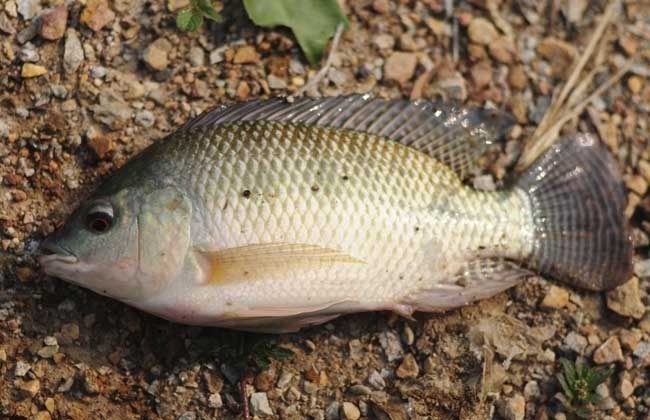
Tilapia is a group of small and medium-sized fish; its appearance and individual size are somewhat similar to those of the crucian carp, with many spiny fin rays like the mandarin fish. The main varieties farmed in China include the Nile tilapia, the blue tilapia, the Mozambique tilapia, and various hybrid offspring of these combinations, and so on. Now let us take a look at the tilapia varieties and picture gallery below!
Nile Tilapia
The Nile tilapia is native to eastern Africa, Jordan, and other places. The edge of the dorsal fin is black, and the caudal fin has distinct black stripes throughout its life, arranged vertically; the throat and chest are white; the end of the caudal fin does not reach the starting point of the anal fin; the sides of the body have 8 to 10 vertical band markings; there is a black spot on the dorsal edge of the caudal peduncle; and the depth of the caudal peduncle is greater than its length. The Nile tilapia has the advantages of fast growth, omnivorous feeding habits, tolerance of low oxygen, large individual size, high yield, and a high degree of fatness, and therefore in many areas of China it can be raised alone or used as a parent fish for hybridization.
Blue Tilapia
The blue tilapia is native to the lower Nile River in West Africa, Israel, and other places. The throat and chest are silvery gray; the dorsal fin and anal fin have dark diagonal stripes; the caudal fin is rounded with silvery gray spots. Compared with the Nile tilapia, the blue tilapia is more tolerant of cold, salt, and low oxygen, and has a higher catch rate. In particular, its sex chromosomes are of the ZW type, and crossing it with the Nile tilapia can produce all-male tilapia, so it is often used as the male parent in crosses with the Nile tilapia.
Mozambique Tilapia
The Mozambique tilapia is native to Natal in Mozambique, Africa, and other places. Its differences from the Nile tilapia are: the black stripes on the caudal fin are not vertical; the outline of the top of the head is concave; the throat and chest are dark brown; the edge of the dorsal fin is red; the end of the pelvic fin can reach the starting point of the anal fin; and the depth of the caudal peduncle is about equal to its length. Because purification and breeding work was neglected during the introduction process, causing variety degeneration, it is used only as the female parent of the hybrid fish Fushou fish.
Red Tilapia
The red tilapia is a mutant interspecific hybrid offspring of the Nile tilapia and the Mozambique tilapia. Its body has beautiful reddish and silvery small spots, or occasionally a few gray or black patches. The red tilapia is one of the faster-growing tilapias, omnivorous, with strong reproductive capacity, wide salinity tolerance, few diseases, large individual size, beautiful body color, and fresh-tasting meat. It is very popular with consumers and producers in Guangdong and the Hong Kong and Macao regions of China, and is also called pearl wax or wax fish.
Oreochromis niloticus × O. aureus Hybrid Tilapia
A hybrid of the male blue tilapia and the female Nile tilapia. Its appearance is similar to that of the female parent, it grows fast, and its male rate is as high as 93%. It has obvious hybrid vigor and a high catch rate, and it is now becoming a major farmed tilapia variety.
Fushou Fish
A hybrid of the female Mozambique tilapia and the male Nile tilapia. It has the advantages of omnivorous feeding habits, few diseases, fast growth, and high yield, but because of its black body color and low meat content, its farming development is affected.