How can tilapia farming costs be reduced? Practical cost-cutting methods shared
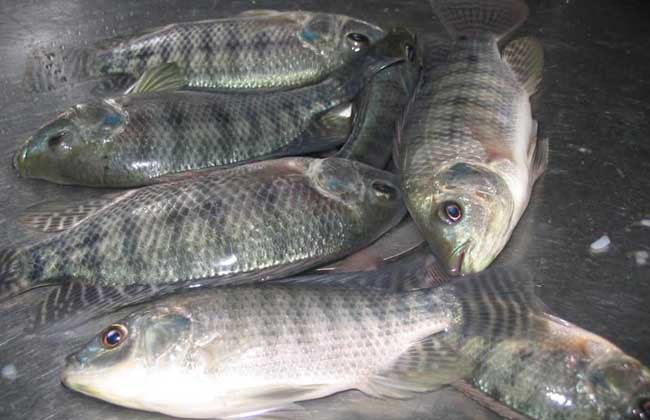
Tilapia is currently farmed fairly widely in China and is a major species bringing increased income to fishermen and farming units in many places. However, during the farming process, many farmers single-mindedly pursue output and keep adding feed and fertilizer to the water, which not only raises farming costs but also causes water quality to deteriorate continuously, affecting the growth and even the survival of tilapia and leading to low farming returns. So how can the cost of tilapia farming be reduced? Let us take a look together below!
Strict disinfection and pond clearing
Pond clearing and disinfection can kill wild and miscellaneous fish, reduce competitors for food, and also kill disease-causing agents in the water, improving water quality so that tilapia has a good environment for feeding and growth. When there are many wild fish and miscellaneous shrimp in the pond, they will compete with tilapia for bait, and ferocious fish may even prey on tilapia, reducing feed utilization, so attention should be paid to removing them. Therefore, before stocking fry, both new and old ponds must be cleaned and disinfected. Old ponds should have excess silt removed, keeping only 10 cm of bottom mud. 10-15 days before stocking fry, disinfect the pond with chemicals to kill pathogens and harmful organisms in the farming water. Generally, either dry pond clearing or clearing with water retained can be used.
1. Dry pond clearing: For dry pond clearing, use about 75 kg of quicklime per mu or 4-5 kg of bleaching powder.
2. Clearing with water retained: When clearing with water retained, use about 150 kg of quicklime per mu and spread it over the whole pond, mixing the bottom soil with the quicklime as much as possible, so as to thoroughly kill parasites, pathogens and wild miscellaneous fish, reduce competitors for food and improve feed utilization.
Reasonable matching and stocking
1. Farming methods: To increase the survival rate of tilapia farming and reduce feed waste, stocking density and companion fish species must be well controlled. Current farming methods are mainly pond farming and cage farming. Fish suitable for mixed culture with tilapia mainly include silver carp, bighead carp, grass carp, bream and freshwater pomfret.
2. Matching and stocking: Each spring, when the water temperature rises and stabilizes above 15°C, winter fry can be stocked. In pond-based main culture, generally 1,500-3,000 tilapia fingerlings are stocked per mu, along with 40-70 silver carp and 40-70 bighead carp fingerlings to control water quality. When mixed with other fish, 200-500 per mu can be stocked.
3. Cage farming: In cages, tilapia can be raised alone, as the main species, or in polyculture. Larger fingerlings are preferable, generally 10-50 g per fish when put into the cage, with 30 g on average being good. Stocking quantity should be determined according to water quality conditions. When dissolved oxygen is above 3 mg/L, the stocking density is 3-20 kg per cubic meter of water.
4. Adjusting density: As the fish grow continuously, in order to adjust farming density well and improve returns, they can be harvested and marketed in batches and caught and restocked in rotation, so as to regulate the fish load in the water and improve the feed conversion return.
Regularly regulate water quality
To farm fish, first cultivate the water. Water quality affects how fast tilapia grows and the feed coefficient. Tilapia likes fresh, clean water. With good water quality, it grows quickly, has fewer diseases, can make full use of feed, and the feed coefficient is reduced. Therefore, when farming tilapia, attention should be paid to regulating water quality and keeping it fresh and clean. Generally, the water is required to be yellow-green, with transparency of 30 cm-40 cm and dissolved oxygen above 3 mg/L.
1. In pond farming, pond water should be changed frequently to keep the water fresh and clean and strictly prevent surfacing and pond die-offs. Generally, add and change new water about once every 15 days, each time changing 10-20 cm, keeping the pond water level at about 1.5 m. In high-temperature seasons, the number of water changes can be appropriately increased. During the farming period, depending on weather, water temperature and fish feeding conditions, appropriately turn on aerators to increase oxygen. When the weather changes, air pressure is low, and dissolved oxygen in the water falls below 3 mg/L and fish surface, increase the frequency and duration of aerator operation.
2. In reservoir cage farming, the cages should be brushed frequently to wash off dirt and attached algae so that the water can fully exchange. The cages should also be checked regularly, and any damage should be repaired promptly to avoid fish escaping or ferocious fish entering the cages. When necessary, the cages should also be continuously adjusted. As reservoir water levels rise and fall, adjust the cages to a suitable water depth so that tilapia has a good feeding environment.
Scientific fertilization and feeding
1. The amount of farming inputs such as fertilizer and bait affects both the growth of tilapia and changes in water quality. In natural waters, tilapia mainly feeds on benthic organisms, aquatic insects, zooplankton, rotifers, organic debris and large algae. It can absorb plankton in the water as food, and of course it is even fonder of artificial feed.
2. During farming, moderate fertilization can also be used to keep plankton in a good growth state, increase dissolved oxygen and nutrients in the water, and assist fish growth. Generally, before stocking fingerlings, sufficient base fertilizer can be applied to improve the nutrient status of the bottom mud in the water, increase nutrients in the pond, and benefit the growth of natural bait. The specific method is to apply 250-300 kg per mu of decomposed chicken manure and the like.
3. In the middle stage of farming, topdressing can also be applied according to water quality conditions and so on, generally once every 15-20 days, with 2-3 kg of nitrogen fertilizer and 1 kg of phosphate fertilizer per mu each time. A small amount of duckweed or azolla can also be put into the pond to supplement tilapia's vitamin needs.
4. Tilapia is currently one of the main species for high-density flowing-water farming or "factory-style" farming. Intensive farming requires feeding compound feed with comprehensive nutrition, but if scientific methods are not used in feeding, it will not only waste feed but also spoil water quality and induce various diseases. Therefore, bait feeding must be scientific.
5. Special feed produced by reputable manufacturers should be selected. A reasonable feed formula can ensure rapid growth of tilapia and avoid feed waste.
6. Tilapia has a very broad feeding habit. Under artificial rearing conditions, various feeds can be given, such as wheat, corn, oilseed cakes and meals, all of which are high-quality feeds for it. In the early stage, the protein content in the feed should be 32-35%, and the daily feeding amount should be 3-5% of the total fish body weight. When the individual size grows to about 200 g, the feeding amount can be adjusted to 2% of the total fish body weight, and the protein content in the feed should be maintained at 27-29%. When the individual reaches about 300 g, tilapia enters its fastest growth period. The daily feeding amount should be kept at 1-2% of fish body weight, and the protein content in the feed should be above 35%. The feed can be a self-mixed blend, but it is best processed into pellets for feeding.