How to Raise Mink? A Detailed Guide to Practical Farming Techniques
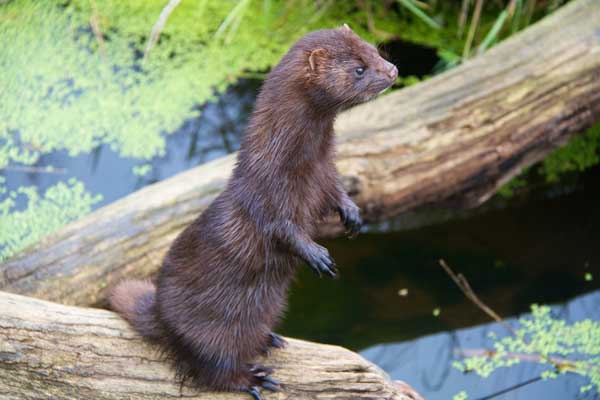
The mink belongs to the order Carnivora, family Mustelidae, genus Mustela, and is a small, valuable fur-bearing animal. In nature there are two species, the American mink and the European mink. The mink currently raised in captivity is mainly the American mink. In 1956, China introduced standard mink from the Soviet Union and established 3 large state-owned wild breeding farms in Mishan County, Hengdaohezi, and Dorbod Mongol Autonomous County in Heilongjiang Province, later expanding to the three northeastern provinces, Inner Mongolia, **, Qinghai, Gansu, Shanxi, Shaanxi, Hebei, Henan, Shandong, Jiangsu and other provinces and autonomous regions. Later, the coastal areas of Guangdong also introduced and trial-raised them successfully.
The Living Habits of Mink
In the wild state, mink mostly inhabit waterside areas such as riverbeds, lake shores, and the banks of forest streams. They use natural rock caves as dens, lining the dens with animal hair, bird feathers or dry grass. The den tunnel is about 1.5 m long, with the entrance on the bank or underwater. The entrances on the bank are all concealed by clumps of weeds or bushes, making them hard to find.
In the wild state, mink feed on fish, rodents, hares, small birds, amphibians and insects. The types of food change with the seasons: in winter and spring they mainly eat fish, rodents and other small mammals, while in summer and autumn they mainly eat fish, frogs, snakes and insects. Mink have the habit of storing food, and they also especially like water, not only for drinking but mainly for playing in the water; in summer they are particularly fond of playing in water. Under artificial rearing conditions, mink are kept in cages, so there is no need to provide artificial water areas for them to play in; simply providing adequate drinking water is enough.
Mink are wild by nature, fierce in temperament and highly aggressive, and are mostly active at night. They have few natural enemies themselves, with only a small number of birds of prey and beasts of prey as their natural enemies. During the mating season they are also often captured by hunters. The mink has a lifespan of 12 to 15 years and 8 to 10 years of reproductive capacity; under artificial rearing conditions, breeding mink are generally used for only 3 years. That is, they are born in the first year, take part in mating in the spring of the second year, and the young mink reach sexual maturity at 9 to 10 months of age; they each reproduce once in the spring of the third and fourth years, and after the autumn molt of the fourth year they are transferred to the pelt-mink group and no longer used for breeding. Every spring is the mink's breeding season; they produce 1 litter per year, and molt once each in spring and autumn every year.
Wild mink are mostly light brown with a white patch on the lower jaw. Captive-raised mink have darker coat color, mostly black-brown or dark brown. After many years of selection and white varieties, the number of colored mink is increasing.
The mink has a slender body, a small head, a well-developed neck, short limbs, and a slender tail with fluffy tail hair; on both sides of the anus there is a pair of anal glands that secrete a substance with a strong irritating odor. Mink are fierce by nature and highly aggressive, hide by day and come out at night, have keen hearing, run and swim fairly fast, and can also dive. Mink are carnivorous animals, mainly feeding on various rodents, snakes, amphibians, fish and shrimp, birds and insects. Mink reproduce once a year, coming into estrus and mating from February to early and mid-March, and giving birth from April to May. The gestation period averages 46 days, with 5 to 8 young per litter. They reach sexual maturity at 9 to 10 months of age and can take part in mating in the spring of the second year. Their reproductive life can last as long as 8 to 9 years, and their lifespan is 12 to 15 years. Under artificial rearing conditions, the useful life is relatively shortened.
Types of Mink Feed
1. Animal-based feed
① Fish feed
Fish feed is one of the important sources of animal protein for mink, with extensive resources and low prices. There are many kinds of fish, which can be broadly divided into two types: marine miscellaneous fish and freshwater fish. Except for poisonous fish such as pufferfish, all of these fish can be used as mink feed.
Fresh marine miscellaneous fish can be fed raw, which gives good palatability and a high protein digestion rate. Marine miscellaneous fish with slight spoilage need to be steamed and disinfected before being fed cooked. A few marine miscellaneous fish and most freshwater fish contain thiaminase, which destroys vitamin B1 (thiamine) and often causes vitamin B1 deficiency after raw feeding, so they should also be steamed and fed cooked.
When fish is used as the entire animal-based feed in the mink diet, it can account for 70% to 75% of the diet by weight, and multiple kinds of fish should be mixed for feeding. At the same time, attention should be paid to the supply of vitamin B1 and vitamin E to ensure good production results. If fish, meat and by-products are combined, fish can account for 40% to 50% of the animal-based feed. Fish feed has a relatively high content of unsaturated fatty acids and is extremely prone to oxidative rancidity, and the protein in fish also spoils very easily. The proportions and contents of certain essential amino acids are also obviously different from those of meat, so the effect of raising mink entirely on fish is not as good as a fish-meat mixture, and the effect is even worse when the variety of fish is too limited.
② Meat feed
Meat feed is an important source of complete-protein feed. It contains essential amino acids in amounts and proportions similar to those of the mink's body, and also contains fat, vitamins and minerals. There are many kinds of meat feed with strong palatability; the meat of various animals can be used as long as it is fresh, disease-free and non-toxic.
Meat feed can account for 15% to 20% of the animal-based feed in the diet, and at most no more than 50% of the animal-based feed. When using meat feed, sanitary quarantine is required; those free of disease can be fed raw, usable meat from diseased livestock and poultry or contaminated meat must be treated harmlessly at high temperature before it can be eaten, and unusable meat should be prohibited from being eaten. In addition to requiring high-temperature and high-pressure treatment, part of the fat of measly pork should be removed as much as possible. At the same time, increase the feeding amount of vitamin E and combine it with a certain proportion of low-fat small miscellaneous fish, rabbit heads, rabbit skeletons or fish meal, etc.
Meat has relatively high nutritional value, but its price is also relatively high, so it should be used rationally. During the breeding period and the growth period of young animals, the proportion of meat feed can be appropriately increased to raise the biological value of the protein in the diet.
③ Meat by-products
Meat by-products include the heads, skeletons, internal organs and blood of livestock and poultry, and have been widely used in production practice. Except for liver, heart, kidney and blood, these products have lower protein digestibility and biological value. Therefore, the amount of these by-products used to feed mink should be appropriate, and attention should be paid to combining them with other feeds. During the breeding period, take care not to feed by-products containing hormones.
Meat by-products generally account for 30% to 40% of the animal-based feed.
④ Dry animal-based feed
Commonly used dry animal-based feeds include fish meal, dried fish, blood meal and feather meal, etc.
Fish meal contains 40% to 60% protein and 2.5% to 4% salt. When fresh, high-quality fish meal is used to feed mink, during the growth period of young animals it accounts for 20% to 25% of the animal protein in the diet, and during the non-breeding period it accounts for 40% to 45% of the animal protein. Fish meal has a high salt content, so it must be thoroughly soaked in clean water before use. Change the water 2 to 3 times during soaking.
Dried fish. The key to using dried fish to raise mink lies in the quality of the dried fish. High-quality dried fish can account for 70% to 75% of the animal-based feed in the diet, but during the mink breeding period it must be combined with 25% to 30% complete-protein feed (fresh meat, eggs, milk and pig liver, etc.). During the growing period of young mink and the winter coat growth period, fresh measly pork must be combined or vegetable oil added to make up for the insufficient fat of the dried fish.