What are the living habits of mink? Read this to understand
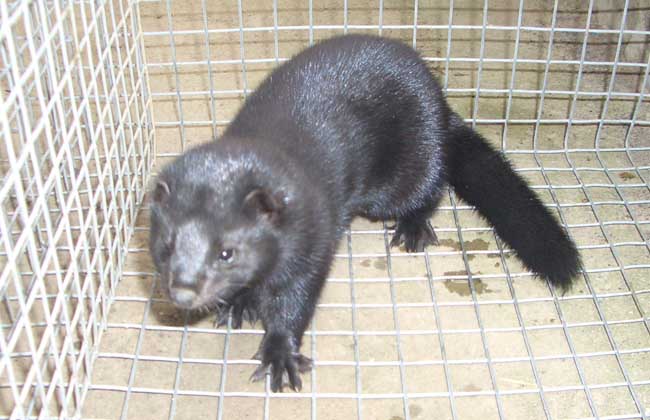
Mink inhabit areas by rivers and lakes, living in natural burrows along the banks. They are semi-aquatic animals, skilled at swimming and diving, and enjoy playing in water even more in summer. They are seasonally breeding animals. Let us take a look at the living habits of mink below!
Group-living behavior
Wild raccoon dogs usually live in pairs in dens, with 1 male and 1 female per den, though there are also cases of 1 male with multiple females or 1 female with multiple males. The parents and pups of neighboring dens usually play and frolic together, and mother raccoon dogs sometimes even nurse each other's young without distinction. Under captive conditions, this characteristic can be used by grouping weaned pups into groups of 10 to 20 for collective pen rearing.
Crepuscular and nocturnal
This characteristic is very obvious in wild raccoon dogs: they sleep in dens during the day and come out around dusk and dawn to move about and forage. Captive raccoon dogs, however, can be active throughout the day, basically having changed the crepuscular and nocturnal characteristic. Captive raccoon dogs have a relatively small range of activity, mostly moving back and forth in a straight line within their cages, and are sluggish and docile in temperament. When people approach, they show suspicion and fear.
Defecating at fixed spots
Whether wild or captive, the vast majority of raccoon dogs defecate at fixed locations. Wild raccoon dogs mostly defecate near the den entrance, and over time the waste accumulates into piles. Captive raccoon dogs mostly defecate in a certain corner of the cage or enclosure. A very small number urinate or defecate into food bowls, water bowls or nest boxes. Once such raccoon dogs are discovered, measures should be taken promptly, otherwise once the habit is formed, it will be difficult to change.
Winter rest
Under wild conditions, in order to avoid the severe cold of winter and endure the extreme scarcity of food, they often stay deep in their dens, their metabolic level decreases, and they consume the subcutaneous fat stored since autumn to maintain their lower level of life activity, forming a non-continuous hibernation, manifested as eating little, reduced activity, and a drowsy state, so it is called semi-hibernation or winter rest. Under captive conditions, due to human disturbance and sufficient feed, hibernation is not very obvious, but most have reduced activity and decreased appetite. When captive raccoon dogs overwinter in the Northeast region, feeding can be reduced from twice a day in other seasons to once a day or once every 2 to 3 days.